
It is a truism among knowledgeable fans of Amel sailboats that changing things is very frequently a bad thing, even when it seems like a good idea done with the best intentions. Sometimes inappropriate changes can be made by vendors we use without being apparent. That’s the story here.
Time for a New Rig.
Three years ago we used a high end rigging company in South Florida to replace the standing rigging on Harmonie. They came highly recommended by people whose opinion we trusted, and the technical specifications, professionalism and care used were all as we would hope for. The only catch was a lack of detailed knowledge about what can be changed on a Super Maramu, and what should be kept the same.
The Good
The rigger we hired, Nance and Underwood [Note 1], has a lot of experience with Amel rigs. They have done literally dozens of rig replacements on these boats. The system they have developed for efficient and reliable swap out of the rig is well thought out, and they have a lot of experience with it.
Each wire is cut over length at the shop and the mechanical terminal at the upper end of the wire is attached. The whole kit of wires is then brought to the boat with one end finished. One wire at a time is removed from the boat and laid out on the dock. The new wire is then cut to exact length, the lower terminal installed, and the new wire is then installed on the mast. Repeat for each of the wires that make up the standing rigging. [Note 2]
This process is made possible because they use mechanical terminals that are easily installed with simple hand tools, no large complex swaging machine is needed. Although the mechanical terminals are significantly more expensive than hardware needed to make swaged ends, the savings in labor and reduction in waste from measurement errors more than make up the difference. This process works well with no issues for all except for one of the wires. The headstay has a very important complication.
The Bad
The headstay requires a swage at its lower end. This is because a mechanical terminal is too large to fit up inside the Amel furler, as it needs to. Nance and Underwood has a solution to this. At the shop the terminal they apply is a swaged one on what will be the bottom of the wire when installed. When they come to the boat, they cut the new headstay to length, and put on the mechanical terminal at the TOP of the wire. Now it can be installed. But… there is still a problem.
The plastic cap on top of the foil was designed to run on the swaged fitting.
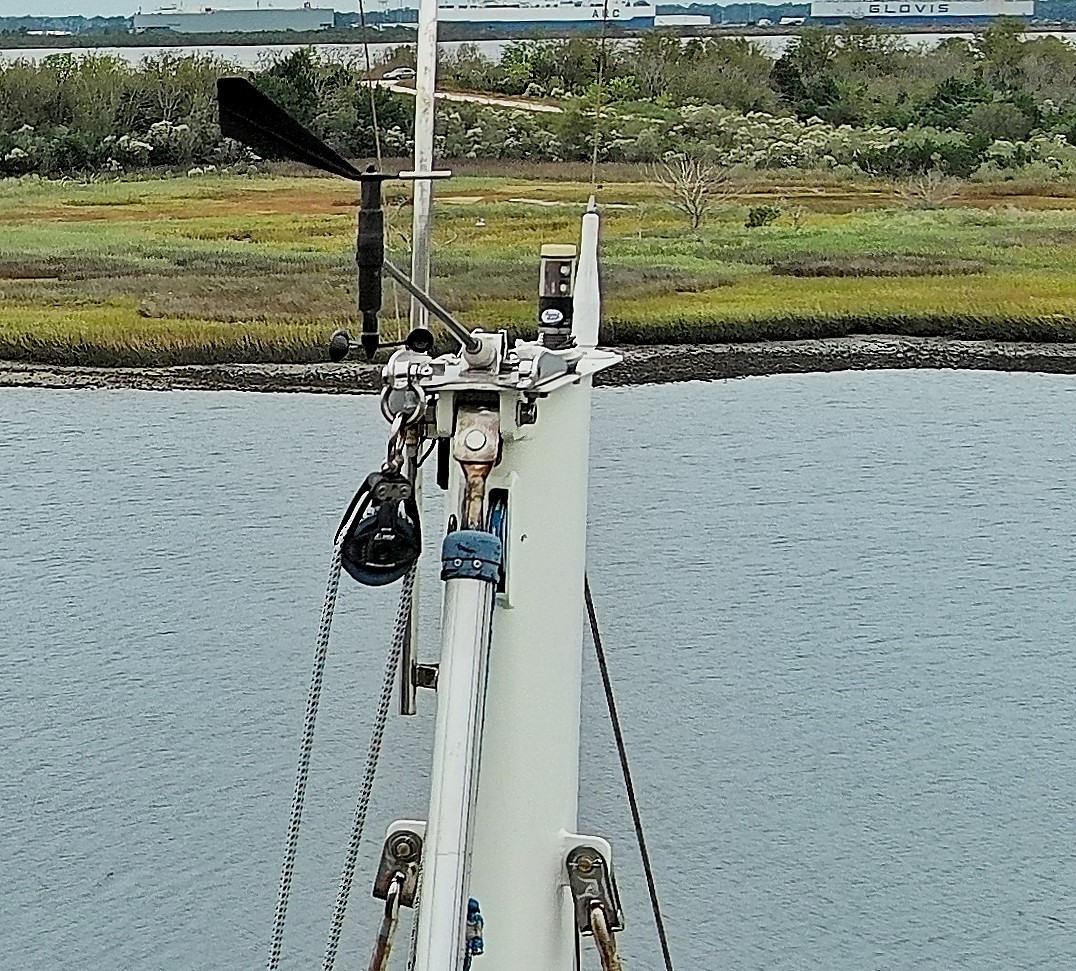
The mechanical fitting is larger in diameter, also, it is not smooth and round. The cap will not fit over the bulkier mechanical terminal. Addressing this mismatch is where things start to go pear-shaped.
The solution that is used is to shorten the foil so the upper plastic cap now runs on the wire instead of the mechanical terminal. There is plenty of room above the sail to do this so it seems a pretty innocuous change. However, this is a case where things are more complex than they seem at first glance, even to professional riggers. Several problems come up because of this change that are not apparent on casual inspection.
And The Ugly
First, the wire is significantly smaller in diameter than the swage, so the upper plastic bearing now has quite a bit of play during use that it did not have before. It is also running on the rougher surface of the wire instead of on the smooth surface of the swage. Both of these mean that the plastic cap is subject to wear and impact loads that it was not designed for, and will cause rapid wear.

Second, the plastic cap is riveted to the foil. As the rougher surface of the wires chafes the rim of the plastic cap, it exposes the metal of the rivets which can now catch on the individual strands of the stay, and potentially cause it to unravel, seriously reducing its strength. In the best case, the back end of the rivets wears off, and they fall, out leaving the cap free to come off the foil. If the cap come off the foil, the inside profile of the foil now bears on the wire as it turns. That is very bad for both the foil AND the wire. It also makes a terrible grinding noise while turning.
Third, in the event of an accidental halyard wrap during operation of the furler, the halyard now twists around the exposed wire, again potentially causing the strands to unlay. A serious halyard wrap can also cause the locknut on the mechanical terminal to back off, potentially destroying its mechanical integrity.
There are a few more problems here, but the potential of losing your headstay seems all the reason you might need to not let things be done this way, or fix it if this is the way things are now.
The Fix
If your foil is too short, it can be fixed.
Amel has lengths of the original foil that can be spliced onto the end of the remaining length using rivets and metal plates that slide inside the structure of the foil. Of course for this to work it means also means replacing the headstay with one terminated by swages on both ends to make things work as intended. We had this rework done at Amel’s Service Center in Martinique. I assume the same repair could be accomplished at La Rochelle, since we do know that Amel in Martinique had to order parts from France. I do not know if they sell the specialized parts to do this repair on a DIY basis.
Notes
Note 1 : I have written to Nance and Underwood several times about this issue, and have never received a comment back from them. If they do comment, I’ll update the information here. I would still recommend them as a capable and knowledgable rigging shop, with the caveat that the work gets managed closely and you insist that it be done as Amel set things up originally. [Return]
Note 2: There is another thing that can go wrong here, but is easily prevented. Do not allow the rigging crew to handle wires on a concrete dock surface! It will scratch the wires, potentially accelerating corrosion. Not an issue on a wood surfaced dock, but concrete needs to be covered where the wires lay. [Return]
 fetchinketch