The weather has had us running faster than we can update our blog, but not to worry, we are in good places.
On leaving Cuttyhunk, we came up through the Cape Cod Canal, and tucked into Barnstable Harbor for a couple days. We’ll have more on that later, but it for now it is enough to say it is a great place to hide for everything–except a northeast blow. When a northeast wind up to 30 knots was forecast, we ran north to Provincetown, which has excellent protection from the North and Northeast. We grabbed a mooring here for a few days, which also gives us shelter from the local effects of Hurricane Erin.
But we have a day or two until Erin passes by, so tomorrow we are going to go out whale watching and tuna fishing.
One of the downsides of today’s media is the need to attract attention to generate revenue. The way to generate attention is with “clickbait” headlines. This is especially true when talking about a topic as mundane as the weather. the headlines make everything appear a lot worse than it will be. We watch the official forecasts closely, and avoid social media for our weather information. We expect to see winds of up to 30 knots or so on Thursday night and Friday morning. Not weather we want to be sailing in, but not really an issue in a protected harbor we secured.
Hopefully, tomorrow we will have whales and other sea stories to tell!
One of those New England names that are almost surely from one or another of the pre-Columbian tribal languages, but whose exact origin is murky at best. It is a small island, but one that lives large in the history of recreational saltwater fishing for the exceptional striped bass fishery in the local area. It is a small village with a summer population of a few hundred, and a winter population of less than a dozen, which I guess makes it a contender for the ultimate summer town.
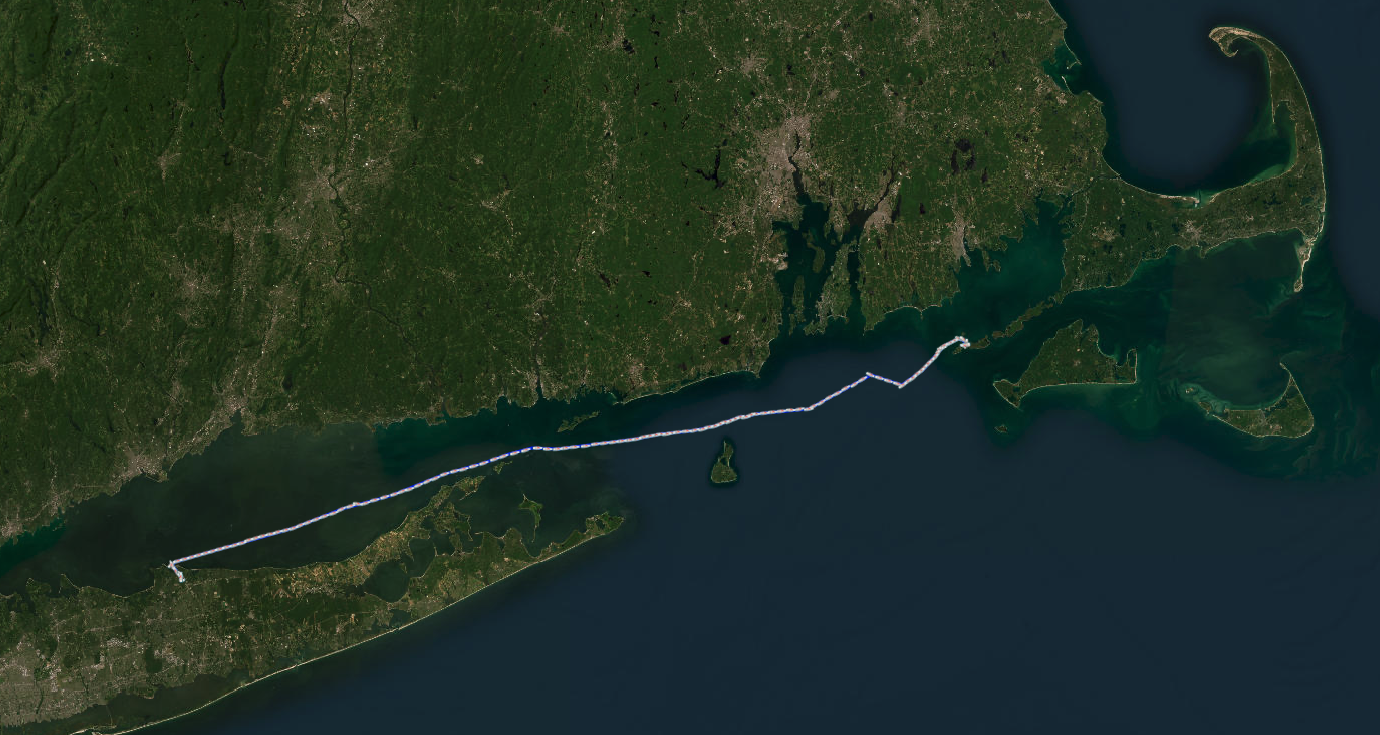
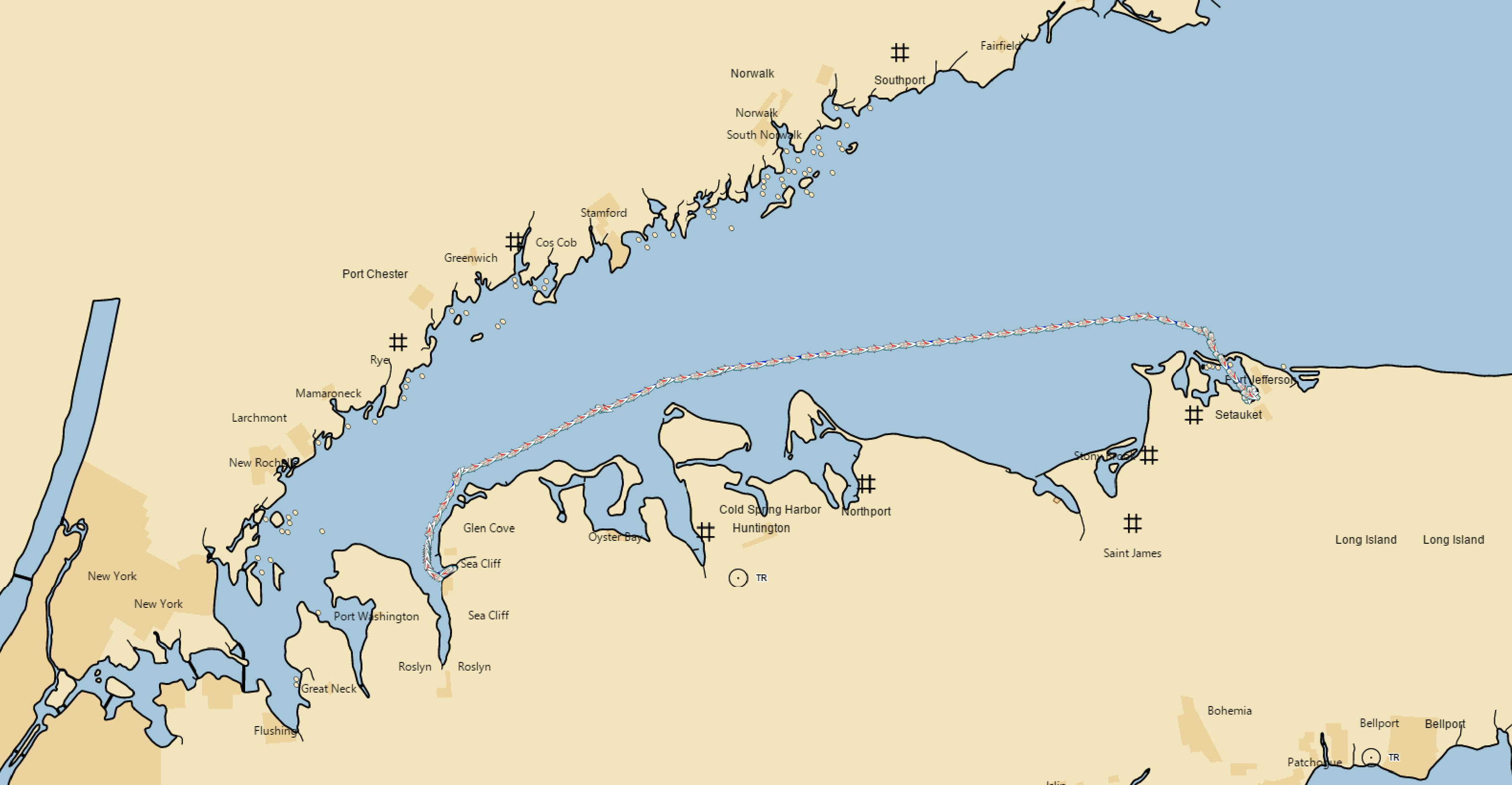
Our passage from Port Jefferson to Cuttyhunk Island.
Arriving at Cuttyhunk
We had an easy overnight sail up from Long Island arriving at Cuttyhunk Harbor just after daybreak in light fog where we were greeted by an unusual sight. At anchor in the outer harbor was the 108 foot topsail schooner Shenandoah. Built in 1964 she serves as a cruise and training ship traveling the local islands. She has the distinction of being the only vessel of her type in the world navigating without any form of mechanical propulsion. She goes by the wind, or doesn’t go. Now she does cheat a bit… Look closely at the photo and you will see a small boat hanging on the stern with a greatly oversized propeller. Something I am sure is used as a tug when she needs to get into or out of tight spots.
The “pure” sailing vessel Shenandoah
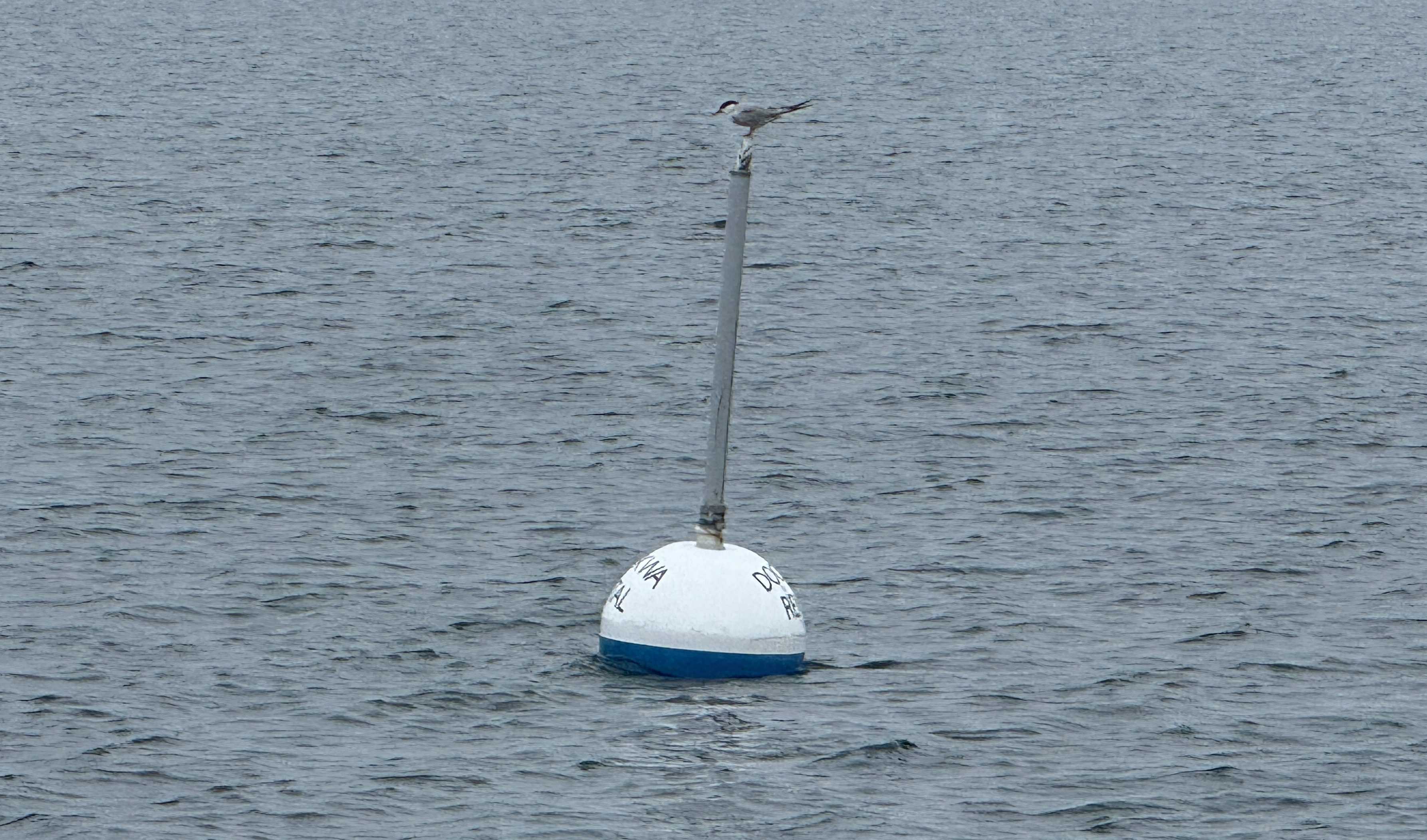
The moorings in the outer harbor here at Cuttyhunk are an unusual design that are the easiest to use we have come across in our travels. The anchor line passes through the center of the float and ends in a loop that is supported on a tube about 4 feet out of the water. Easy to reach from the deck, no contortions or boat hook needed.
A Cuttyhunk Harbor mooring ball.
Mooring Field Follies
After an overnight sail, we settled in for a bit of a morning nap, arising around lunchtime, we were treated to the entertainment of other boat’s arrivals.
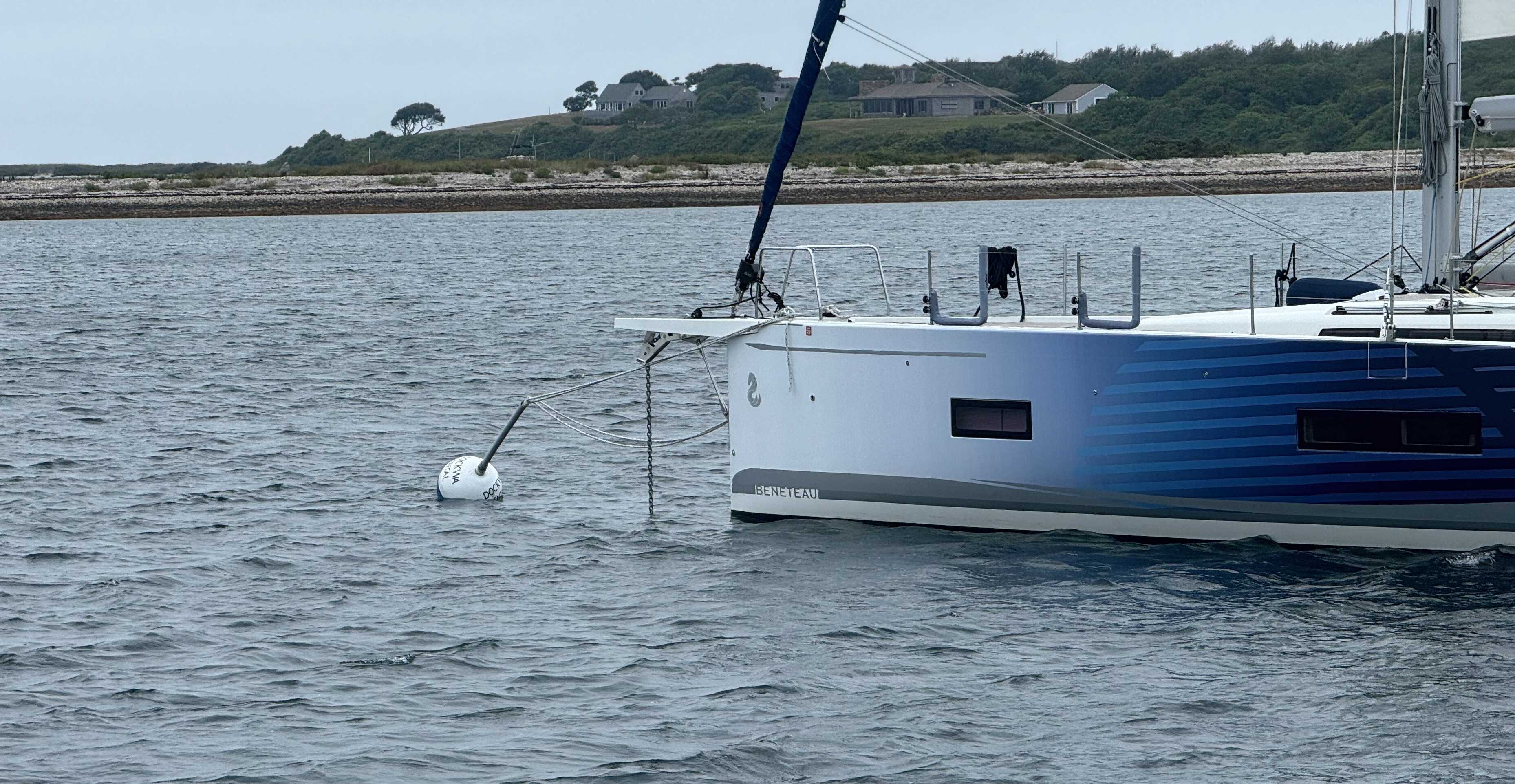
First up was a shiny new Beneteau Oceanis 54, a boat that is supposed to be the newest and best cruising boat that Beneteau can build. They left out something… There seems to be no good way to tie to the mooring without the mooring line chafing on the anchoring gear. The captain even lowered the anchor into the water in an attempt to limit the swinging of the boat back and forth, but even in the light winds here it was not enough. As the boat sailed back and forth, the ground tackle sawed on the mooring lines.
Cruising boats typically spend a lot of time anchored or on moorings. this is not an area where compromises should be made.
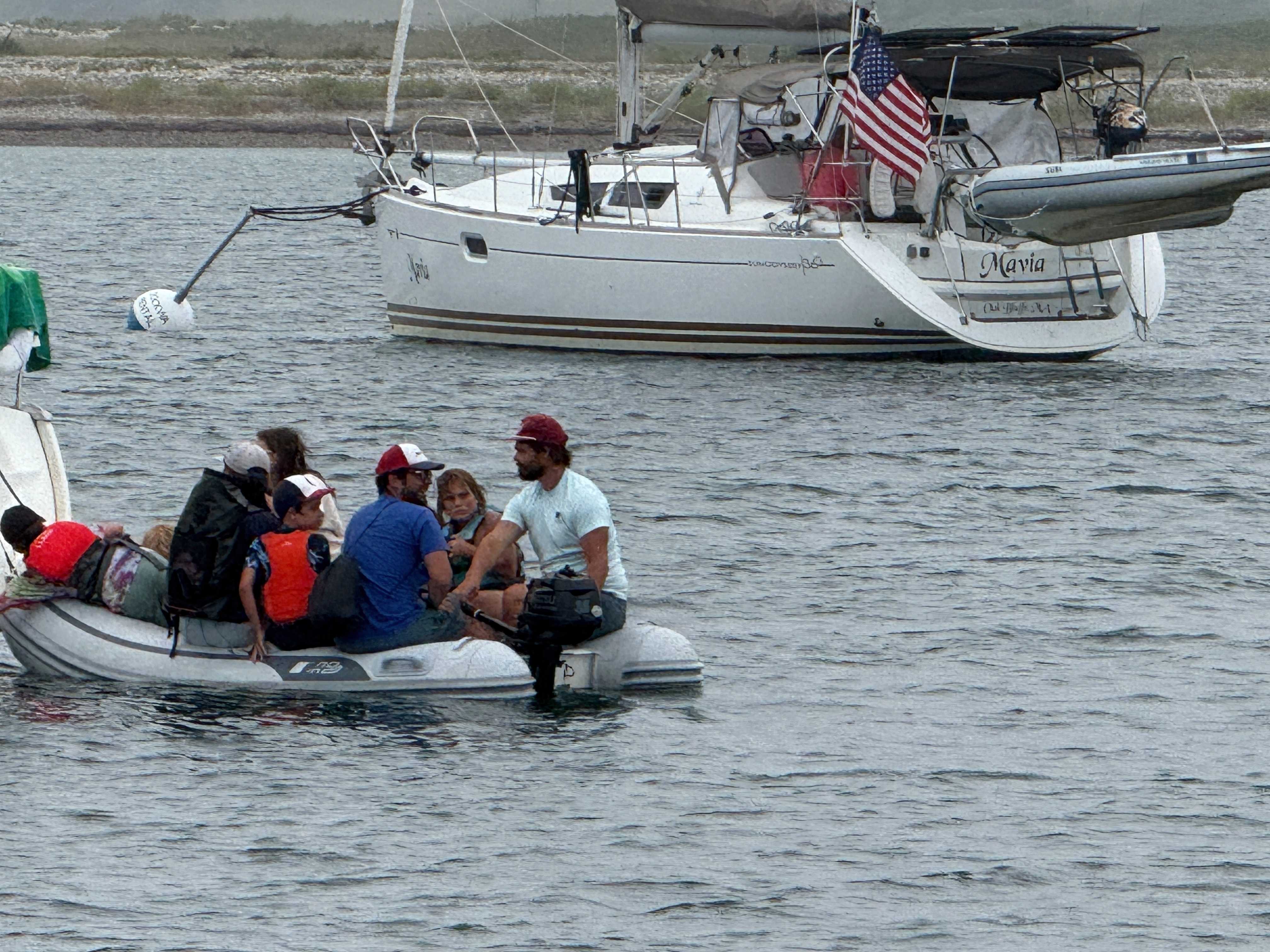
Next up was a crowd of four adults and four children all jam-packed into a dinghy for the trip from shore to the moored boat. It really would not have taken very long to make two trips. This is ridiculously (and dangerously) overloaded. The only good thing I can say, is it looks like the kids and women have lifejackets on. Something that seems to be too wimpy for the manly-men onboard.
I’m sure there is room for ONE more!
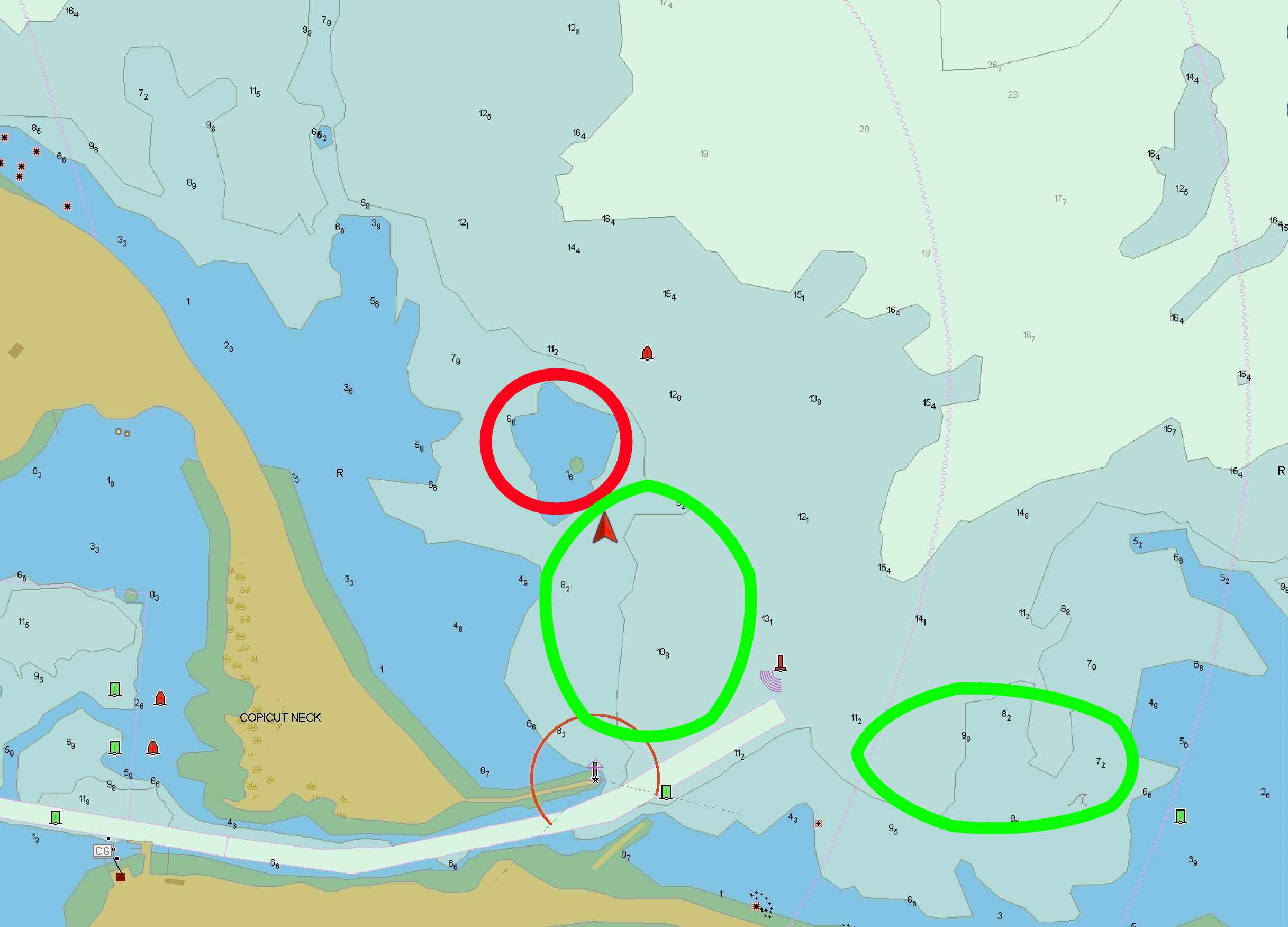
To understand the next act of the afternoon follies you have to see a chart of Cuttyhunk Outer Harbor.
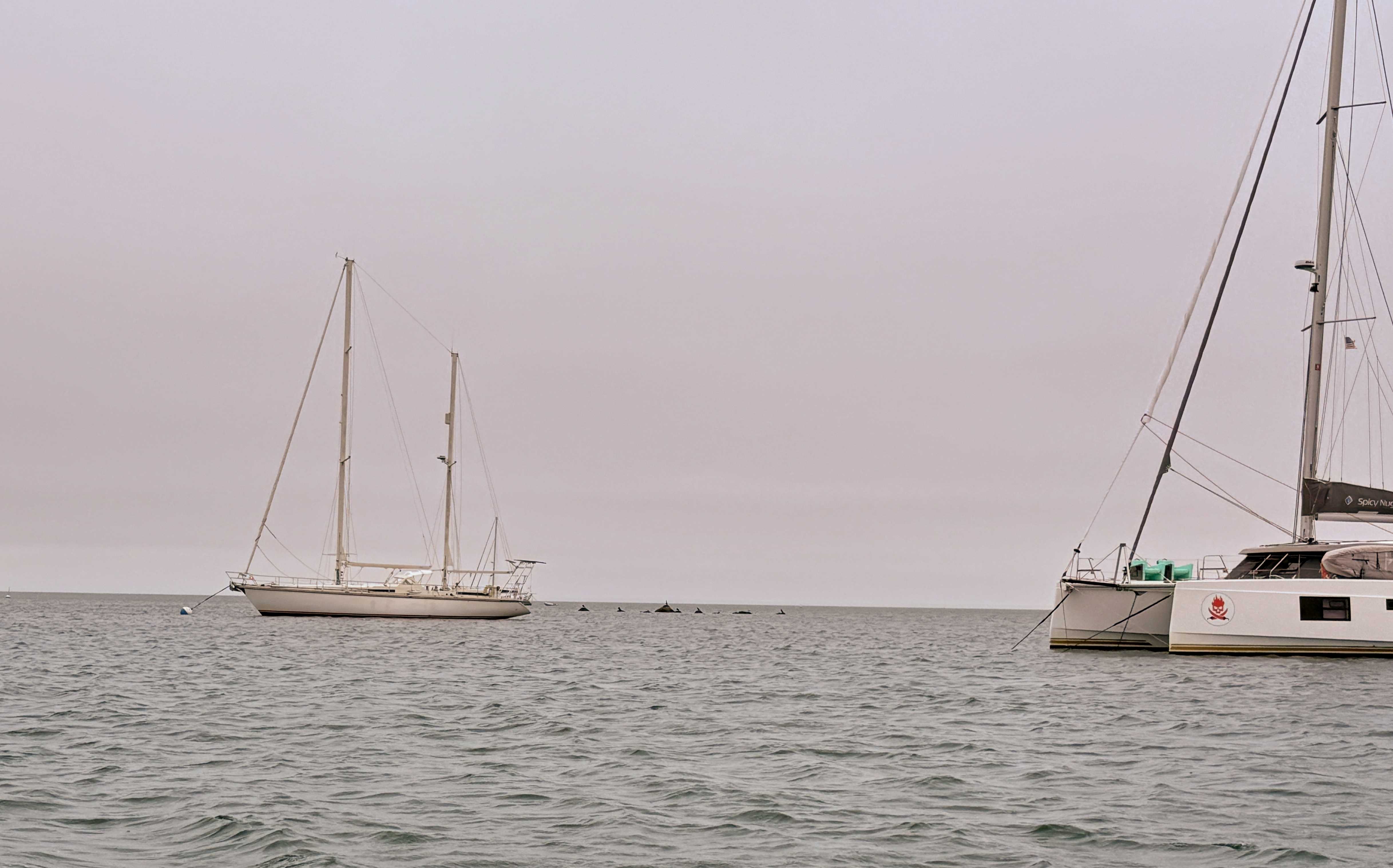
The mooring fields are roughly outlined in green. The red circle marks “Pease Ledge,” a hard rocky ledge that is submerged at high tide but is well exposed at low. Here is a picture of the ledge just poking through the surface at about half tide behind our own Harmonie:
At high tide, the catamaran to the right of the photo tried to approach apparently without looking at the chart (or maybe not understanding what it was showing?) and fetched up hard on the rocks–that were then underwater–to the sound of grinding fiberglass. They did manage to get off without much trouble, but still not a good look…
More to Follow…
I’ll be posting up a video tour of Cuttyhunk Harbor within the next week. Tomorrow morning we are up early to weigh anchor at about 6AM so we can catch the north flowing tidal current in the Cape Cod Canal. Our target for tomorrow is to be anchored by early afternoon in Barnstable Harbor on the north side of Cape Cod.
After a month at the dock In Glen Cove, New York working with another Amel owner to install a new C-drive in his boat, and do some other assorted repairs and upgrades, our time is our own for a while. This morning we headed out of the marina in Glen Cove, and moved about 25 miles east to Port Jefferson. A nice little tourist town and a harbor full of moorings available for $75/night, and that includes launch service from your mooring to downtown. From here, our plan is to jump to Cuttyhunk Island for a day or two, then up the Cape Cod Canal toward the coast of Maine with possible stops along the way.
The C-Drive Installation.
The Amel C-drive is a very reliable piece of machinery, but everything is subject to failures eventually. I have now replaced two of these and in both cases the cause for failure could not be clearly identified.
The gearboxes used in these units came from two different French manufacturers. There are external differences bewteen the two supplier’s units. I do not know i the internals are identical or not. Amel can supply a replacement of the entire drive system for about €32,000.
Amel has a contractor who installs the lower unit in a bespoke fiberglass housing, The problem is that these housings are not drop-in replacements. The housing as supplied today requires modification to fit. It has to be made larger in some areas, and smaller in others. I suspect that each boat model will require somewhat different tweaks to get the fit and alignment as perfect as it needs to be.
The overall process to install one of these is tiem consuming, fussy, and difficult. The modifications need to be done to a fairly high level of precision so the alignment comes out correctly. The engine then needs to be aligned with precision to the new drive system.
Having a close encounter with tropical storm Chantal wasn’t all bad. In her wake she left a strong and steady southeasterly flow of wind in the mid 20’s across the ocean This was exactly what we needed to make good time north to New York.
For a couple of years now, we have been using Saillogger as our online tracking tool. It’s a bit geeky to set up, but many boats have the hardware already in place, so it’s an inexpensive install compared to some alternatives. If you’re interested, drop me a line, and I can discuss further. One of the features is a daily email while you are underway that gives you your statistics for the last 24 hours.
For most medium-sized cruising boats, a 24-hour run of 140 to 150 miles is about average. Everybody likes to think their boat can go faster, but we tend to remember the fast days and dismiss the slow ones. The “magic number” that everybody hopes to get to is a 24-hour run of 200 miles. Two-hundred-mile days are rare but not unheard of aboard Harmonie. Our first day out of Fort Lauderdale, we did 211.
But yesterday….
We have never had a 250-mile day, so covering 264 miles in 24 hours is quite likely the fastest we will ever cover ground on this boat.
Of course, we could never cover ground that fast without the help of the Gulf Stream pushing at speeds of 4 knots or more. Well, now it is time to step off that conveyor belt and head in toward NY Harbor. We will be arriving tomorrow in the afternoon and likely anchoring unless we are very lucky with our timing of the tides.
We were supposed to be well west of a small low pressure system, but instead, rapidly shifting forecasts left us in the middle of Tropical Storm Chantel.
Tropical Storm Chantal makes landfall behind Harmonie
Overall, it wasn’t terrible, but certainly wasn’t what we’d choose to do. Maximum winds we saw were 40, gusting to 45, and waves to about 12 feet. We plotted a course that had us sailing on a deep broad reach with only a highly reefed jib out. Sailing was fast, but well controlled. Occasionally smacked around by an errant wave.
The boat and her systems did fine. While it wasn’t comfortable, at no point did we feel we were in “survival conditions” either. We were hailed on the radio by a large cargo ship passing nearby checking if we were ok, or needed assistance. I can imagine we were the subject of a bridge discussion about crazy people on little boats.
Now (Afternoon, Sunday, July 6) we are back near the axis of the Gulf Stream off Cape Hatteras sailing in a comfortable 20 knots of SSE wind. With a current push of 3.5 knots, we have been occasionally breaking 12 knots over ground. The wind is forecast to lighten over then next two days, and we expect to arrive at the entrance to New York Harbor late Tuesday afternoon.
Yesterday morning we left from Hall of Fame Marina in Fort Lauderdale, filled our fuel tank, and jumped out onto the northbound conveyor belt that is the Gulf Stream.
Since departing, we have been running fast on a broad reach with steady winds of 12 to 20 knots. Combined with a current of 3 to 4 knots, we have been running 10 to 11 knots over the ground. The weather has been overcast with widely scattered showers.
There is the possibility of a low pressure system developing along our route, but so far it looks like that will have little impact on us.
Our target destination is the north shore of Long Island, New York. We’ll be working with another Amel owner to install a replacement C-drive in his Super Maramu, and then spending a few weeks there visiting and exploring. We expect a fast trip, with favorable winds almost all the way. Our routing program predicts our arrival on Wednesday, July 9th.
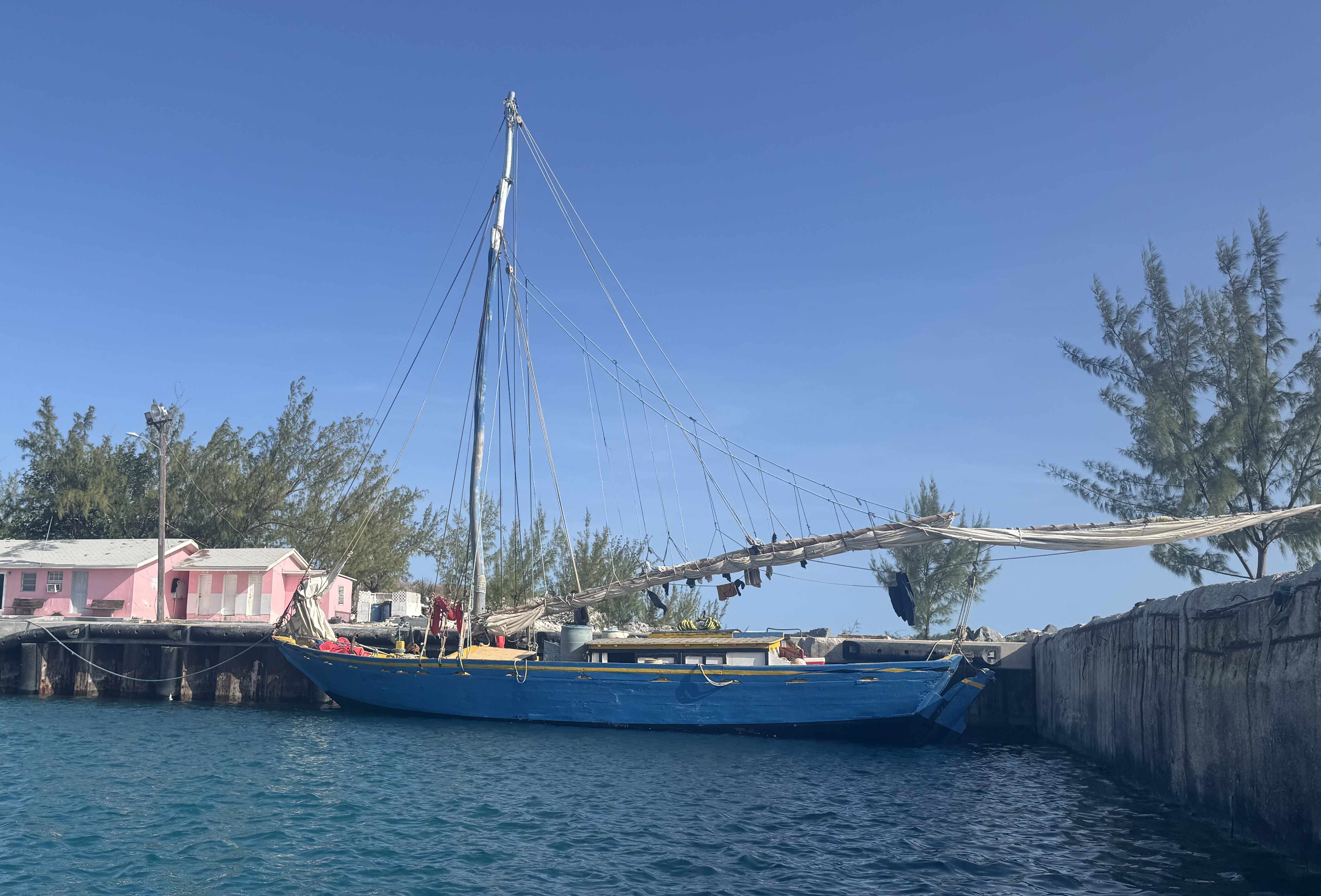
Tied up in the tiny harbor basin in Matthewtown, Inagua was this wooden hulled sailboat, with an interesting story. It comes here from Haiti to trade. I am guessing it is not at all an accident that they are here while the store’s shelves are bare several weeks after a supply boat run. They bring bananas and mangoes from Haiti and sell them here.
According to the locals there are only four mango tres on the island, and none of them are reliable fruiters, so the market is here for the tasty tropical fruit.
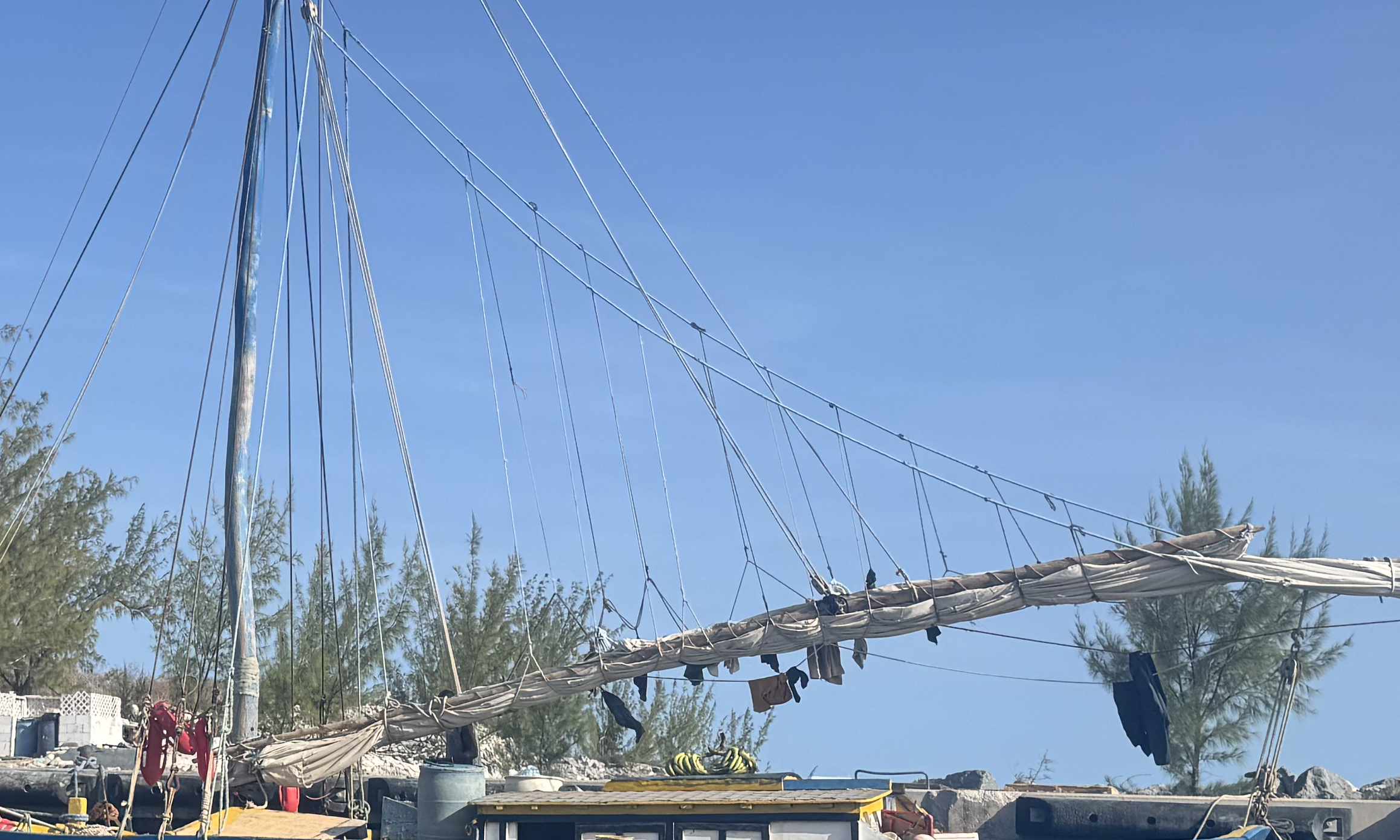
The boat appears to be well cared for, but in a very rustic way. Looking closer at the rigging, we see that the mast and other spars are, well, sticks fresh from the tree. The bark stripped off, a coat of paint applied, and off they go… The boat’s bilge pump is made of wood, and worked by pulling on a rope.
It’s rough and tumble way of making a few honest dollars, but these days a few dollars probably goes a long way in Haiti.
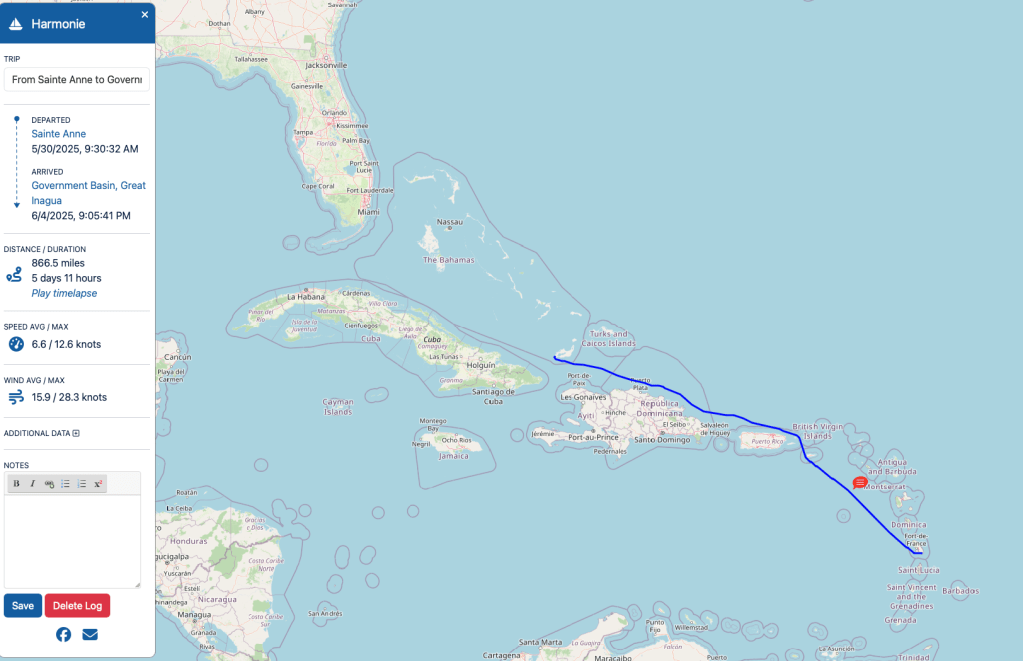
Last night we dropped anchor off Matthewtown on Great Inagua Island. These days this is the port of entry for the Bahamas that is farthest east and south, so the most convenient for boat traveling in the direction we are. The over all trip was 866 miles, over 5-1/2 days. An average speed of 6.6 knots. No engine use at all except for anchor maneuvering at the beginning and end.
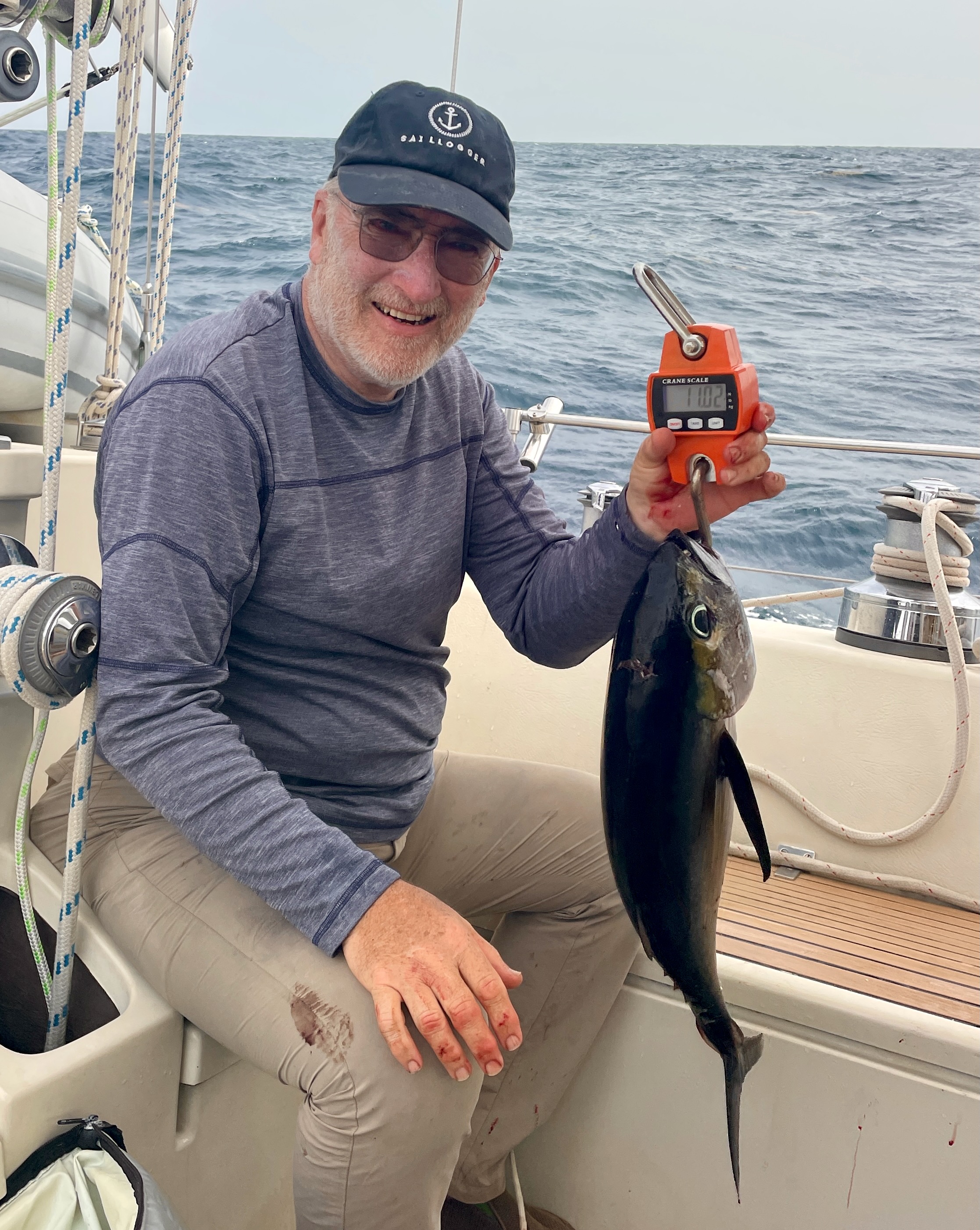
Overall the trip was easy and smooth. Winds were favorable, so much so we spent almost two days with the twin-headsail downwind rig up. The highlight of the trip was having a 10lb blackfin tuna accept our invitation to dinner.
The freshest sushi that can be had…
Karen has checked us into the Bahamas at the local customs office. She and Keven then walked down to the general store and found the shelves totally bare. Apparently the last supply boat was here two weeks ago, and the next one is not due until Saturday. We’ll be digging into the frozen and canned stock for our veggies for the next two weeks.
Our plan for tomorrow is to start an 18 hour sail to West Plana Cay, one of our favorite uninhabited islands. We’ll explore, fish, and comb the beaches for treasure, for a week(?) then head to Fort Lauderdale where we’ll take care of some doctor appointments, and we also say goodbye to Kevan who has been a great crew for this whole trip. Splitting watches 3 ways instead of two makes passages a lot easier! He will be missed.
This morning we pulled anchor from the Sainte Anne anchorage in southwestern Martinique, and set sail. As always, you can find our track and status here:
For most of the two months we’re were at the dock in Martinique I was traveling on one business project or another while Karen stayed put working as Project Manager for various repair and upgrade projects on Harmonie.
Our target destination is Great Inagua in the Bahamas. The first of the Bahamian islands with a port of entry where we can check in. We are about 5 days out from there. We hope to spend a week or two exploring, beach-combing, and fishing in the Bahamas before heading further north to the next project.
This will be an easier trip than most. For the first time in ages we have crew aboard to help with our watch schedule. Kevan has sailed with us before, and we all expect things to go easier with ta 4 on/8 off schedule compared to the 4 on/4 off that Karen and I are used to!
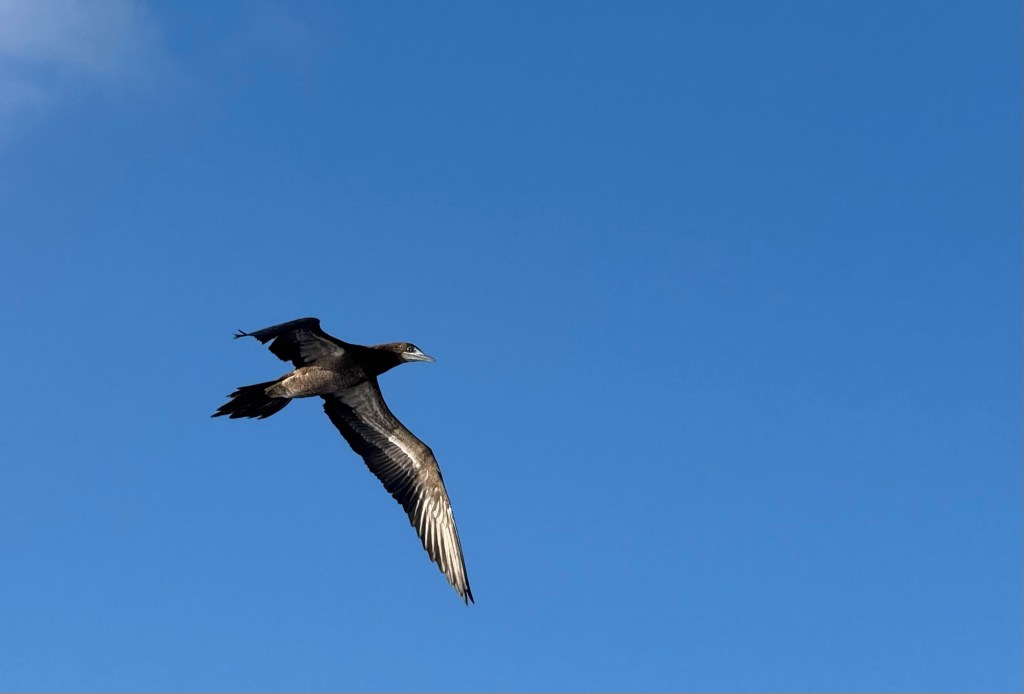
Our first day at sea has been uneventful. We have been treated to two brown boobies using the boat to help them catch fish.
Brown boobie on the wing
They soar around the boat waiting for a school of flying fish to scatter from the hull, and they are on them in a flash grabbing them just after they splash down.
Tomorrow afternoon we will come up on an open ocean weather buoy, where we hope to snag a tuna or two for the freezer.
Harmonie is performing well. It is good to be underway on our own boat.
This morning we pulled anchor from the Sainte Anne anchorage in southwestern Martinique, and set sail. As always, you can find our track and status here:
For most of the two months we’re were at the dock in Martinique I was traveling on one business project or another while Karen stayed put working as Project Manager for various repair and upgrade projects on Harmonie.
Our target destination is Great Inagua in the Bahamas. The first of the Bahamian islands with a port of entry where we can check in. We are about 5 days out from there. We hope to spend a week or two exploring, beach-combing, and fishing in the Bahamas before heading further north to the next project.
This will be an easier trip than most. For the first time in ages we have crew aboard to help with our watch schedule. Kevan has sailed with us before, and we all expect things to go easier with ta 4 on/8 off schedule compared to the 4 on/4 off that Karen and I are used to!
Our first day at sea has been uneventful. We have been treated to two brown boobies using the boat to help them catch fish.
Brown boobie on the wing
They soar around the boat waiting for a school of flying fish to scatter from the hull, and they are on them in a flash grabbing them just after they splash down.
Tomorrow afternoon we will come up on an open ocean weather buoy, where we hope to snag a tuna or two for the freezer.
Harmonie is performing well. It is good to be underway on our own boat.