We still have a couple weeks before we are due in Annapolis, so we are taking advantage of some delightfully cool and comfortable weather to explore the Chesapeake Bay some more on a cruiser’s schedule. Which means, whenever, wherever. Since leaving Urbanna we made a quick, unplanned, stop in Henrys Creek to run and hide from an approaching line of thunderstorms. Nothing to see here 🙂
From Henrys Creek we moved to a very isolated, out of the way, spot called St Marys City. Today, there is nothing at all there except St Marys College, a very small (1600 student) liberal arts school, and a museum complex. The stop was recommended to us, and it was fun and relaxing (Thanks Jeff!)
How small is it? There is not a single place in town you can buy food–except the college dining room which “welcomes visitors.”
That’s now. Back in the day (we are talking the early 1634’s) it was actually the first settlement by the British in Maryland, and was the capital of the colony until the political capital was moved to present day Annapolis in the 1690s. It was never a particularly large settlement, the estimates I saw had a population of about 200 at its peak.
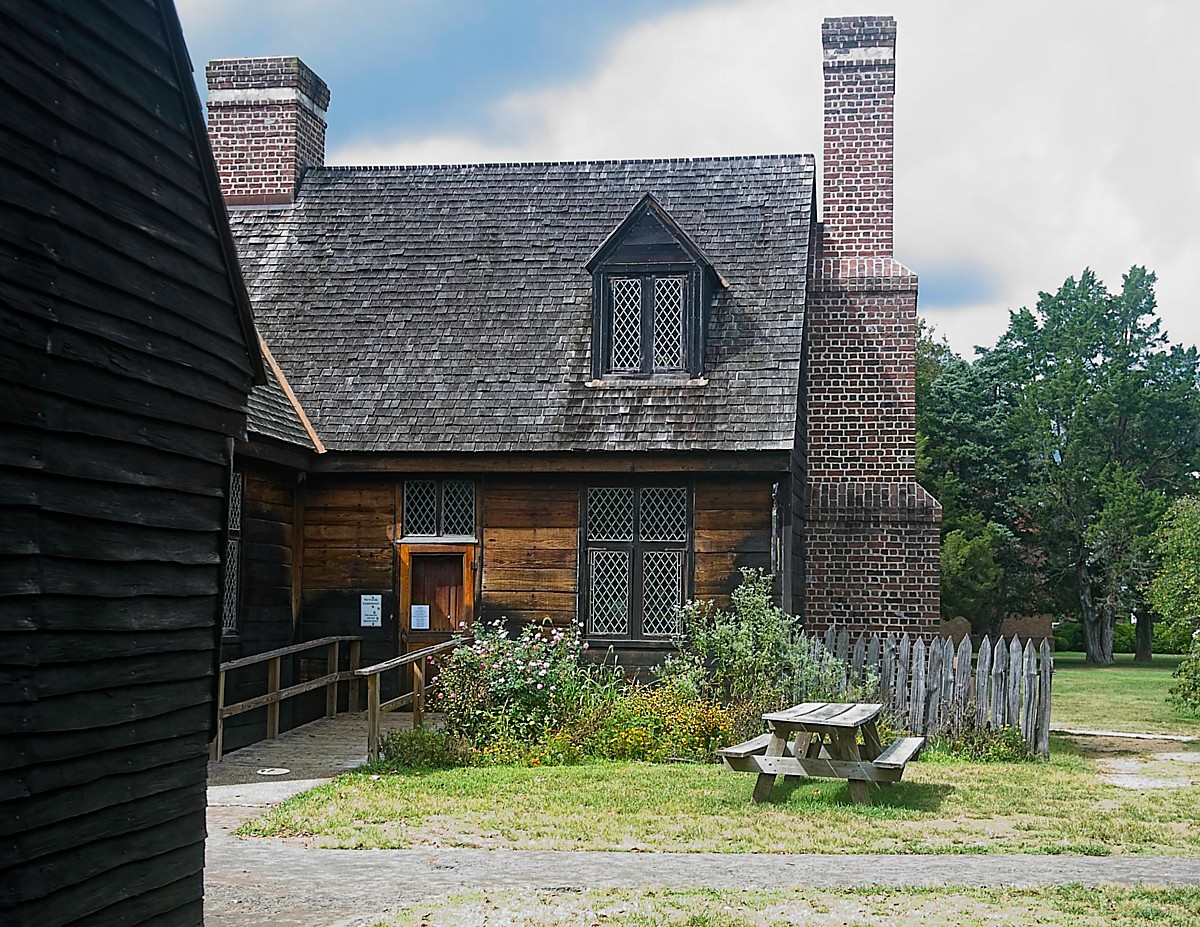
The museum was closed when we were there, although the replica of the original statehouse was open to walk through. Unfortunately, there is very little descriptive material on the layout of the original town, so the buildings currently extant are a “best guess” as to what would have been there.
I am sure there were any number of interesting people who lived here. Certainly anyone with the ambition to sail from the (relative) comfort of England would be an interesting person. Certainly one of the most unusual people in St Marys City in the 1600s was Margaret Brent, a single woman, landowner, lawyer, business woman, and one of the most influential people in the young colony at a time when most women rarely left the home.
The replica of the original statehouse must have been an imposing building in the mid-1600s. A re-imagined home from the early colonial period in the museum complex.
The Dove is a replica of the original vessel that the colonists brought with them from England. Only 57 feet on deck, she was used trading both locally and with England. The economy was driven by the trade in tobacco.
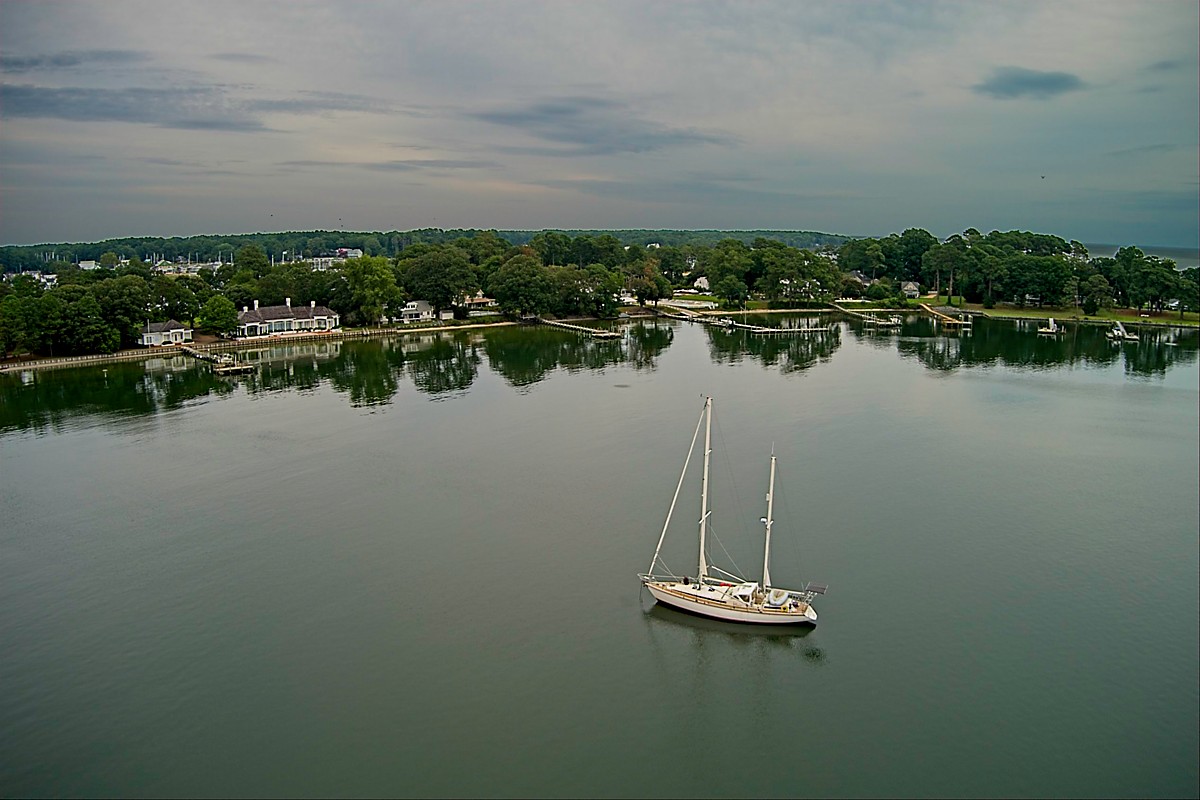
A more modern sailing vessel at anchor off St Marys City (Harmonie)
From the quiet of St Marys City, we have moved to the much busier port of Solomons, a major yachting center in the central Chesapeake. We had planned to be on the move, but we are planning to stay here for another day or two to catch a local festival. More on that soon!
If you have been following us us on our travels, you know that a few weeks ago we had an aborted delivery when the boat got hit by lightning. Well…
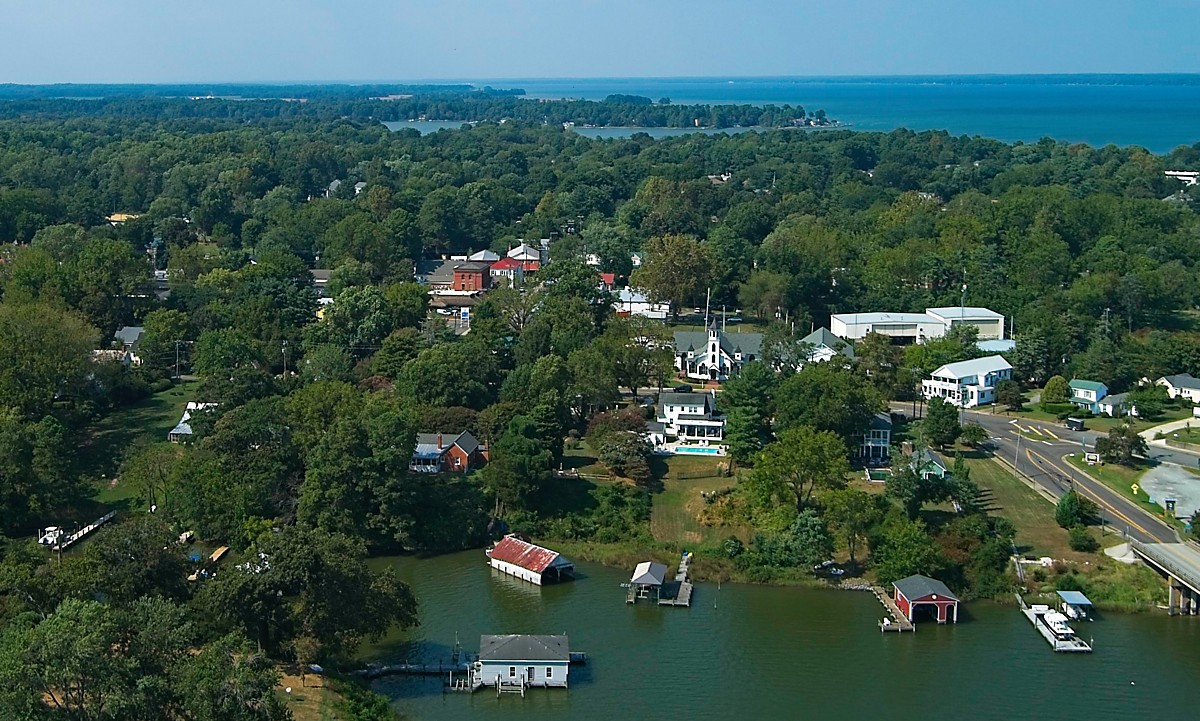
That boat–and its new owner–are now here in the Chesapeake, just a dozen miles from our anchorage in Deltaville. It had been patched up well enough for a delivery crew to motor it north. We traveled over to the tiny, remote, but picturesque, town of Urbanna, Virginia (Pop. 500) to meet up with the owner and do some training on the “new to her” boat, and help with some lingering electrical issues from the lightning strike. How small is Urbanna? So small my cell phone doesn’t work here. So small only one street has ever been been visited by Google Street View cars, and that was 8 years ago…
Profitable a long time ago from the seafood processing industry, it is now a remote, wealthy suburb of Richmond. about an hour’s drive away. Still with a lot of charm.
Back to the Little Things…
One of the lessons this lightning strike has reenforced is do not assume you have found all the problems for a very long time. Sometimes things were damaged, and fail later, sometimes you get tricked into thinking something works, when it does not. An example: Right after the lighting strike we used the electric furler to roll up the mainsail. We made the assumption that the furler was fine. EXCEPT… the delivery crew discovered that while it rolled the sail IN just fine, it could not roll the sail back OUT. Assuming the likely fault was the switch, I took that apart, and found everything fine. Opening the contol box revealed a fairly simple system of a single large relay. I pulled out the relay, and as we were cycling through the various switches, I felt a wire under my finger suddenly get quite hot. Abnormally so.
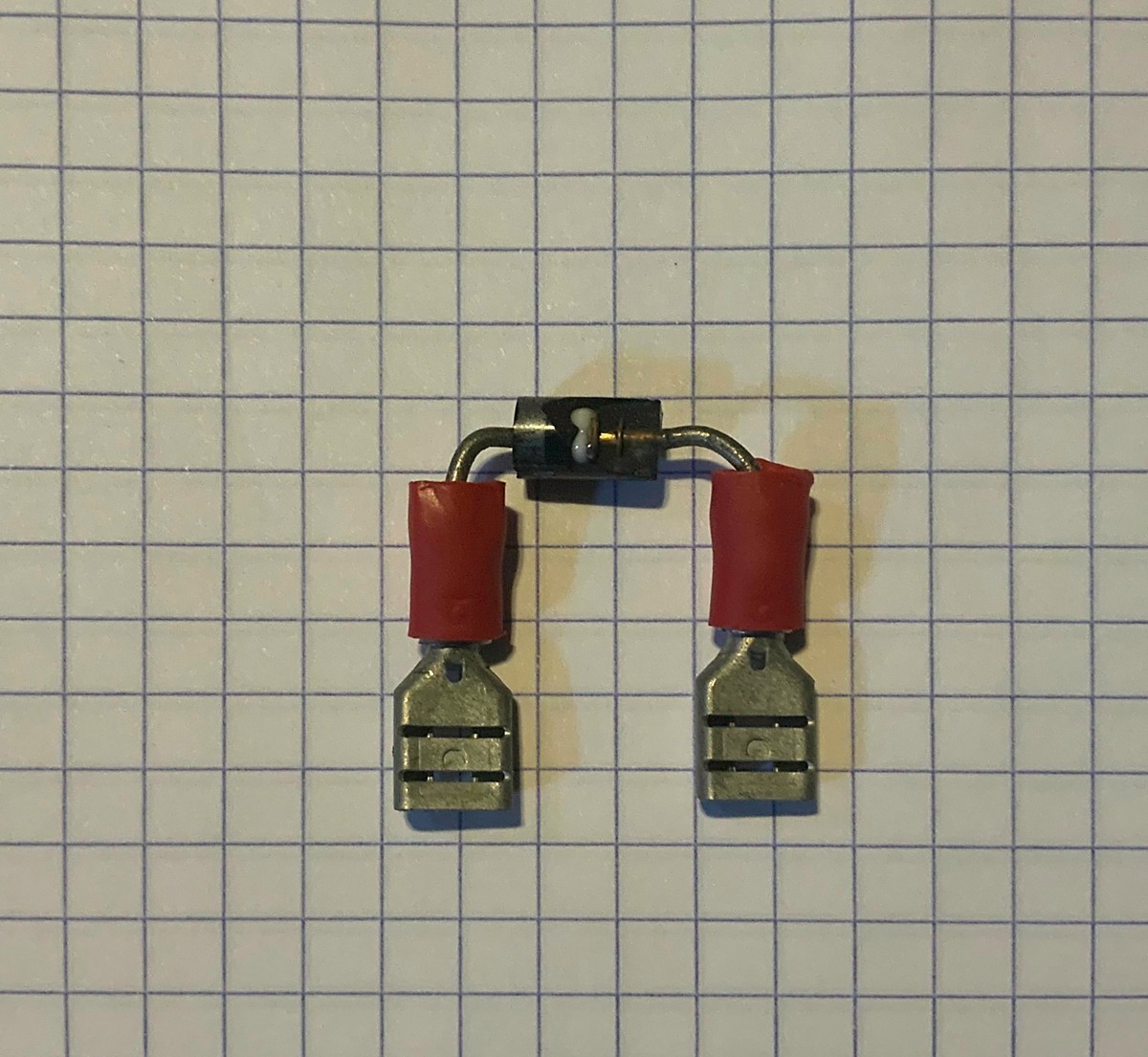
The offending piece, and its issue were quickly apparent.
Connected across each of the two coils in the relay was a “flyback diode”. These are installed to prevent the large reverse voltage that can be generated when power is interrupted in a coil from damaging attached equipment. In this case one of the two had been blown out by the lightning strike, causing to to conduct current both ways, short circuiting the control system, and disabling the coil.
Fortunately, I had a bunch of these left over from the bow thruster lift project. Total cost of parts to repair: 15 Cents.
We are anchored in Fishing Bay, in the town of Deltaville in the state of Virginia. It is about a quarter of the way up the western shore of Chesapeake Bay in the Piankatank River. (Pee-on-ka-tonk) (Has there ever been a place name name more fun to say than that?) A bucolic location if there ever was one. Not really anything of great interest around, it is just pretty enough to be one of our go-to anchorages.
Our plan to drive a bit out of the way to avoid the worst of what was hurricane Idalia worked perfectly. The local forecast includes only modest amounts of rain, and winds of less then 30 knots. The bulk of the storm will be significantly south of us with a closest approach tomorrow afternoon.
You may remember our posting a short while ago about our aborted delivery of a Hylas 54 our of Florida due to a lightning strike. The boat has been patched up, and is actually right now about 14 miles away. We will be heading over to that location this weekend to do some basic skills training with the new owner. That’s always a fun time.
We are still hopping to find a weather opportunity to run offshore and get some fishing in, but with the current level of tropical storm activity, that is looking less likely. If that doesn’t happen, there are still huge sections of the Chesapeake we have yet to explore.
We have been bouncing around off the cost of Virginia and Delaware looking for an opportunity to catch some fish. It has been beautiful sailing weather. The only catch is, that perfect sailing weather is poor weather for the kind of fishing we were trying to do! We were targeting tile fish, which means we need to fish very deep, which means we need calm winds. It just wasn’t being cooperative!
Right now we are on the edge of the continental shelf, sailing in delightfully cool, clear, weather with calm seas, and enough breeze to get us moving, headed back to the Chesapeake Bay. Our plan is to find a protected harbor to tuck into for the forecast storm coming on Thursday. Then we will see…. Maybe back out to fish? Or explore the bay?
We have been here in Hampton, VA a few weeks, and are ready to move. After the excitement of the delivery aborted due to the lightning strike, we enjoyed the opportunity to complete a few Harmonie projects at a leisurely pace.
Just as a quick update to those who might be wondering, we got an update from the Hylas’ owner today, and the bill for the electrical damage is probably going to exceed $20,000. Unfortunately, not an unusual kind of number for a complicated boat hit by the energy in a lightning bolt.
We finally received all the bits and pieces to replace our radar. Our electronics are mostly B&G brand, which is owned by the Norwegian company, Navico, which is in turn owned by the American company Brunswick. They did well by us. Our radar model was retired several years ago, but they let us slide into their “in-service” replacement program, basically getting us a current model for less than half retail price. If you are at all familiar with the pricing structure for the marine electronic market, this is a huge discount.
We have been doing this boat stuff long enough now that the idea of going up the mast to install the new radar dome is just sort of all in a day’s work, and we don’t even consider it an especially challenging or interesting project.
I have to say, some of the features of the new radar are just awesome for offshore cruising. We’ll give it a workout and let you know if it works as well in practice as it looks on the spec sheet.
As part of the radar upgrade, we also upgraded the ethernet connections on our instrument systems. We also (hopefully!) fixed a pesky window leak, and fixed some bilge pump problems.
We have a few picking up things to do, and some boat cleaning left, but in a day or three we will be back out into the ocean. Our destination will be Lewes, Delaware. This puts us in easy reach of the Baltimore and Norfolk canyons out on the edge of the continental shelf. What’s out there? Why FISH, what else? We will primarily be targeting golden tilefish, but we will be happy to pick off some sea bass, tuna or dolphinfish that present themselves.
Once we have our fill of fishing (or just fill the freezers!) we will head up the Delaware River, through the C&D Canal, and then down to Annapolis.
We set off yesterday from Fort Lauderdale aboard a beautiful Hylas 54 with a destination of Bluewater Marina in Hampton, VA. If you have been following along, you might know that is right where Harmonie is docked waiting patiently for us.
We arrived here a few days before, and had the usual boat inspection, and last minute preparations. The weather looked good, if anything less wind than we might have liked.
We got out of Port Everglades at about 10AM, and turned north. The afternoon sea breeze filled in, and we shut down the motor, and spread sail. We were soon making 10 to 11 knots over ground with the help of the Gulf Stream pushing us along. Sunny, clear, not too hot, not too cold. A perfect sailing day.
But this IS Florida in July, and it is expected that right along coast there is always the chance for pop-up thunderstorms in the afternoon even on days (like this one!) where they are not in the forecast.
Sure enough, as we approached Palm Beach the first of them appeared behind us. Not terribly large, or violent. We dealt with a couple wind shifts, and some moderate rain. The crew was enjoying counting the seconds between lightening flashes and thunder to track the approach of the storm. Right up to the point there were NO seconds between the flash and the thunder.
I was sitting in the cockpit, and felt the pick of an electric shock on my hand as electricity jumped from the metal of the dodger to somewhere else. All our instruments went haywire, and out of the corner of my eye I saw debris falling into the water from the top of the mast. We had been hit by lightning.
A quick inventory of the damage and we realized that continuing the voyage was not practical, so we headed back to Fort Lauderdale to do a more complete survey, and get repairs started. Everybody on board worked together calmly and smoothly to get things back to a point we could navigate again.
This was the first time I have been on a boat that experienced a direct strike. I was actually surprised—a little. I would have predicted something more violent. But the damage to systems was widespread, and widely random. So far, here are the wounds we know about:
Electric genoa furler, not functioning.
Bow thruster, works only in one direction.
One (of the two) chart plotters dead.
Instrument network offline.
Autopilot not working.
Inverter not functioning.
Dishwasher not functioning.
Generator does not start.
VHF antenna on the mast head: Gone.
Tricolor and Anchor lights on the mast head: Gone.
At this point the actual causes of failures haven’t been diagnosed, some might be simple, some complex, and there might be more to find. The owners have already gotten the various threads with the local vendors started to get repairs underway.
So Karen and I will be back on an airplane this afternoon to Virginia while all the king’s horses and all the king’s men work to put this boat back to condition to move offshore again.
Our trip from Charleston, SC north to Hampton, VA was uneventful. A spot or two of heavy rain, but mostly we managed to dodge any significant storms. Winds were light, and we did motor a good bit to keep on our schedule. Schedule? What is this “schedule” thing?
Well, now that we have arrived here in Virginia, we hop on an airplane tonight and fly right back south to Fort Lauderdale where we will pick up a Hylas 54 and deliver her, with her new owners, right back here where Harmonie is staying at Bluewater Yachting Center in Hampton.
In another case of “it’s a small world” the new owner of the Hylas is a former student of mine from when I was teaching sailing full time back in California.
We did get a chance to pause during our trip up here and do some fishing. It’s always fun when I stop the boat out in the middle of the (apparently) featureless ocean, and say there are fish HERE. And then very satisfying when I drop my lure down and hook my first fish before it hits the bottom.
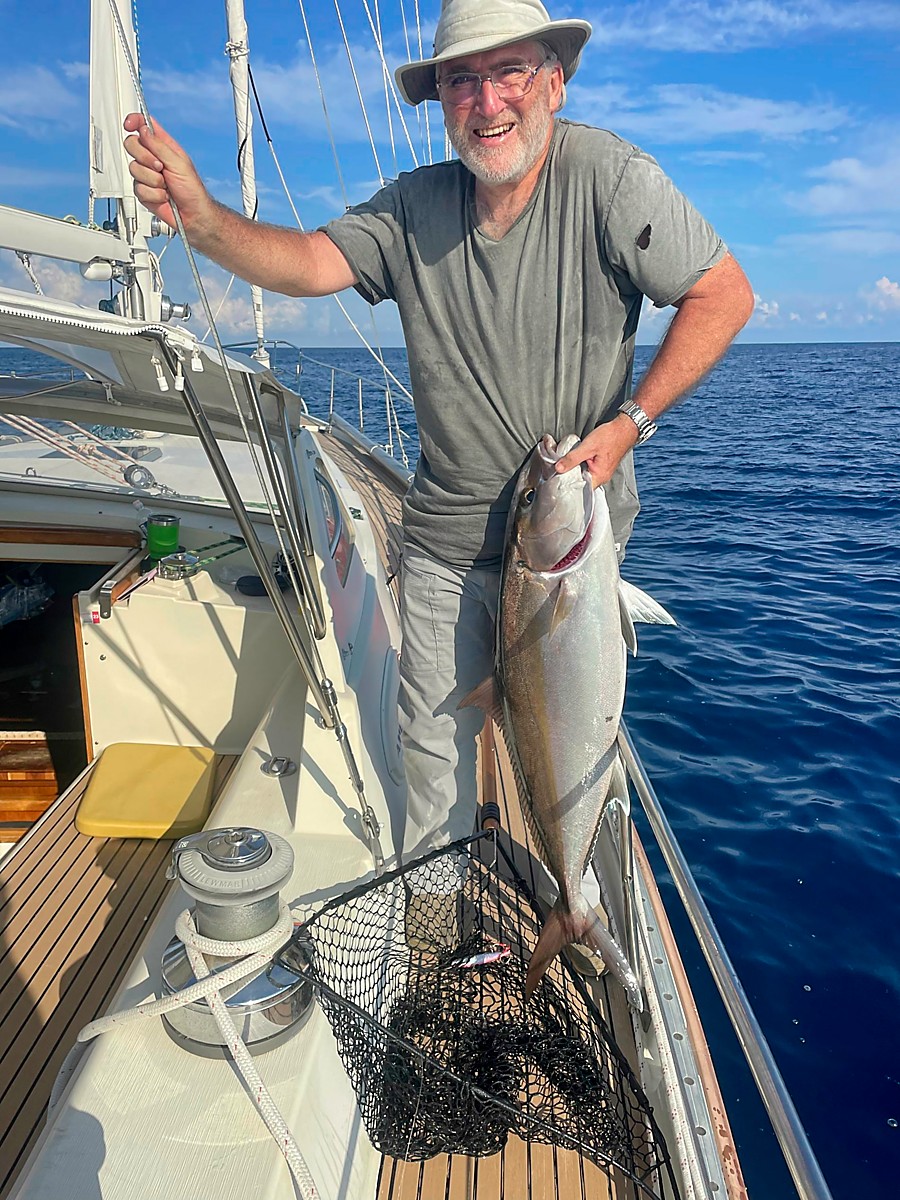
In this case the victim was a Lesser Amberjack. As a family, the Jacks are really tough fighting fish, and the Amberjacks are the toughest of the tough. Pound for pound these guys will tow any other fish backwards around the ocean all day and not break a sweat. This rather modest sized one took me almost 40 minutes to bring up to the side of the boat.
Unfortunately for us, we don’t find Amberjacks to be especially good table food, so this guy was sent back to the 300 foot deep wreck where he lived. I hooked several more Jacks of various species before we got moving again.
The approach to the mouth of the Chesapeake is always an interesting challenge. Up and down the bay there are large ports so the amount of commercial shipping is significant and continuous. At to that the largest US Navel Base on the East Coast in Norfolk, and it takes a lot of attention to a lot of things to stay safe and out of everybody’s way.
We have been enjoying Charleston over the past few weeks, and are getting ready to continue onward.
We have been staying on the MegaDock at the Charleston City Marina surrounded by boats mostly far bigger than Harmonie.
Harmonie in the shadow of the 165 foot motor yacht, Lady Elaine. Our suncover makes a huge difference in the load on the air conditioners in the summer heat.
We had a very unusual pair of failures of equipment on our trip up here, unfortunately both in systems we consider important to our safety underway.
The first indication of an issue was the dramatically reduced performance of our AIS system. This system alerts us to large ships in our vicinity, and lets them know that we are here as well. Normally we would see a large ship appear on our screen at distances of between 30 and 50 miles. Suddenly, they are showing up no further than 4 or 5 miles away. A bit of troubleshooting confirms that the radio is just not getting a proper signal. Any time you have this issue on a boat Suspect Number One is always the cable to the antenna and its connections. In our case a trip to the top of the mizzen mast confirms that the antenna and its connections need to be replaced. We have received the new cabling for the installation, and are anxiously awaiting the delivery of the new antenna. We will have this system repaired before we are back out in the ocean.
The next issue was the sudden failure of our radar, which suddenly lost communications with the display. Our experience with technical support from B&G was very much a mixed bag. The technician who helped troubleshoot the system was great. Patient, helpful, and knowledgable. Unfortunately, the phone waits to actually get in touch with someone are insanely long. Literally all day. A call placed at 10AM was finally picked up from continuous hold at 4:30PM. Even though the unit is marginally older than the official policy allows, they agreed to replace it at a steeply discounted price with a newer unit. We are not likely to get this in hand before we move on.
It was a bit disconcerting to lose both of these systems at almost the same time. You realize how much we have come to depend on these technologies to keep us safe. When I first started ocean sailing, I had neither radar nor AIS. I survived, although the level of stress involved with figuring out manually if that distant set of lights on a large cargo ship is on a collision course is something I do NOT miss!
Things To Do in Charleston
You can walk for hours in Charleston and never once be out of sight of a beautiful home. The architecture, both historic and modern, is amazing.
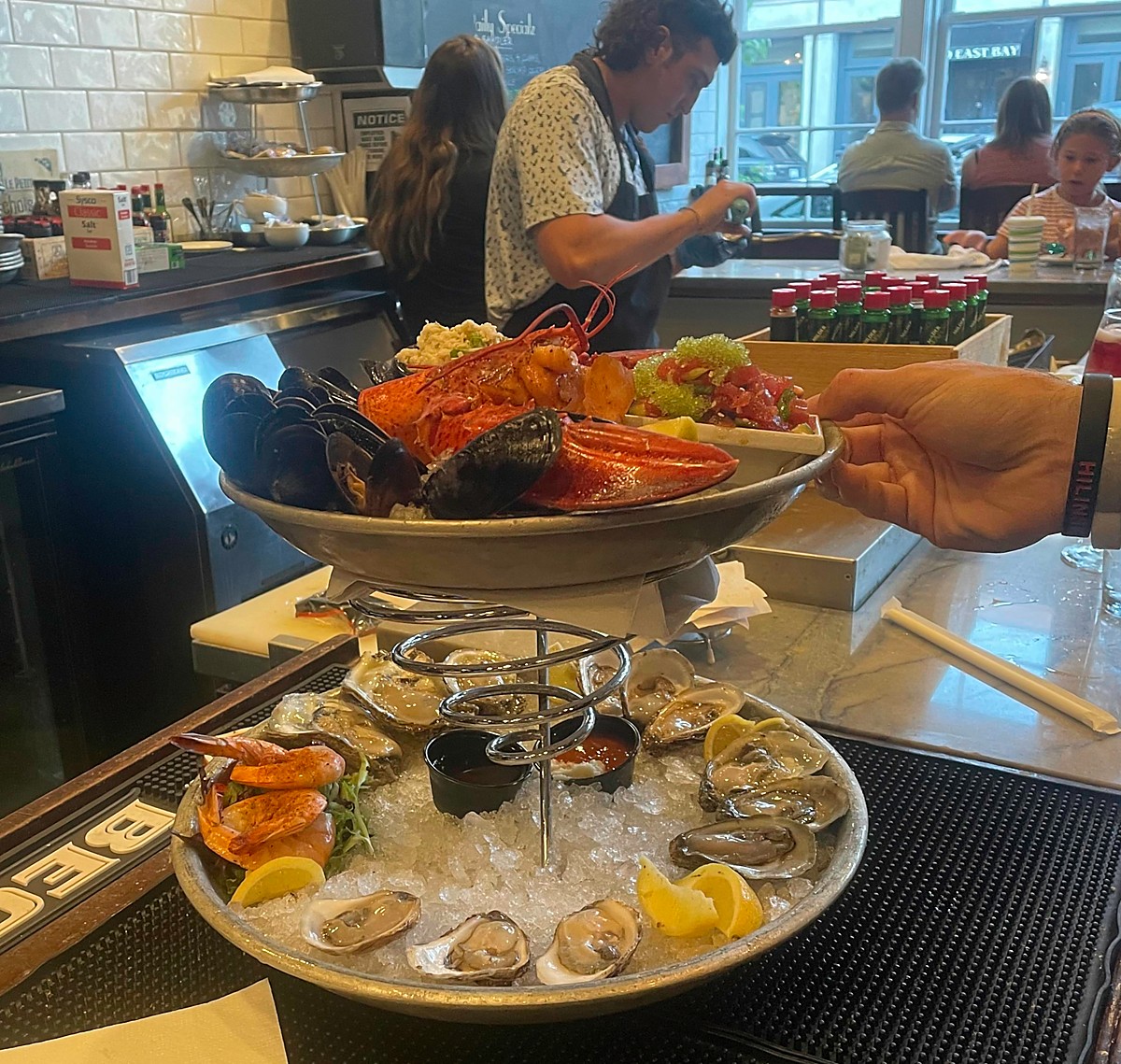
A mixed seafood platter at Pearlz.
In addition to its beautiful homes, this is a city with a very serious food fetish. Every restaurant seems better than the last. While you can find outrageously expensive food if you look for it, in general the food is very reasonable for the quality. One of our favorites is an oyster bar downtown called “Pearlz”. The chef is creative and talented. Everything we have had there has been over the top special.
Another recently discovered favorite is “60 Bull”. A small sandwich and dinner shop in a quiet residential neighborhood far from the tourist bustle. The shrimp and grits are just to die for, and I don’t even much care for grits!
We also had a chance to visit the Sistine Chapel. Or maybe the Sistine Chapel came to us? Are you now hopelessly confused?
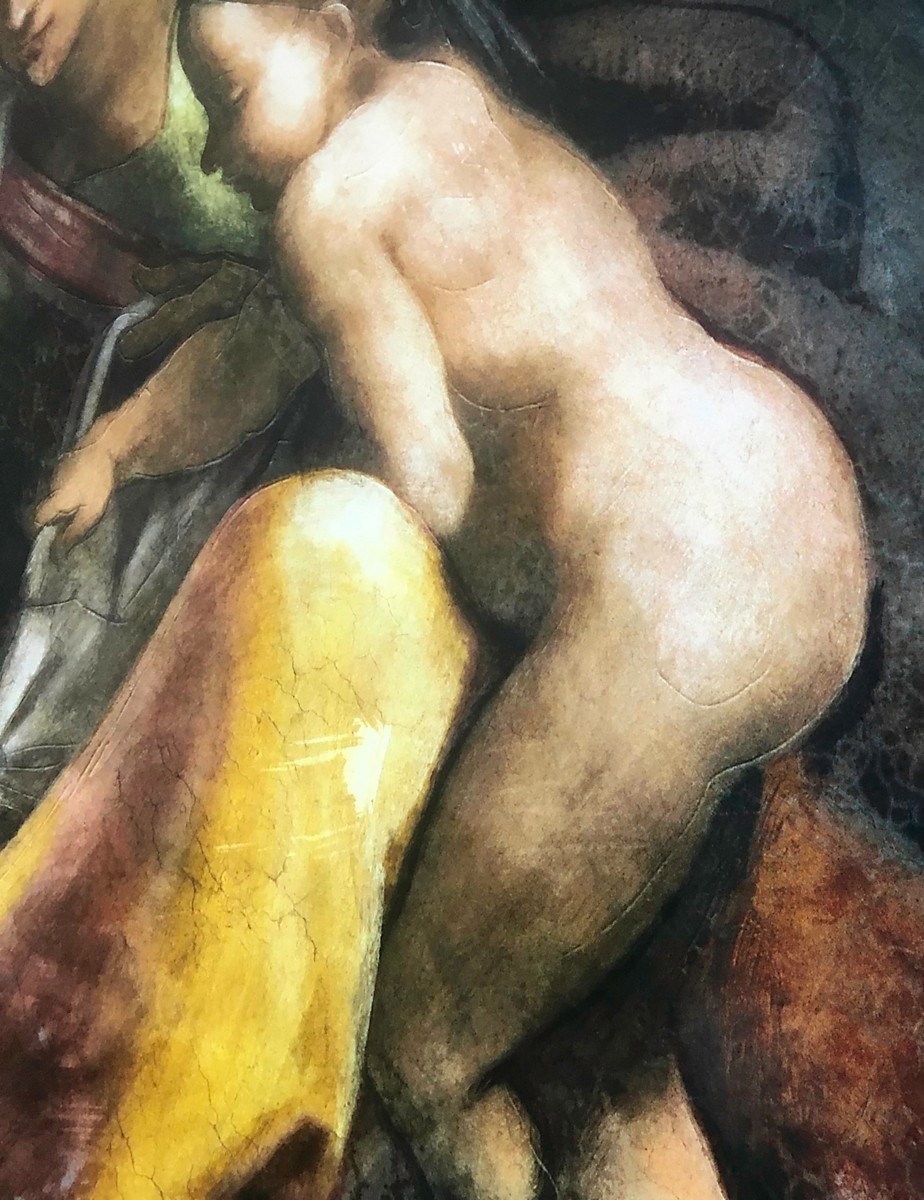
Well… there is a traveling museum exhibit that just opened in Charleston, and will be here for the next 12 months. It is life-size high resolution photographs of Michelangelo’s frescos on the ceiling of the Sistine Chapel in the Vatican. You can see these amazing works of art “up close and personnel” like nobody standing on the floor of the church itself can ever hope to. The photos are amazing. In many places you can see the scratches that Michelangelo made in the wet plaster over 500 years ago as the “rough sketch” that guided his paintbrush.
The exhibit lets you examine the master’s work in a way very few people have in the last 500 years.Here is one of the images where you can clearly see the painter’s initial scratch-sketch in the plaster.
Even if you have seen the actual Sistine Chapel in the Vatican, this exhibit is 100% worth a visit. Definitely, highly recommended.
Our Route From Here
If the weather cooperates, we will be headed out of here next week, with a destination of Annapolis. Ironically, as soon as we touch down there, we will be jumping on an airplane to Florida to pick up a delivery and head right back up to the Chesapeake. The boat we’ll be delivering is a Hylas 54, and the new owner is a former student of mine from back when I was teaching sailing in Berkeley, California. In the eight years or so I taught sailing I probably had over 2000 students, so I guess it is not surprising that they keep popping up on sailboats all over!
We left Brunswick on time to catch the ebb tide out of the harbor. As with most places we visit, we are both happy to be moving on, and sad to leave.
The view of Brunswick over our stern as we head out toward the ocean.
Our plan was to take a longer route to Charleston so we could do some fishing in the deeper water offshore. After visiting the local grocery store and seeing frozen tuna steaks at nearly $30 a pound, Karen had “requested” that I deliver a tuna for our freezer. One of our favorite dishes is fresh tuna poke, which is doubly good in hot summer weather. I feel there are a lot of fish I can deliver “on order”. Mahi-mahi, grouper, tilefish, snapper. But while tuna is a regular catch on Harmonie, it is a bit hard to predict when we will find them. I promised to do my best…
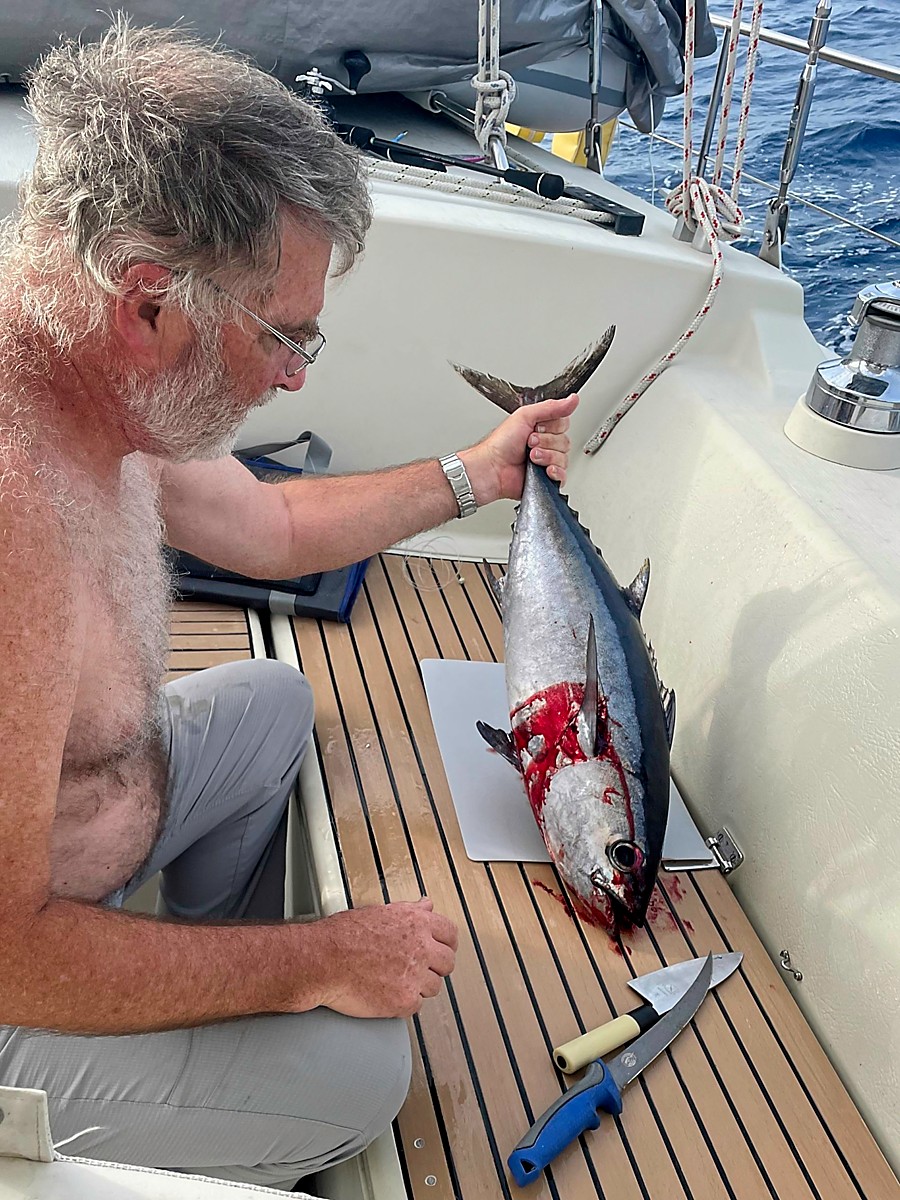
We did have a successful fishing trip. A king mackerel, a false albacore, two barracuda, a small mahi-mahi, and… a blackfin tuna! Blackfin are not large tuna, a REALLY big one is 30 lbs. But they have been a stable on Harmonie’s sushi menu because they are quite common in the waters we sail in. We can take a 10 lb. tuna like this and convert it into 6 lbs. of high-quality sushi. The fish are landed, and bled immediately, then cleaned and butchered quickly. Usually in the freezer within an hour or so of swimming, they come to our table as good as the best on the market.
And a few hours later, there are the preparations for a perfect tuna poke dinner laid out in Harmonie‘s galley, with a lot more bedded down in the freezer.
Poke is a dish from Hawaii, although it is frequently thought of as Japanese. In its most basic form it is fresh, raw fish, soy sauce, sesame oil, ginger, and garlic. Beyond that, the chef’s imagination is the limit. In the US it is almost always seen with tuna as the fish. In Hawaii, it is made with a wide variety of fish, and each family has their own variation on the theme. Served over rice, our recipe is traditional, simple and delicious.
Our trip was pretty much as predicted. We motored for the first 20 hours or so in very light headwinds, and once we turned toward Charleston Harbor entrance, the wind picked up a bit and clocked around to the east, and we sailed most of the way back in to shore. Not fast, with winds ranging from 7 to 10 knots, but comfortable and easy.
We entered the harbor just before 6AM and docked at the City Marina by 7AM. We managed to keep our eyes open until the office opened at 8 to complete the paperwork before settling down to catch up on sleep.
We have been on radio silence on our blog not because we are hiding, but because we have been busy with less than exciting things.
Tied to the marina in Brunswick Georgia, we have had one or two projects on Harmonie, but most of the time here has been spent on OPB. (Other People’s Boats). We have helped install new engine mounts in one boat, and designed and helped replaced almost all of the AC electrical system in another boat. Plus a long list of miscellaneous projects. All that work has help put a little cash back into the cruising kitty, so now it is time to go cruising again!
On board Harmonie, we did a major rebuild of our bow thruster electrical and mechanical operation. With this modification, we should be ready to be thrusting our bow from side to side for another 25 years! You can read all about it in gory deatil here: Rebuilding the Amel Bow Thruster
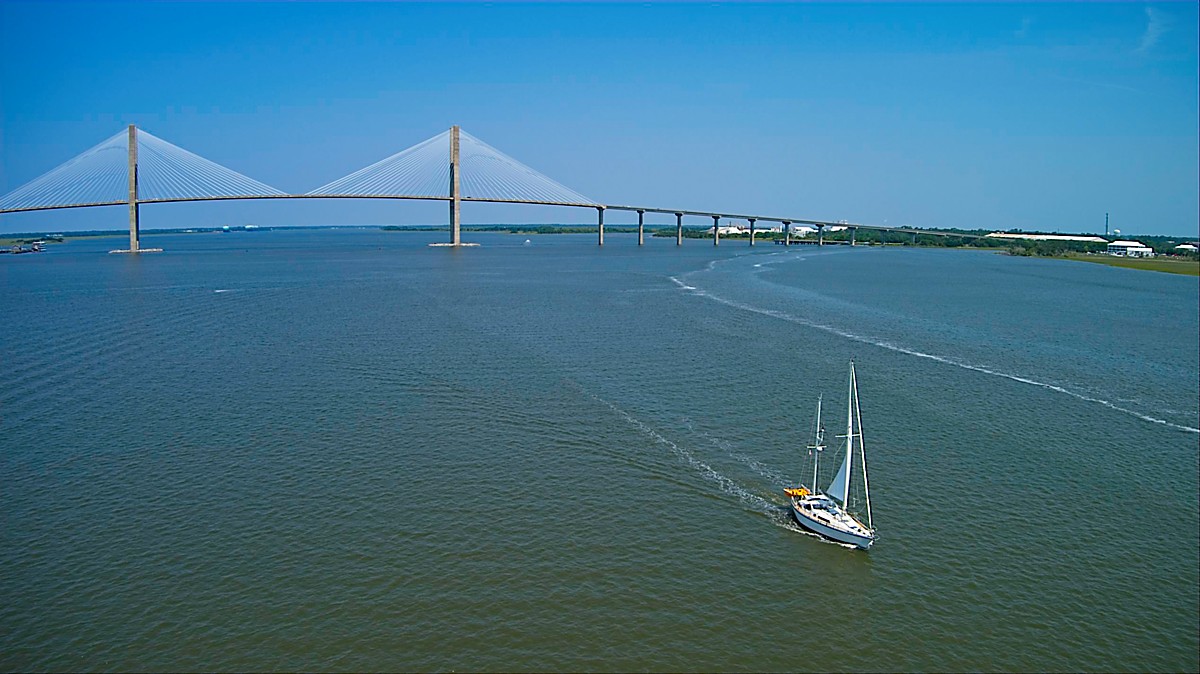
Shrtly after we leave the marina on Thursday morning, we’ll be passing under a beautiful local landmark, the Sydney Lanier Bridge on US Highway 17 . We’ll be making our way north toward Charleston, SC. A relatively quick 24 hour passage if taken straight through, we’ll be making a bit of a detour it the weather allows. We’ll be headed for deeper water about 60 miles offshore hunting for tilefish, grouper and tuna.
The detour will probably add about 24 hours to our trip, and hopefully some protein to our freezer.
Once we get to Charleston, we hope to spend a little time there exploring a beautiful and vibrant city we have always enjoyed, and somehow never got to spend as much time there as it seemed to deserve.
Once done in Charleston, we will most likely be jumping much further north, probably to some place in southern New England. Newport? Block Island? Descisions…












 fetchinketch