Having a close encounter with tropical storm Chantal wasn’t all bad. In her wake she left a strong and steady southeasterly flow of wind in the mid 20’s across the ocean This was exactly what we needed to make good time north to New York.
For a couple of years now, we have been using Saillogger as our online tracking tool. It’s a bit geeky to set up, but many boats have the hardware already in place, so it’s an inexpensive install compared to some alternatives. If you’re interested, drop me a line, and I can discuss further. One of the features is a daily email while you are underway that gives you your statistics for the last 24 hours.
For most medium-sized cruising boats, a 24-hour run of 140 to 150 miles is about average. Everybody likes to think their boat can go faster, but we tend to remember the fast days and dismiss the slow ones. The “magic number” that everybody hopes to get to is a 24-hour run of 200 miles. Two-hundred-mile days are rare but not unheard of aboard Harmonie. Our first day out of Fort Lauderdale, we did 211.
But yesterday….
We have never had a 250-mile day, so covering 264 miles in 24 hours is quite likely the fastest we will ever cover ground on this boat.
Of course, we could never cover ground that fast without the help of the Gulf Stream pushing at speeds of 4 knots or more. Well, now it is time to step off that conveyor belt and head in toward NY Harbor. We will be arriving tomorrow in the afternoon and likely anchoring unless we are very lucky with our timing of the tides.
We were supposed to be well west of a small low pressure system, but instead, rapidly shifting forecasts left us in the middle of Tropical Storm Chantel.
Tropical Storm Chantal makes landfall behind Harmonie
Overall, it wasn’t terrible, but certainly wasn’t what we’d choose to do. Maximum winds we saw were 40, gusting to 45, and waves to about 12 feet. We plotted a course that had us sailing on a deep broad reach with only a highly reefed jib out. Sailing was fast, but well controlled. Occasionally smacked around by an errant wave.
The boat and her systems did fine. While it wasn’t comfortable, at no point did we feel we were in “survival conditions” either. We were hailed on the radio by a large cargo ship passing nearby checking if we were ok, or needed assistance. I can imagine we were the subject of a bridge discussion about crazy people on little boats.
Now (Afternoon, Sunday, July 6) we are back near the axis of the Gulf Stream off Cape Hatteras sailing in a comfortable 20 knots of SSE wind. With a current push of 3.5 knots, we have been occasionally breaking 12 knots over ground. The wind is forecast to lighten over then next two days, and we expect to arrive at the entrance to New York Harbor late Tuesday afternoon.
Yesterday morning we left from Hall of Fame Marina in Fort Lauderdale, filled our fuel tank, and jumped out onto the northbound conveyor belt that is the Gulf Stream.
Since departing, we have been running fast on a broad reach with steady winds of 12 to 20 knots. Combined with a current of 3 to 4 knots, we have been running 10 to 11 knots over the ground. The weather has been overcast with widely scattered showers.
There is the possibility of a low pressure system developing along our route, but so far it looks like that will have little impact on us.
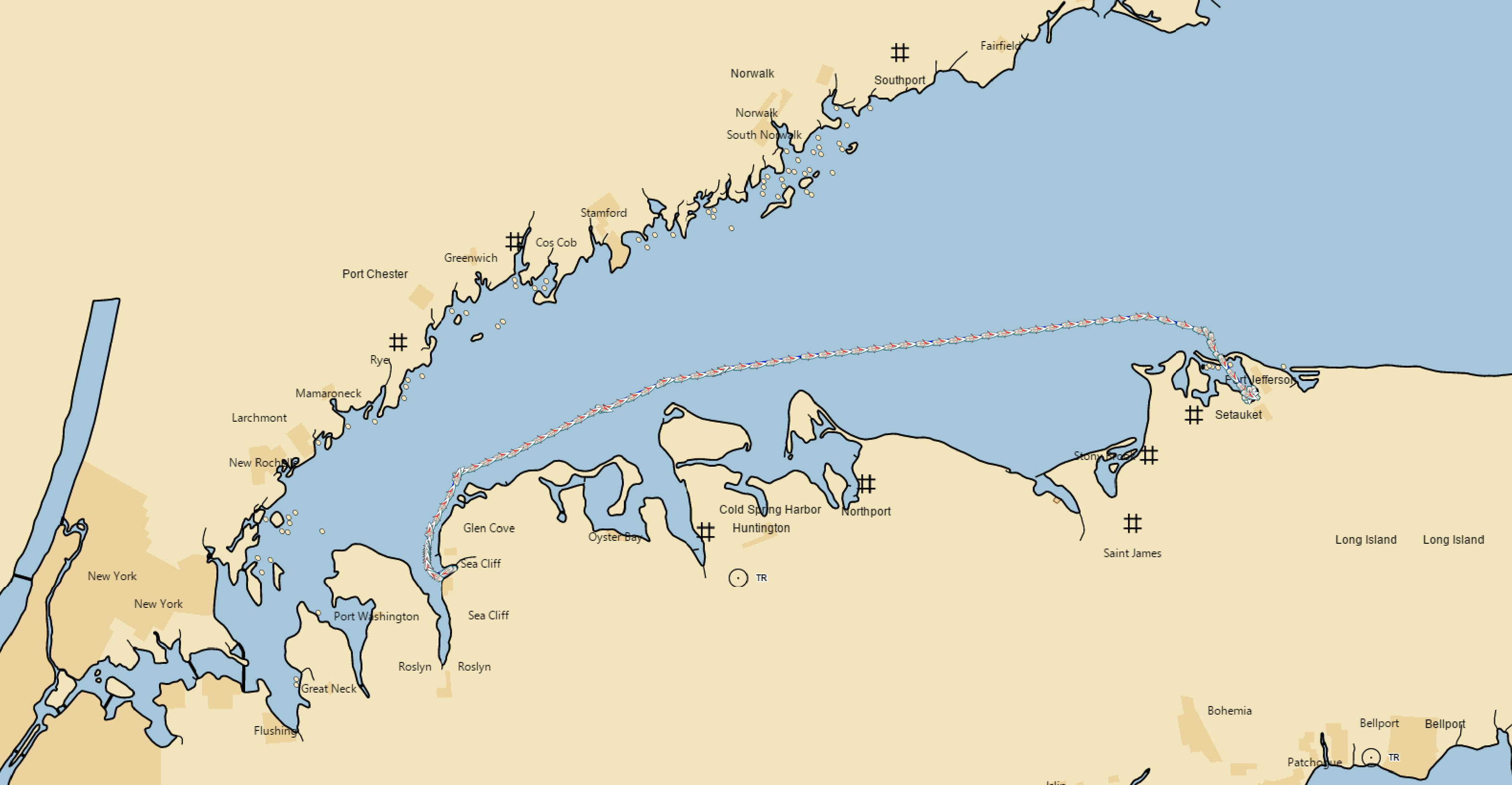
Our target destination is the north shore of Long Island, New York. We’ll be working with another Amel owner to install a replacement C-drive in his Super Maramu, and then spending a few weeks there visiting and exploring. We expect a fast trip, with favorable winds almost all the way. Our routing program predicts our arrival on Wednesday, July 9th.
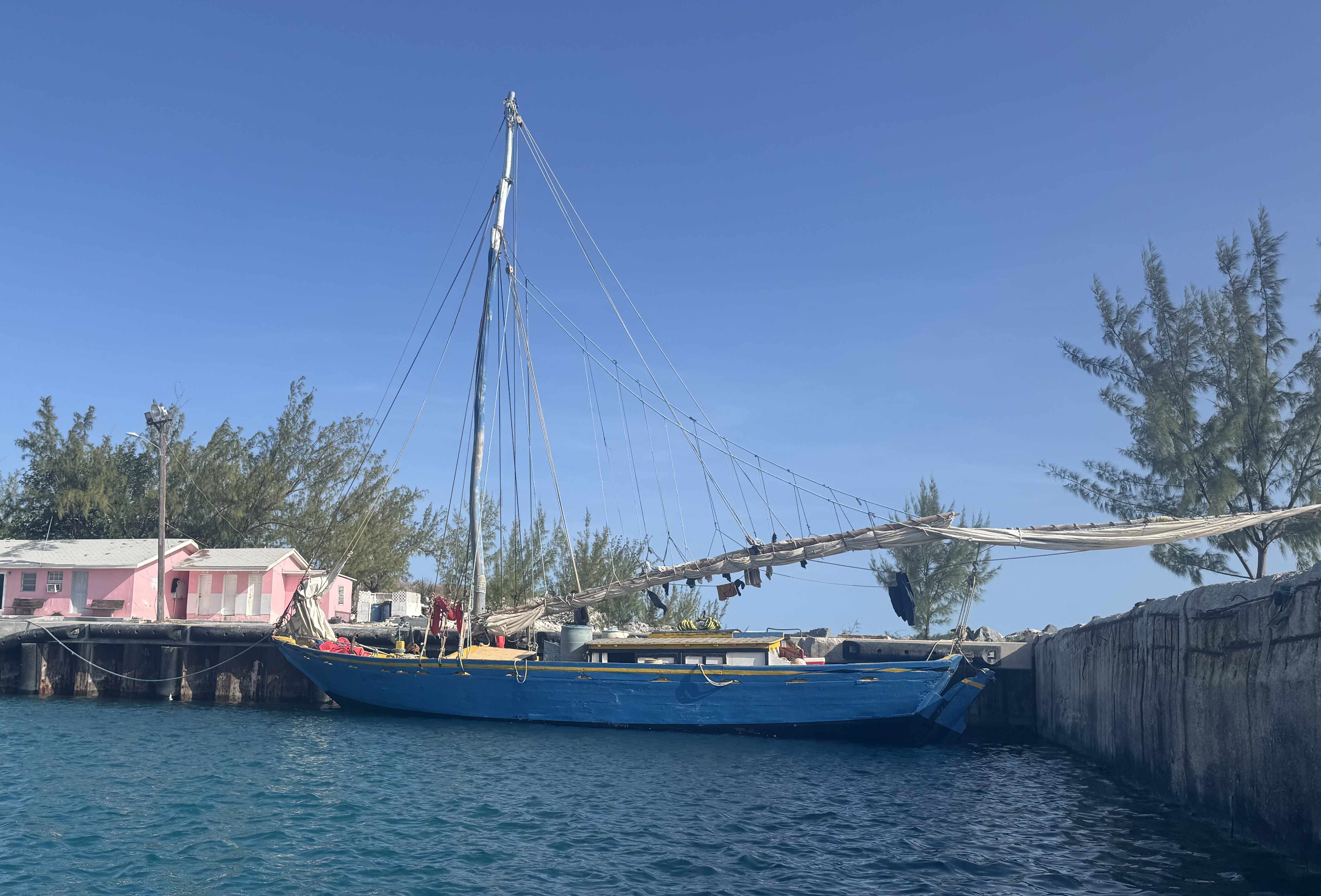
Tied up in the tiny harbor basin in Matthewtown, Inagua was this wooden hulled sailboat, with an interesting story. It comes here from Haiti to trade. I am guessing it is not at all an accident that they are here while the store’s shelves are bare several weeks after a supply boat run. They bring bananas and mangoes from Haiti and sell them here.
According to the locals there are only four mango tres on the island, and none of them are reliable fruiters, so the market is here for the tasty tropical fruit.
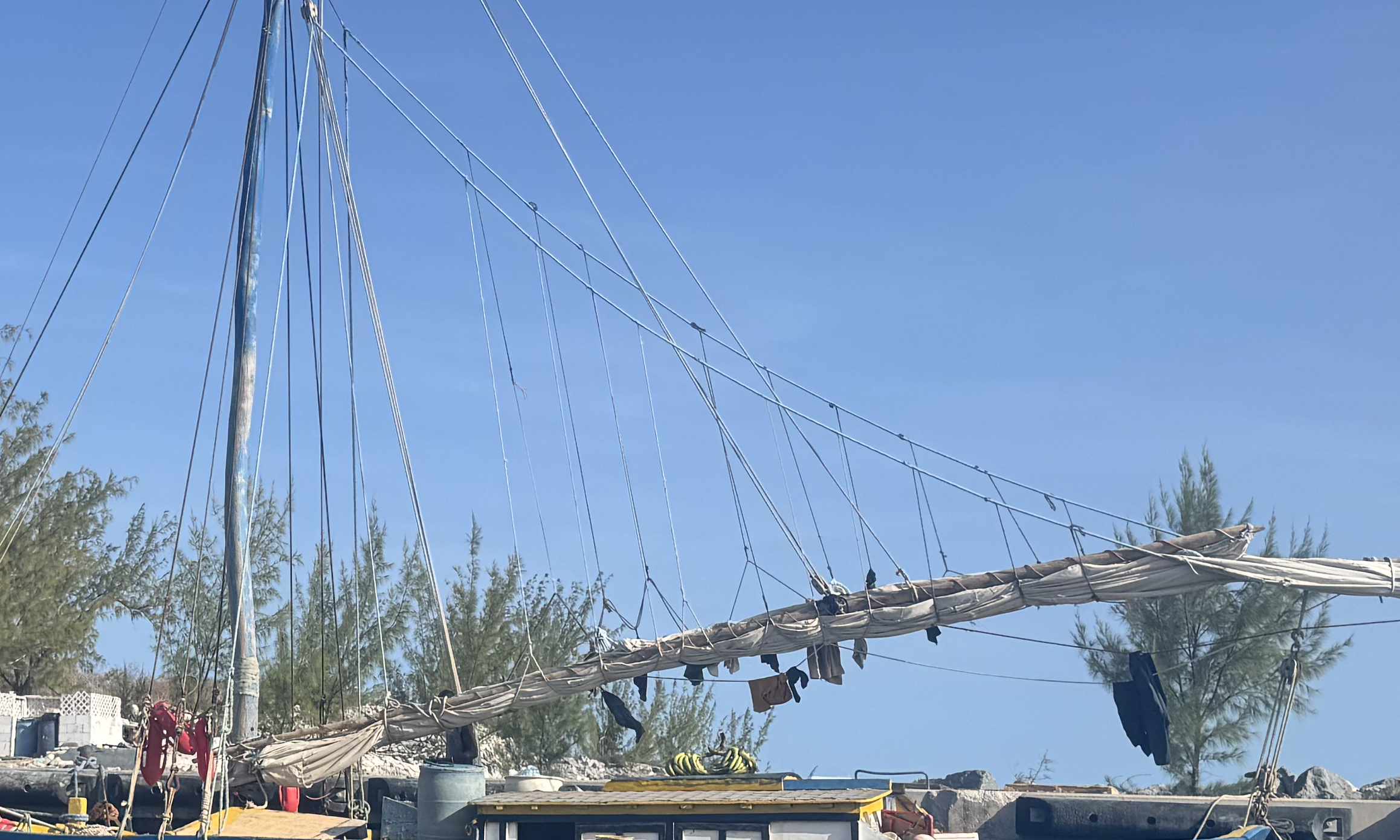
The boat appears to be well cared for, but in a very rustic way. Looking closer at the rigging, we see that the mast and other spars are, well, sticks fresh from the tree. The bark stripped off, a coat of paint applied, and off they go… The boat’s bilge pump is made of wood, and worked by pulling on a rope.
It’s rough and tumble way of making a few honest dollars, but these days a few dollars probably goes a long way in Haiti.
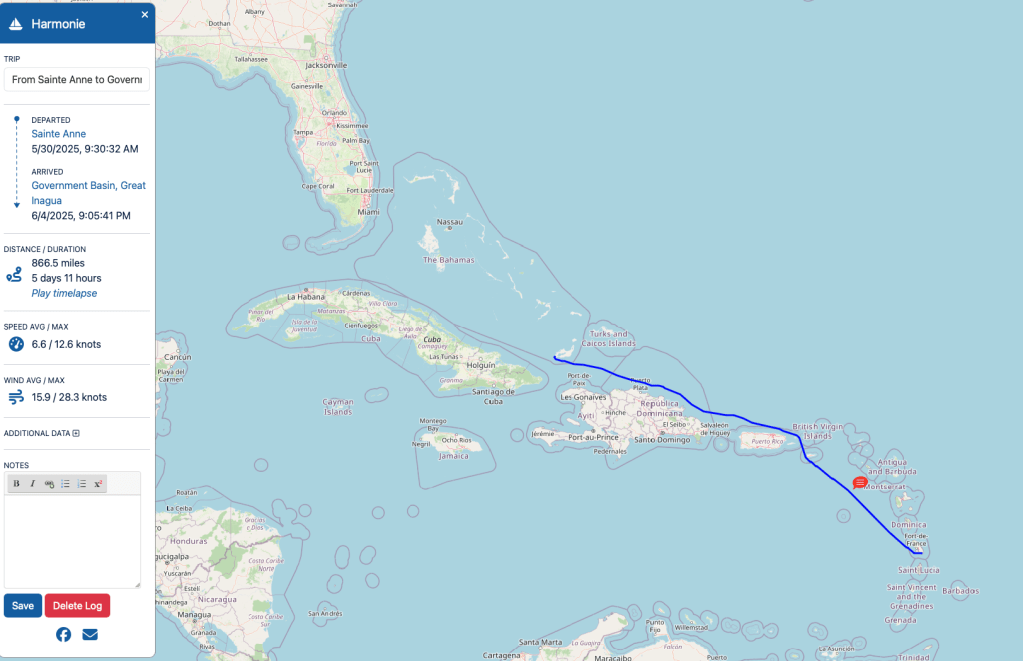
Last night we dropped anchor off Matthewtown on Great Inagua Island. These days this is the port of entry for the Bahamas that is farthest east and south, so the most convenient for boat traveling in the direction we are. The over all trip was 866 miles, over 5-1/2 days. An average speed of 6.6 knots. No engine use at all except for anchor maneuvering at the beginning and end.
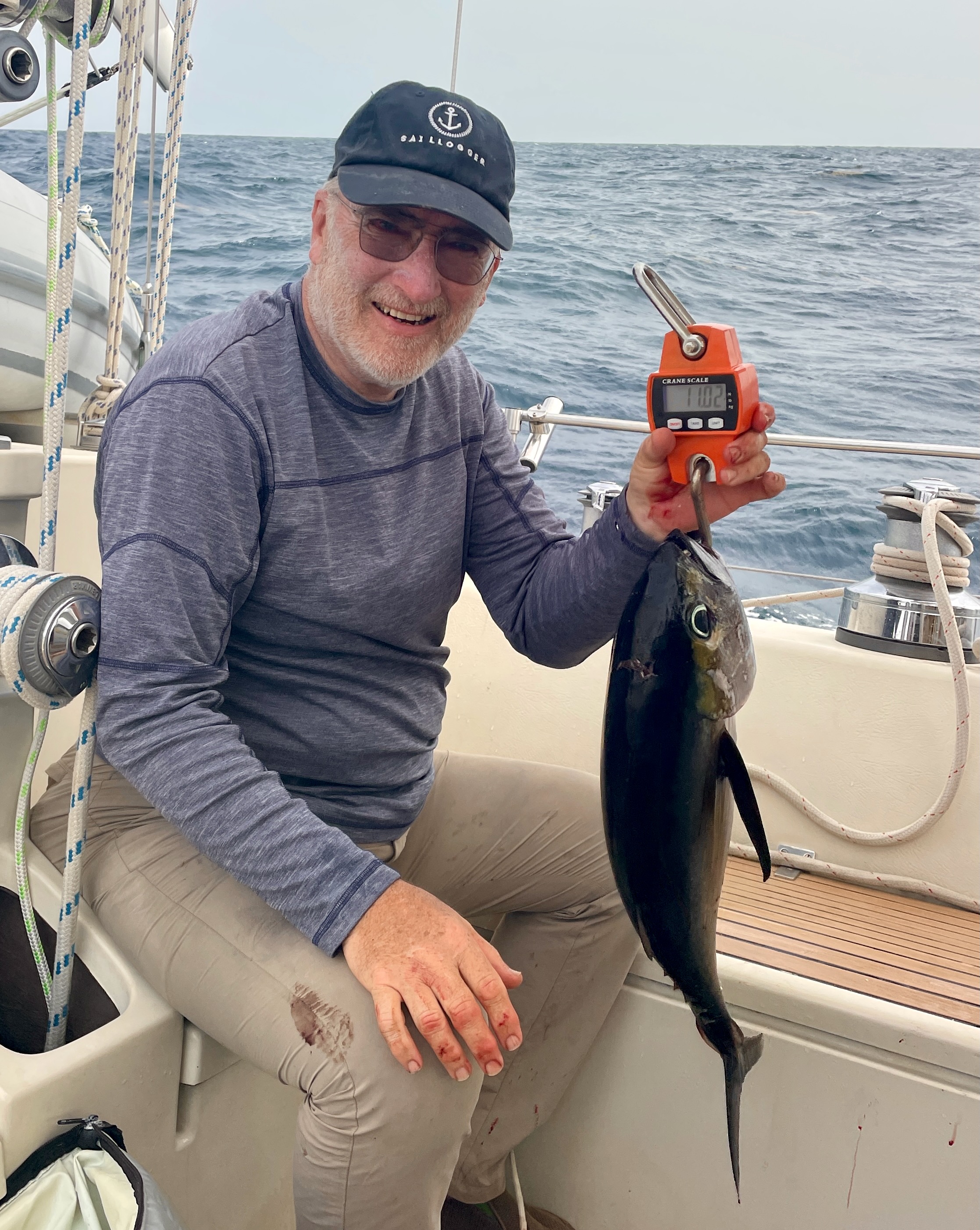
Overall the trip was easy and smooth. Winds were favorable, so much so we spent almost two days with the twin-headsail downwind rig up. The highlight of the trip was having a 10lb blackfin tuna accept our invitation to dinner.
The freshest sushi that can be had…
Karen has checked us into the Bahamas at the local customs office. She and Keven then walked down to the general store and found the shelves totally bare. Apparently the last supply boat was here two weeks ago, and the next one is not due until Saturday. We’ll be digging into the frozen and canned stock for our veggies for the next two weeks.
Our plan for tomorrow is to start an 18 hour sail to West Plana Cay, one of our favorite uninhabited islands. We’ll explore, fish, and comb the beaches for treasure, for a week(?) then head to Fort Lauderdale where we’ll take care of some doctor appointments, and we also say goodbye to Kevan who has been a great crew for this whole trip. Splitting watches 3 ways instead of two makes passages a lot easier! He will be missed.
This morning we pulled anchor from the Sainte Anne anchorage in southwestern Martinique, and set sail. As always, you can find our track and status here:
For most of the two months we’re were at the dock in Martinique I was traveling on one business project or another while Karen stayed put working as Project Manager for various repair and upgrade projects on Harmonie.
Our target destination is Great Inagua in the Bahamas. The first of the Bahamian islands with a port of entry where we can check in. We are about 5 days out from there. We hope to spend a week or two exploring, beach-combing, and fishing in the Bahamas before heading further north to the next project.
This will be an easier trip than most. For the first time in ages we have crew aboard to help with our watch schedule. Kevan has sailed with us before, and we all expect things to go easier with ta 4 on/8 off schedule compared to the 4 on/4 off that Karen and I are used to!
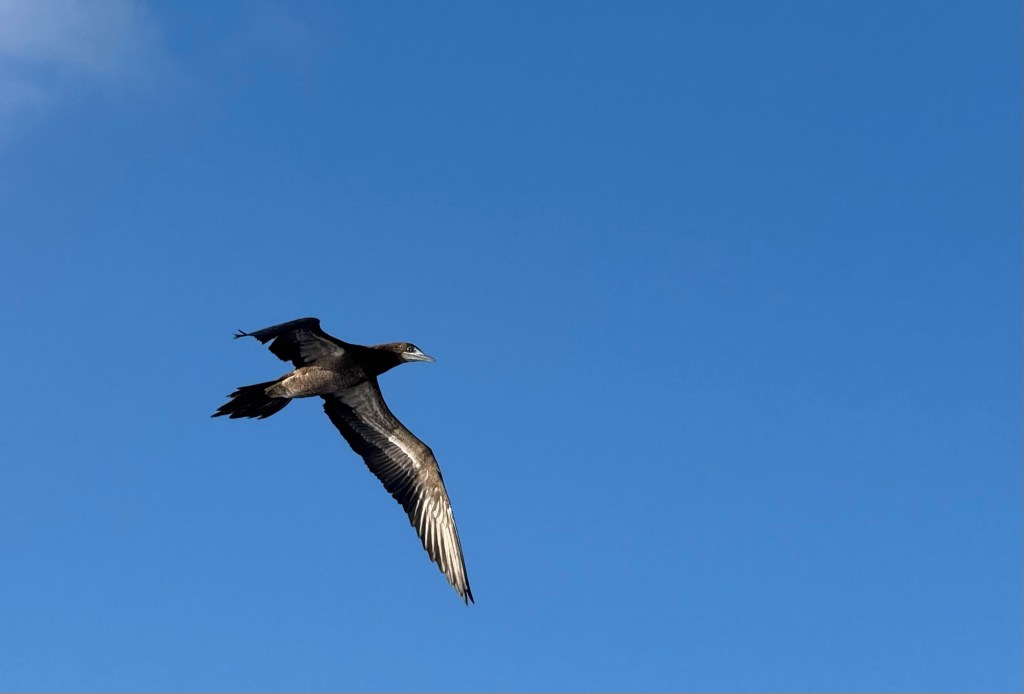
Our first day at sea has been uneventful. We have been treated to two brown boobies using the boat to help them catch fish.
Brown boobie on the wing
They soar around the boat waiting for a school of flying fish to scatter from the hull, and they are on them in a flash grabbing them just after they splash down.
Tomorrow afternoon we will come up on an open ocean weather buoy, where we hope to snag a tuna or two for the freezer.
Harmonie is performing well. It is good to be underway on our own boat.
This morning we pulled anchor from the Sainte Anne anchorage in southwestern Martinique, and set sail. As always, you can find our track and status here:
For most of the two months we’re were at the dock in Martinique I was traveling on one business project or another while Karen stayed put working as Project Manager for various repair and upgrade projects on Harmonie.
Our target destination is Great Inagua in the Bahamas. The first of the Bahamian islands with a port of entry where we can check in. We are about 5 days out from there. We hope to spend a week or two exploring, beach-combing, and fishing in the Bahamas before heading further north to the next project.
This will be an easier trip than most. For the first time in ages we have crew aboard to help with our watch schedule. Kevan has sailed with us before, and we all expect things to go easier with ta 4 on/8 off schedule compared to the 4 on/4 off that Karen and I are used to!
Our first day at sea has been uneventful. We have been treated to two brown boobies using the boat to help them catch fish.
Brown boobie on the wing
They soar around the boat waiting for a school of flying fish to scatter from the hull, and they are on them in a flash grabbing them just after they splash down.
Tomorrow afternoon we will come up on an open ocean weather buoy, where we hope to snag a tuna or two for the freezer.
Harmonie is performing well. It is good to be underway on our own boat.
The delivery of an Amel 54 across the Atlantic has been completed without incident. The boat has performed well, only minor issues. Weather was very cooperative. That makes be my first TransAtlantic trip.
We did pause at an open ocean weather buoy anchored in 13,000 feet of water to catch a tuna on a hand line for dinner. There were a lot of fish at the buoy, we could have filled a freezer if we wanted.
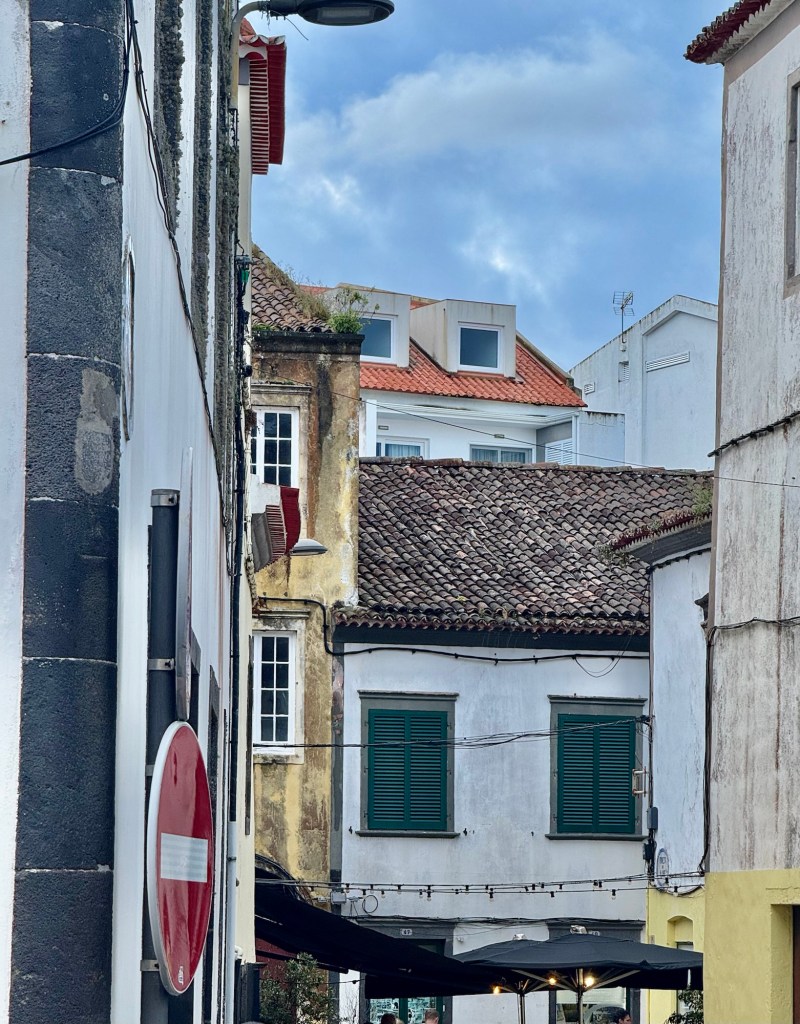
We arrived in Ponta Delgada, Azores after 16 days underway from Martinique. The town and island are beautiful, and well worth stopping for in their own right.
We spent two nights there to pick up fuel and fresh provisions, and were back back underway for about a week to our final destination of Vigo, Spain.
The rugged coastline of São Miguel, Azores.Ponta Delgata, São Miguel, Azores
And the Finish
From Sao Miguel to Vigo, Spain was another 6 days. Winds were contrary, but light. We spent about 2.5 days motoring in the final approach to the coast.
Overall the trip was straightforward. We had no nasty weather, and no serious boat mechanical issues. We left Martinique on April 19, and arrived in Vigo on May 13, with a two day break in the Azores. That’s 22 days, a very fast trip.
Right now I am on my way back to Martinique, in what seems like a painfully long series of flights and layovers. 26 hours instead of 22 days!
And Next
While I have been off traveling for a month on other people’s boats Karen has been holding down the fort on Harmonie back in Le Marin. There have been a number of projects large and small she has been managing with the local shops. It looks like they will all be done either before I get back or within a few days of my return.
We are actually having crew join us in Martinique for our sail north. Kevan has sailed with us before, and we meant it when we said he’d always be welcome back. Our plan is to head to the Bahamas. Where we will explore some of our favorite spots, and then head further north.
A Super Maramu in waiting for me in New York to install a new C-drive that was damaged in a collision with floating debris. Hopefully we can get that done in a week, and then, again, be on our way for the rest of the summer.
The past couple weeks have been a travel scramble as various customer projects have moved up to their place on the schedule.
Travels in the last month, and upcoming. Red paths complete.
A C-drive Install
After dashing south from Brunswick, GA, USA to Le Marin, Martinique, I quickly hopped on a plane back to the states. My destination was Annapolis, Maryland where I supervised the installation of a new C-drive into an Amel 55.
This was a large and complex project that took about a week. Several unexpected issues were encountered, but all were resolved, and the boat has been launched and test run successfully.
Trans Atlantic Delivery
As soon as I return to Karen and Harmonie back in Martinique, it’s time to jump on an Amel 54, and begin a delivery to Virgo, Spain. This is a long trip, about 25 days. We are just into our second 24 hours, and passing north of Guadeloupe.
Any voyage crossing the North Atlantic is a serious undertaking requiring the boat to be autonomous for about three weeks. This boat is well found, and the owner has done an excellent job chasing down issues.
Unusually, this delivery is being done with a total crew of four. A watch schedule of 4 on / 12 off seems a positive luxury.
The Home Front
Karen is on Harmonie in Marina du Marin organizing the projects we have running with the local mechanics. Almost as soon as I get back, we will need to be underway northbound away from the approaching summer hurricanes.
Last night we dropped anchor off Sainte Anne in Martinique after a long, but relatively uneventful trip. No gales, no pounding close hauled sailing. In 7 1/2 days we covered 1158 nautical miles at an average speed of 6.5 knots.
Coming down from Bermuda the prevailing winds allow the trip to be done pretty much all on a close reach. Once you get a bit south out of Bermuda, the chances of a cold front dropping down low enough to affect the trip get pretty small. What we expected, was exactly what we found. Right out of Bermuda, we had a period of light wind which had us motoring for a bit, but the rest of the trip was entirely on port tack, with winds that were fresh, and kept us moving at a good speed. Once we got further south into warmer water, we did run into a few tradewind squalls, but nothing too serious.
In my last post I complained about the amount of sargasum weed that was making normal trolling for fish impossible. That continued for the whole trip, and in fact got progressively worse as we moved south. By the time we got the east coast of Martinique, I’d estimate that about 2% of the ocean’s surface was covered with weed. I hinted in the previous post that I had a plan to catch some fish despite this.
As you can see, my plan was a success. The larger fish is a young yellowfin tuna (ahi), the smaller one is a blackfin tuna. So, how did I catch these fish when I could not troll a lure behind the boat? The key is finding where the fish are. Anything floating in the open ocean attracts fish. These fish were caught courtesy of the NOAA Weather Buoy 41049 which is anchored in 16,000 feet of water (!) pretty much right on the rhumb line track from Bermuda to the eastern Caribbean. As we approached the buoy, we dropped lines behind the boat, and as the lures came up to the mark, we had fish on two of the three lines. We lost a large mahi-mahi when he jumped and threw the hook, but were really happy with the addition of high quality tuna sushi to the freezer.
The Ahi in particular was an extremely fatty fish. There was actually a layer of white fat under the skin, which I have never seen before. If you are at all familiar with sushi, you know this is a highly valued trait. I can report that this was an amazingly yummy fish. Melt in your mouth buttery and smooth.
But Not All is Roses.
This was a good sail. We did not break much. Only one thing.
While dealing with one of those squalls, the wind climbed into the mid 20’s. As we released the main sheet to reef the sail, the piece that the French call a “saddle” that attaches the main sheet blocks to the boom ripped out of the boom. If I had seen this failure on any other boat I would have assumed it was due to an accidental gybe. We are going to turn this problem over to the Amel staff here in Martinique to fix.
Overall, it was a great trip. We caught fish. The boat performed well. We did not add to the injuries we ourselves suffered on the passage to Bermuda. Other than the few miles departing from and arriving at the islands, the entire trip was one long port tack reach.
Lessons Learned
The primary lesson I took away from this whole experience is: If you are leaving from the east coast of the USA for the eastern Caribbean, just suck it up and go to Bermuda. Yes, it can add two or three days to the underway passage time, but it ends up being a MUCH better trip. Sometimes the conventional wisdom is exactly spot one. Add to the fact that Bermuda is a delightful place, and you have a no-brainer.