Killing time…

Since our reserved slip in Charleston won’t be ready for us for another 36 hours, we spent today offshore South Carolina with our favorite time killing pastime: fishing.

I was anxious to experiment with new gear and techniques, and we stopped at an artificial reef about 60 miles offshore where we marked a large number of fish on our sonar. I rigged up one of my new jigs, with the matching rod for its first real test.

The technique of “slow pitch jigging” was one that I experimented with using improvised equipment and had good success. It is one of a series of jigging techniques to come out of Japan over the last few years. We attended a seminar while we were in Fort Lauderdale to pick up the finer points of technique and equipment. A shopping trip or two, and we were ready.

As we drifted over the reef 150 feet below us, the sonar showed us large, densely packed schools of big fish. In our past experience, these kinds of marks indicated large jacks. I was hoping the we could find a tasty grouper lurking nearer the bottom.

As I dropped the jig for the first time, the first bit came before it even got to the bottom. I wasn’t ready for that, and missed him. Not to worry, less than a minute later, before I could bring the lure half way up I was hard into a nice sized Almaco jack. The gear is light, and the fish was strong, it took a while to tire him out and get him to the side of the boat. I lost him just before landing which wasn’t terrible since Karen isn’t especially fond of the taste of jacks. But they are fun to catch!

The action continues in that vein. In fact on the next drop of the lure I land TWO more Almaco jacks! You’ll have to wait for the video to see how that happened! Every drop resulted in a fish hook up. I lost a couple jigs to sharp-toothed King Mackerel, and we decided to move to deeper water.

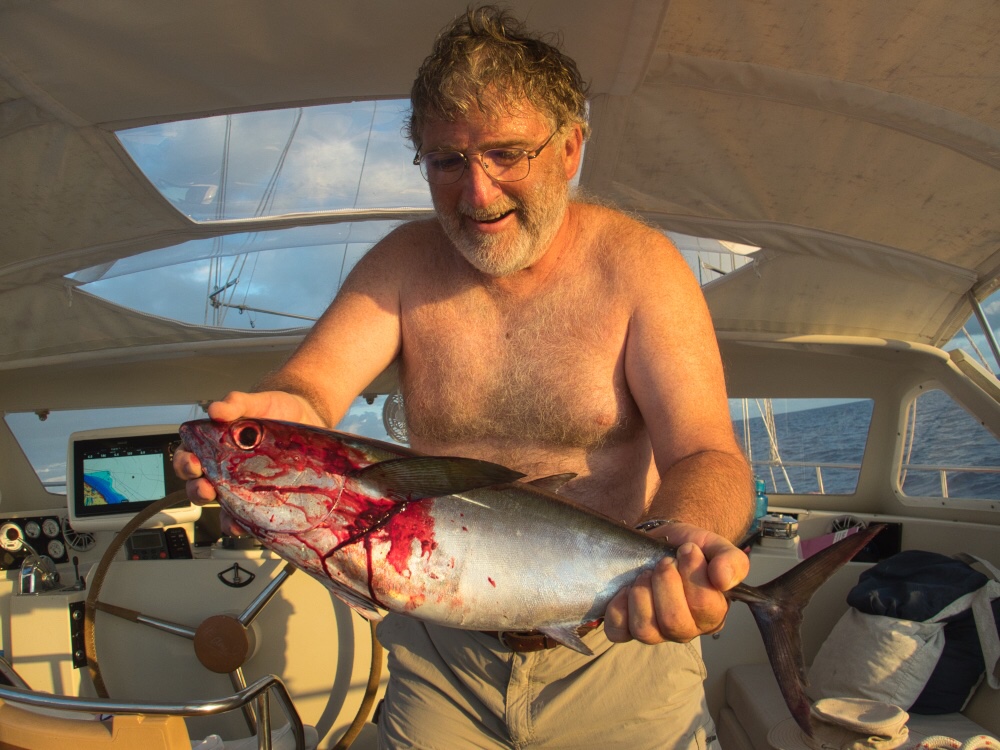
Dropping to the bottom at the edge of the continental shelf in 400 feet of water quickly hooked us up with a 12 pound Blackfin Tuna. Now THAT is a fish worth the effort to get on the table!

Further experimenting with deep fishing for tilefish didn’t get anything further into our freezer.

We are going to hangout off shore in delightful weather overnight, and target an arrival in Charleston harbor on Monday.
Posted in Underway | 1 Comment

Much faster

Time 12APR2019, 12:15 local
Latitude N 29° 16.7’
Longitude W 80° 01.7’
Weather: SE, 16, gusting 18. Scattered clouds
Course: 004°M
Speed: 10.1 knots
Water temperature: 81.5°F
Nautical miles from Port Everglades: 190nm
Nautical miles to Charleston Seabuoy: 203nm

After 24 hours we find ourselves halfway along a trip that was supposed the take 3 1/2 days. How so?

It has been our experience that the models always and consistently underestimate the speed of the Gulf Stream. The forecast was for a favorable current of 3.0 knots. Instead it has been steady at 4.1 knots and frequently surging for extended times as fast as 4.5. Combine that with a wind that has run 6 to 8 knots stronger than forecast for the last 10 to 12 hours, and we find we are making excellent time. To keep to our schedule I am running the boat as slow as comfortable in the steep confused seas that are normal in the Gulf Stream, but still we are way ahead of expectations.

Ordinarily that would be a good thing, after all when sailing “fast is fun.” Unfortunately, Charleston is not a city blessed with a large number of good anchorages, and what few marina slips they do have are full for “Charleston Race Week.”

Our plans had been to grab a dock downtown to make exploring easy. Right now it looks like we might arrive two days before our slip will be available! A bit of improvising will be in order.

Posted in Underway | Leave a comment

Northbound

Time 11APR2019, 19:00 local
Latitude N 26° 43.8’
Longitude W 79° 50.3’
Weather: SE, 8, gusting 10. Clear
Course: 004°M
Speed: 6.4 knots
Water temperature: 81.2°F
Nautical miles from Port Everglades: 41nm
Nautical miles to Charleston Seabuoy: 352nm

We left greater Fort Lauderdale about noon today after filling our diesel tank. Since then it has been a slow, steady ride with light, but steady, winds and the fast flowing Gulf Stream moving us along.

We haven’t stopped to fish yet, but we have been trolling when the sargassum weed allows. So far our catch has been limited to the tiniest little dolphin fish I have ever seen.

We’ll be in the Gulf Stream for almost the whole way to Charleston, which will add a steady 2 to 3 knots or more to our speed. The weather forecast is for several days of slow easy sailing. It doesn’t get much nicer than this right now!

Posted in Underway | Leave a comment

Back Where We Belong

We left the Lauderdale Marine Center docks this morning, and made our way down the New River, which is always a fairly short, and complex journey through a narrow and congested waterway.
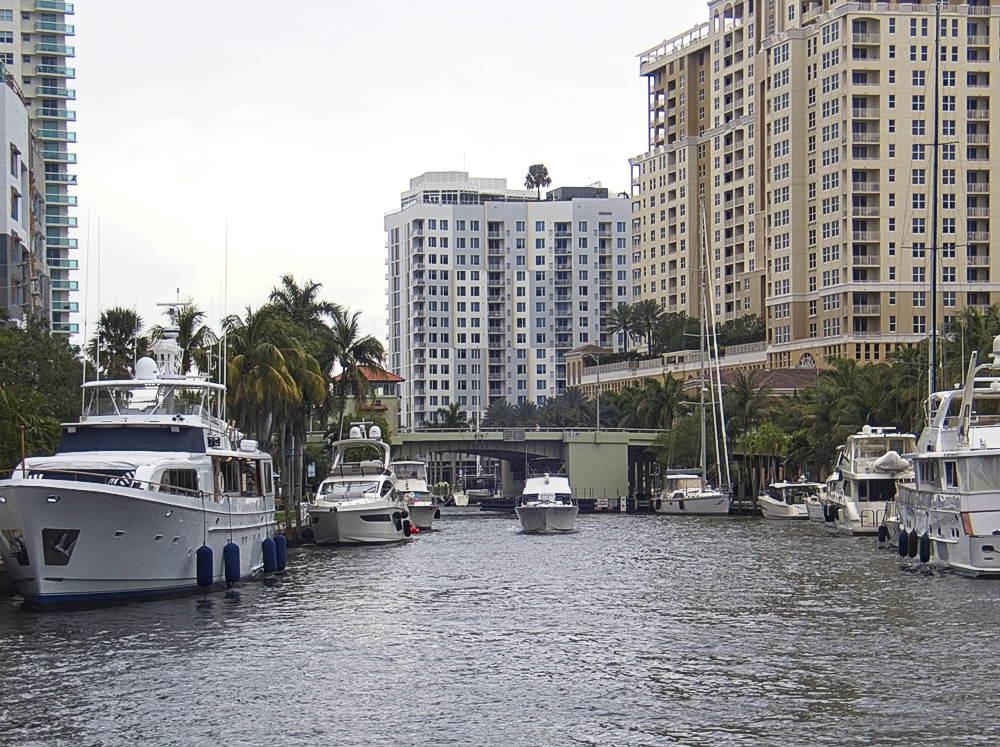
Approaching the 3rd Ave Bridge outbound on Fort Lauderdale’s New River.

We are now anchored in South Lake, Hollywood, Florida. Harmonie, and both of us, just seem more comfortable at anchor than when we are tied to the dock. We got everything we needed done, and are now off again to travel as the wind takes us.

There certainly things that are easier when we are “docked.” You don’t have to worry about how much water or electricity you use. If you want to go for a walk, you just step off and go. Usually, we’ll have a rented car so grocery shopping and other such things require little or no planning. On the the other hand, the convenience comes with a price. A price in dollars of course, but also in comfort.

At anchor, the boat always points into the wind, and the boat is well ventilated and comfortable. At the dock we find we frequently find ourselves running the air conditioning to stay comfortable. At anchor, the world is quieter and generally more “natural” than in a marina. It is true the boat moves more, but the motion is what we expect and are adapted to. If the boat moves in a marina the cause is usually some jerk diving through the “No Wake Zone” at a speed that is not synonymous with “no wake.”

Finally, when you are anchored, you are responsible for your own fate. If things go wrong, it is your own fault. For us, that sense of self reliance is priceless.

Tomorrow, we are having dinner with some friends, and then Thursday we hope to be back in the ocean, making our way north. Our first planned stop is Charleston, South Carolina, a city neither of us have explored before. The weather forecast looks great, and we hope to catch some fish, and enjoy the blue water. If anyone has any suggestions of things to do and places to see in Charleston, feel free to drop a note in the comments!

Posted in Underway | Leave a comment

Back in the USA

After our crazy weather experience at anchor a few days ago, we had a delightful sail back to the coast of Florida. For several months we have been sailing INTO the prevailing wind, and getting the chance to sail downwind is a relaxing change. The winds were mostly quite light, and the sailing slow. We coasted along at a steady, if sometimes a bit lethargic, pace.

Our crossing of the Gulf Steam was uneventful, although a bit “lumpy” as the north winds clashed with the northward flowing current. We arrived off of Fort Lauderdale at about 10PM and had our anchor down in South Lake in Hollywood, Florida by midnight.

Unlike our past experiences, checking into the USA was uneventful and went as it should have. The Border Patrol has a new system where you use a program on your mobile phone to check in. It took about 10 minutes, and that was it. We were approved.

Returning to “civilization” is always a bit of a system shock. It starts 20 miles offshore when you get within radio range of the coast. You hear so much chatter, and so much of it obnoxious and rude. The shock continues right on until you get to the grocery store, where the choices can be almost paralyzing.

It’s hard to understand the difference. Grocery shopping in the out islands is more like foraging. You never know what you’ll find on the shelf. If you see something you want, you get extra because it might not be there for months. In the USA it is hard to understand the excitement that can surge through the cruising fleet when people find out the market actually has bananas–for the first time in weeks.

We are settled in on the docks at Lauderdale Marine Center because they have the best rates around. We have some routine medical stuff to take care of, and we have a significant repair to our dinghy we need to make happen. After a few other minor things to source and fix, and then we’ll be off for points north.

Posted in Underway | 1 Comment

Oh Wow!

We hunkered down in this small and protected harbor because we knew “weather” was coming. Royal Island Harbor is small, roughly 1 mile from east to west and a quarter that north to south, and closed in except for a narrow opening game to the south.

The forecast models suggested that we would be right on edge of the nasty conditions, maybe a bit south of the worst of it. In any event, we knew that we didn’t want to be out sailing in winds forecast to be in the low 30’s. We certainly can sail in those winds but really prefer to avoid it if possible.

This morning was calm and clear. There were clouds off to the north, but nothing ominous. Most of the day continued in the same vein, and by the middle of the afternoon I was thinking we might just dodge this bullet. Not true…

We were hanging on the anchor in a very light south wind. A glance out the companionway showed a line of dark and scary looking clouds to the north. I suggested that Karen might want to get the drying laundry inside just as the first cold breath of wind arrived from the north with a spit of rain in it. The boat quickly swung around and pointed into the new wind direction, and the clouds lowered and darkened.

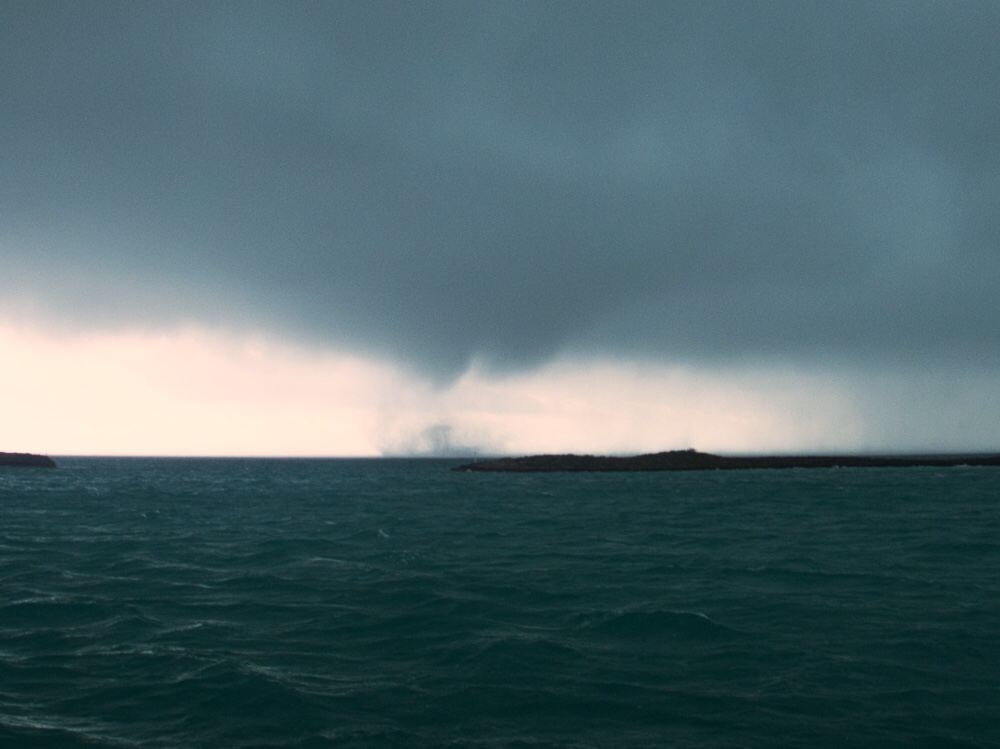
The wind started to pick up, and the world started to change, and not for the better. A hundred yards outside our snug little harbor the waters of the bay were whirling around in a circle as a large water spout started to spin up (that’s a tornado to you landlubbers).

It certainly doesn’t look like much in a still photo, but the rapidly rotating winds of an incipient waterspout/tornado are not something anybody wants nearby. Off to the right you can see the gray wall of rain.

Moments later, this was all that could be seen in that direction.

In 5 minutes the wind went from 4 knots from the south to 55 knots (!) from the northeast. Visibility was as close to zero as can be in drenching rain and blowing spray. The shoreline disappeared. All the other boats in the harbor disappeared. The bow of our boat disappeared. It was loud. It was, frankly, terrifying. Oh, yes, let’s not forget the lightening and thunder…

I started the engine so it would be ready if needed. During the worst of the blow I had the engine in gear taking some of the load off the anchor. I was at the helm watching the track of the boat swinging on the anchor as the GPS reported it’s position. We did not move a bit. That new—and bigger—Mantus anchor was worth every penny.

Right now, three hours later, we are sitting comfortably as I write with the wind still blowing at over 30 knots. After 55, 30 seems positively quiet and peaceful.

There are five other boats in the harbor: Three sailing catamarans, another sailing monohull of about 45 feet, and the 78 foot Cochise, the Dashew’s high end motor yacht. All of the catamarans dragged significantly, although none disastrously, and none in our direction. Before the front approached, Cochise had moved her position in the anchorage to get away from the crowd of catamarans in the eastern end. A wise move in retrospect.

We learned (and relearned) a few lessons. Most things we did right, and, as always, there were a few things we could have done better.

We chose a well protected place to wait out the weather, even though it took us a day or more out of our way to get here.

Whenever we anchor, we always prepare for the worst. We had our anchor set with enough chain out that we didn’t need to make frantic adjustments when the weather turned unexpectedly bad. Our anchor, chain, and snubber all did exactly what they were supposed to, in conditions worse than we expected.

In the case of bad weather the boats around you are likely to be the most dangerous things. Knowing the direction the wind was going to be coming from, we had positioned ourselves away from the crowd.

Winds over 45 knots really limit what you can do. You can’t see. You can’t walk upright. Improvising in case of a problem is really, really hard. If we had gotten in trouble and really needed to run, we should have had a buoy ready to clip on the anchor chain so we could drop it and recover later.

Overall, it went well. The boat, her systems, and her crew, all did well. Tomorrow’s forecast is for winds of 10 to 15 knots. Perfect for our next sailing leg.

Posted in Underway | 4 Comments

Famous Neighbors…

We are anchored off of Spanish Wells in Royal Island Harbor. This is a tiny little bay that is unusual in this area of the Bahamas because it is an anchorage with excellent protection from wind and waves from all directions. We are here because a late winter cold front is forecast to pass through tomorrow. We’ll hunker down here until the wind and rain pass, and then resume our route west.

Cochise

A couple hours after we arrived this morning an unusual looking aluminum hulled motor yacht came into the anchorage. Of a very distinctive design, it turned out to be the 78 foot long Cochise, the personnel boat of Steve and Linda Dashew. Steve is one of the best know yacht designers around and the FPB series of motor yachts is his ultimate idea of what a cruising yacht should be.

After we left Mayaguana we spent a few days at East Plana Cay, another uninhabited member of the Plana Island group.

With a small, poorly charted, and rather unprotected, anchorage the island is not often visited. The only evidence of other humans we found ashore were some footprints in dried mud in the interior of the island. The anchorage was beautiful, the beaches full of shells.

In the early 1960’s this island was the last place in the world where the Bahamian hutia could be found. These guinea pig-like rodents keep the vegetation diversity limited to those plants they find inedible. Despite that the island is green and beautiful. After visiting several islands that are now home to large populations of hutia, we have yet to see a live one. They apparently are very strictly nocturnal.

Foootprints we did find on the island were:

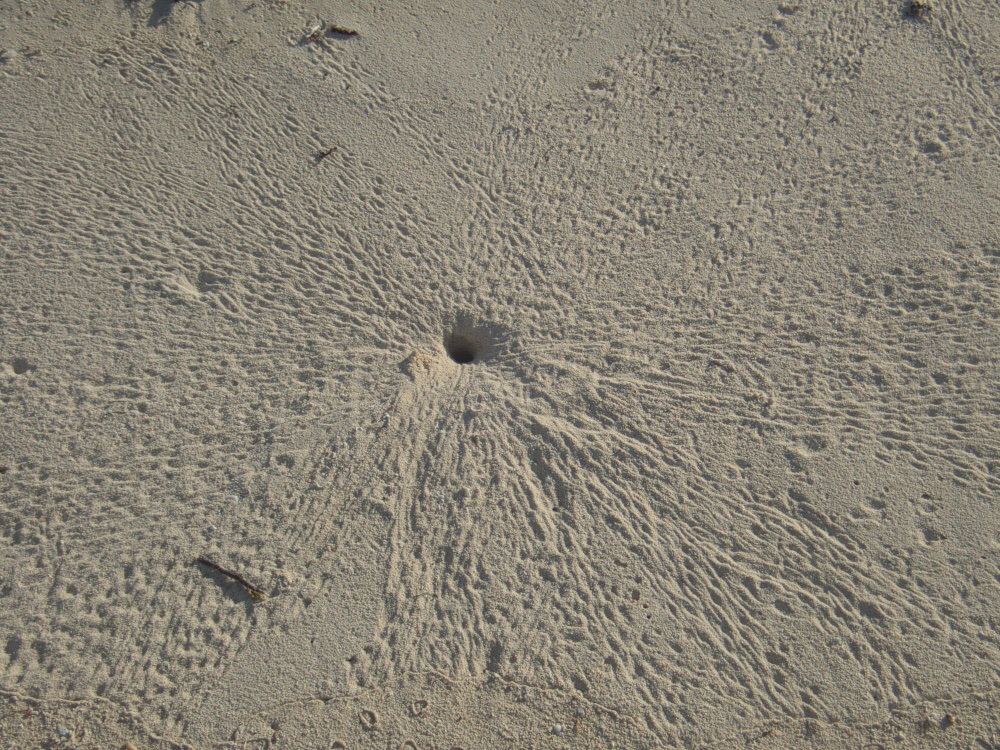
Land crab “foot” prints
Lizard tracks
Tracks of the elusive hutia

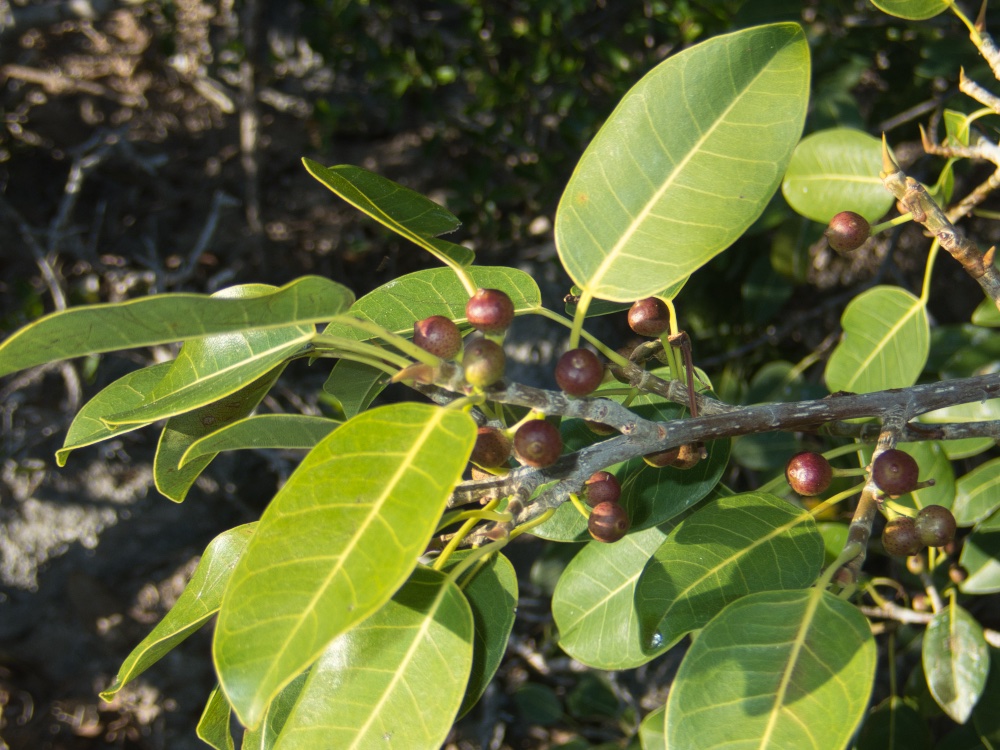
The most common trees on the island are the machaneel tree, “the little apple of death” with sap so nasty if you sit under the tree in the rain it will raise scarring blisters on your skin.

Don’t sit under this apple tree with anybody!

A fair number of Turk’s Head Catus were to be found. A normal looking green barrel cactus, with a large red flower stalk.

Turks head cactus

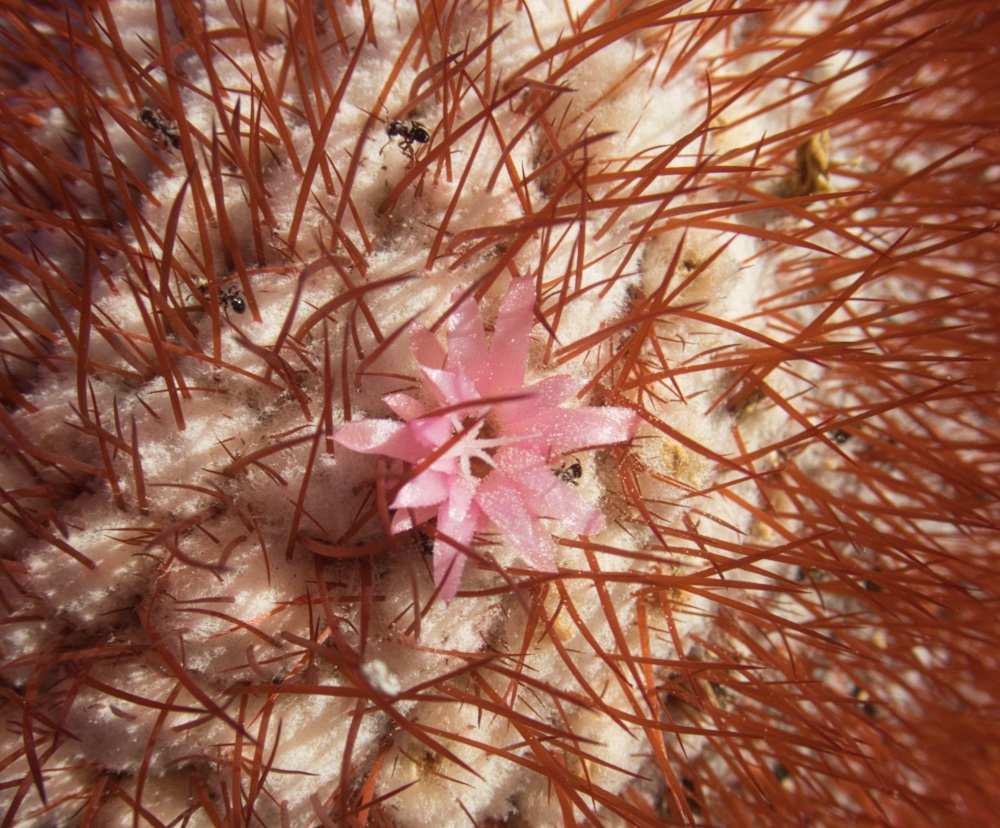
The flowers themselves are tiny, and buried down in the spines, probably designed to be pollinated by ants.

Turks head flowers

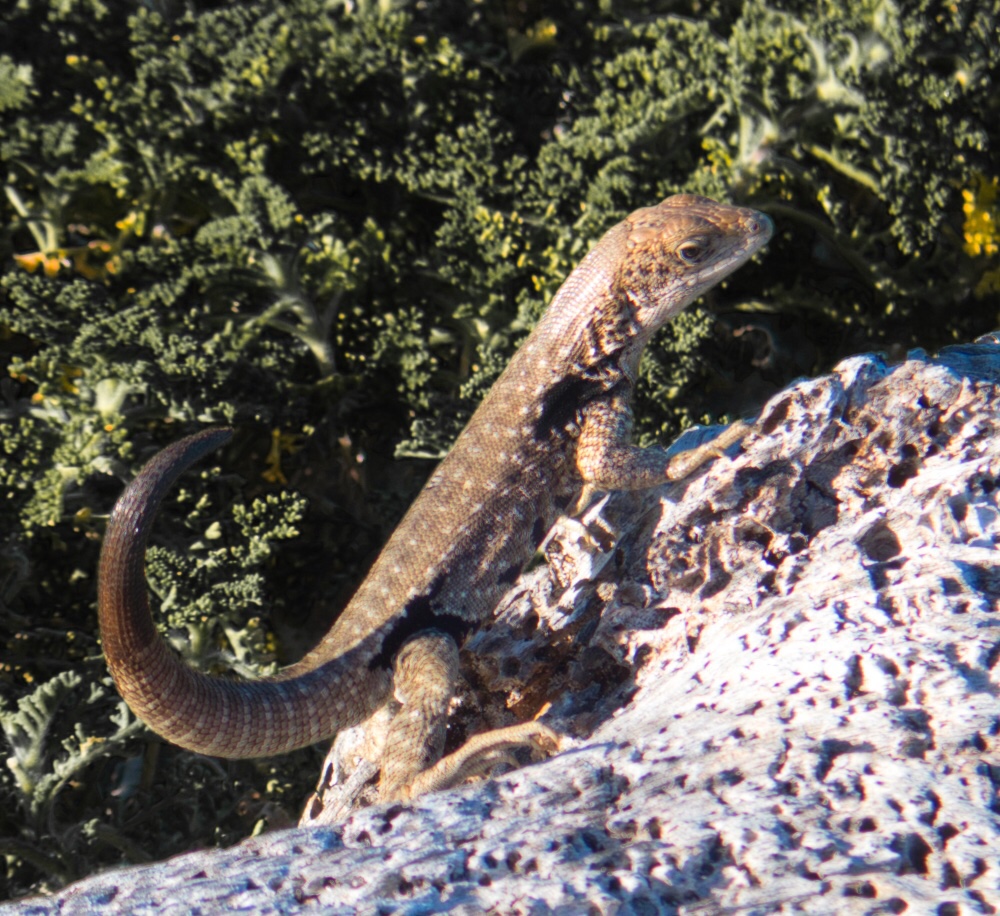
The island had large number of curly-tailed lizards of a species different than we have seen elsewhere.

The East Plana version of the curly tailed lizard

And a resident pair of nesting osprey who have been adding to this nest for many years.

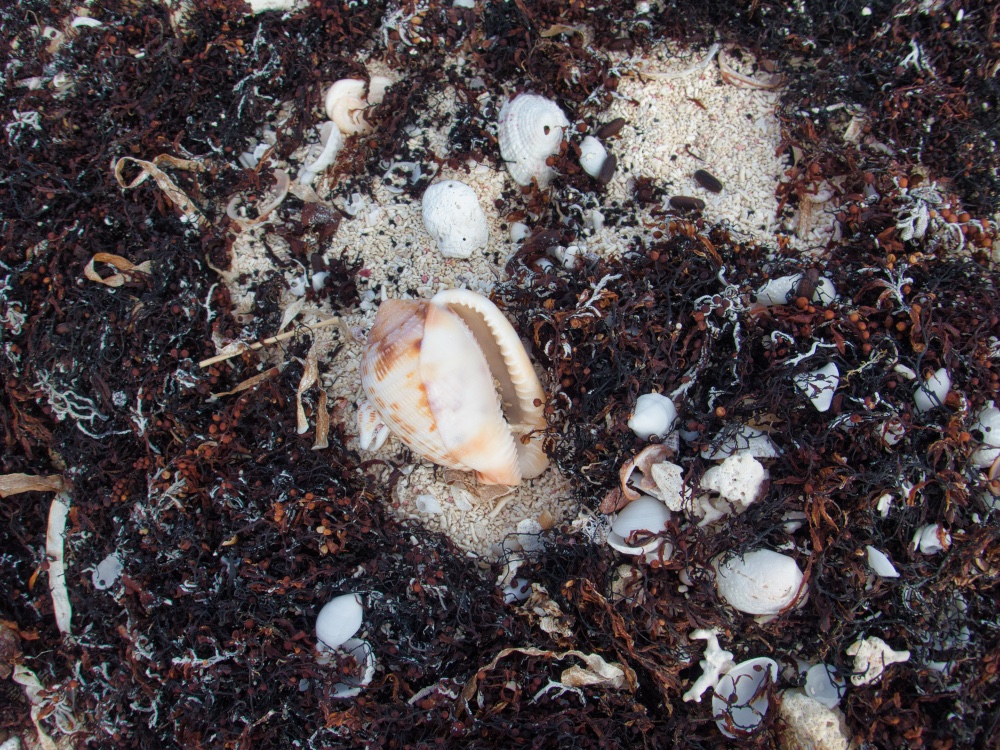
In her beach combing Karen was determined to find a helmet. Always helpful, I called her over when I found one…

She did better herself, finding the kind helmet shell she really wanted…

It is an unfortunate fact that on only ocean island these days there will be lots of trash. Much of what we see is lost bits and pieces of commercial fishing gear. Here, for example, is a large piece of a net…

Sometimes you find something less common, like this radio buoy used by long line fishermen. Long liners fish with baited hooks suspended from long—VERY long—lines. Every 10 miles of line, they attached a radio buoy. so they can keep track of the lines. Tuna and swordfish are the most common targets of they fishery. Apparently, sometimes the buoys themselves go walkabout…

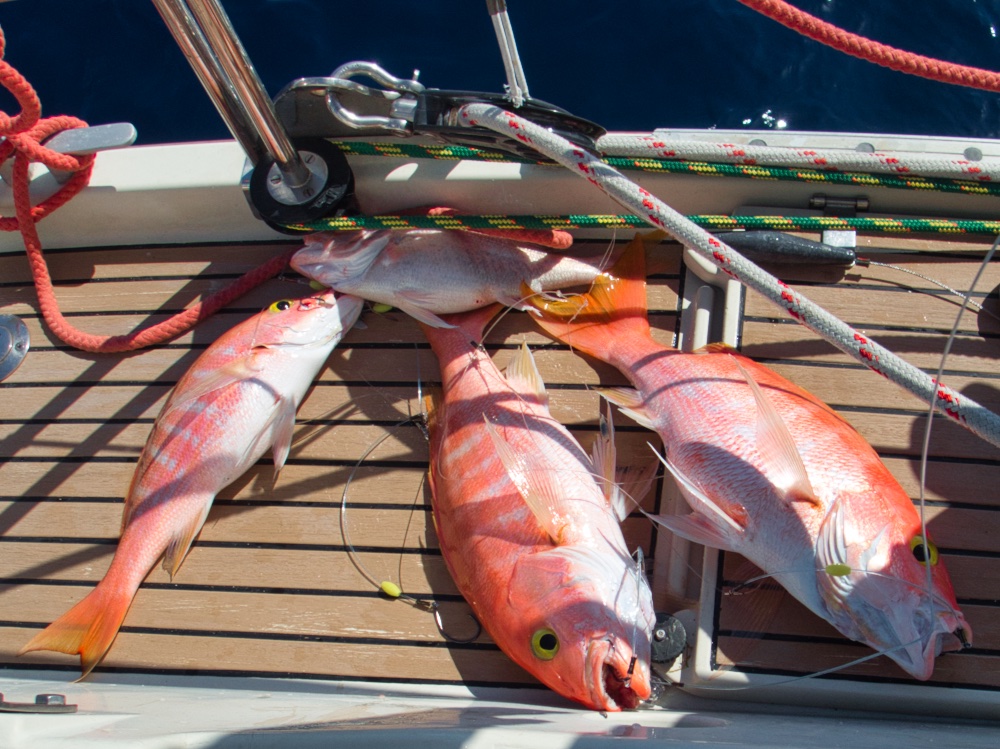
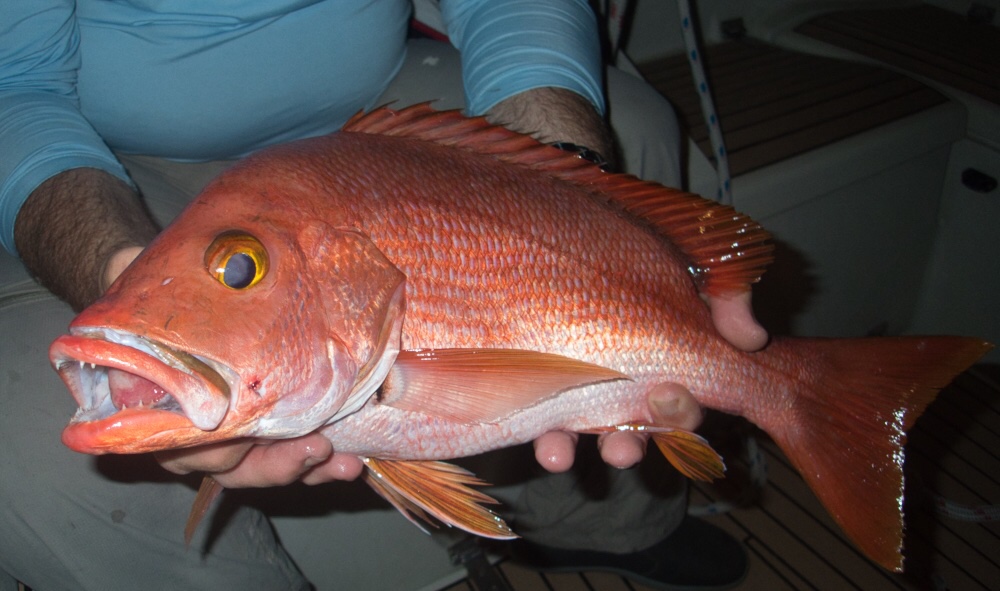
We did some fishing ourselves in the deep waters surrounding the island. This is one pull of line from 600 feet deep. Three silk snapper, and one red snapper.

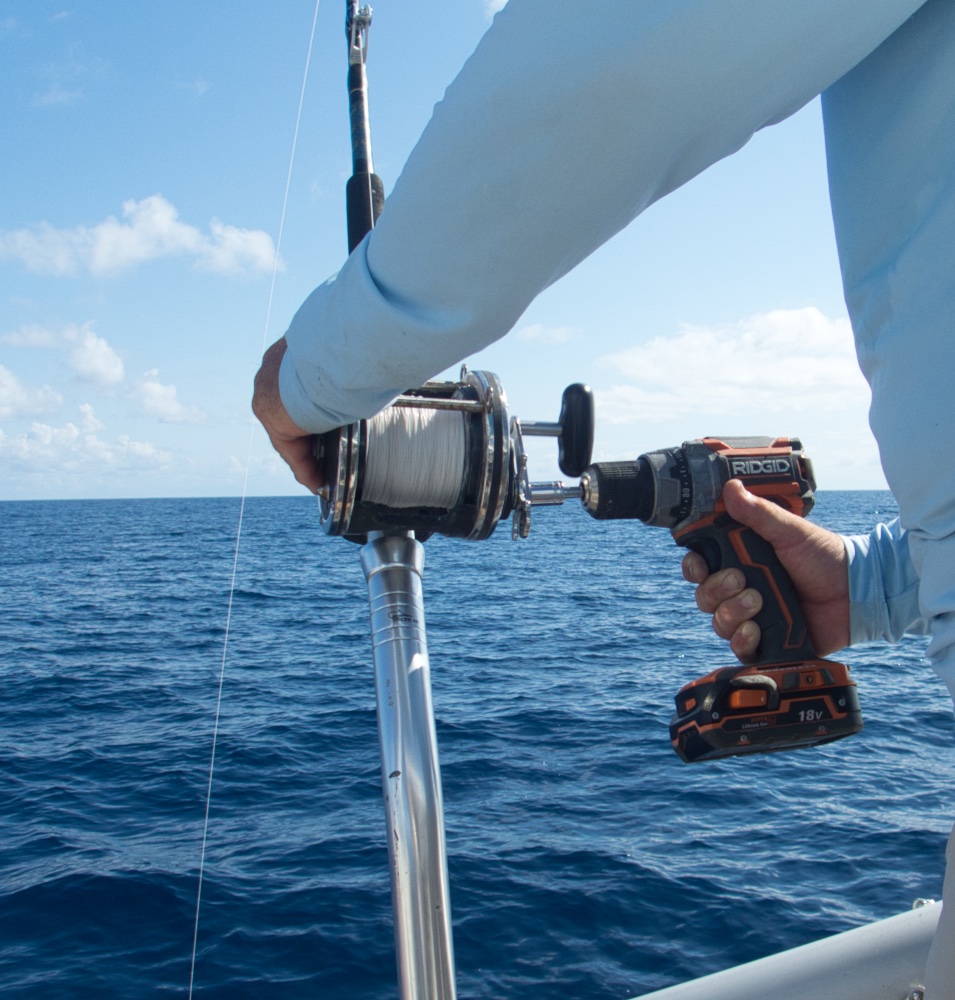
I have managed to work out a system for retrieving this much line without having my arm fall off…

Bring up several snapper, plus a 4 pound sinker from 600 feet down

I know, I know… it’s CHEATING! I agree… right up to the moment that a fillet of silk snapper lands on my dinner plate. They are SOOOO good…

In two or three days we’ll be landing in Fort Lauderdale, and running around to routine doctor visits, and resupply stops, repair shops, and then start heading north.

Posted in Underway | Leave a comment

Plans… Plans… Plans…

In our onshore excursion today we did take an extended walk across the island away from the main road. See below for the circumstances around that time killing exercise. The variety of plants that grow here is astounding. Including plants that you might have heard of, but never actually seen. The basic ecosystem is a mixed hardwood forest, with the tallest trees maybe 15 to 20 feet tall. Mahogany, Lignum vitae, and tamarind are common. Poisonwood and machaneel are common enough to make you careful about what you touch. Flowers and butterflies abound. A delightful place.

In looking at our cruising plans for the summer season, we realized that we really want to get further north, maybe as far as Newfoundland. If that is going to be a priority, then heading north early is going to be a good idea. Since we have already touched the places that were on our visit list for this winter, it seems like this is a good place to turn around. So… for this season Mayaguana, Bahamas is going to be our furthest south and east destination. Tomorrow we begin to retrace our steps back in the direction that we came from.

Our first stop on our return trip will be to revisit the Plana Cays. This time, we’ll be checking out East Plana Cay which looks to be at least as much fun as West Plana Cay where we stayed a week ago. We’ll be there for a few days beach combing, bushwacking, snorkeling, and fishing.

Our real adventure today was getting our Bahamian fishing license renewed. This requires a trip to the Customs Office. Last year when we did this in the city of Marsh Harbor, we presented our paperwork and the officer in charge made disapproving noises about the staff at Bimini. He said that our fishing permit should have been good for a year. He crossed out the original date, wrote in a new one, and sent us on our way. Problem solved.

Out here, things were a bit more complex. We had to redo ALL our paperwork as if we were entering the country for the first time. Then it has to all be approved and stamped by the “Administrator.” Stamping is very important, and only the Administrator can do the stamping.

The problem is that the Administrator is not in the office. It seems he is out at the airport meeting today’s plane. “He’ll be back in a half hour.” Now, we know what that means in island time. So we go for a walk (see above) and return 90 minutes later, at noon. The Administrator is not back yet, and somehow is STILL expected in a half hour. Karen is smart enough to ask when the plane is due.

“Oh, One o’clock. Maybe One-thirty. If it’s not late.”

We walk down to the beach and hang out until two o’clock. Our paperwork is finally ready, with all the official stamps in lots of places.

Out at the Plana Cays we’ll be internet limited again, with only our sat phone connection. Just imagine… The pleasure of NOT reading the news for a week. 🙂

Posted in Underway | 1 Comment

Stalking the Wild Flamingo

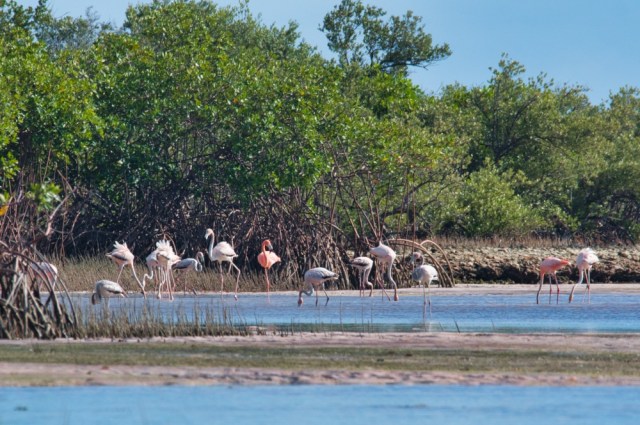
From our position anchored in Abraham’s Bay in Mayaguana, Bahamas we looked over toward town. From the distance we could see the Red Mangrove trees along the shoreline, but the roots of the trees looked unusually red. A quick look with binoculars confirmed our first sighting of an honest to goodness flock of wild flamingos.

From the boat’s deck the birds were barely visible as they fed on the shallow mudflats.

Today’s project was to get on shore, and get better pictures of the birds, but before we did that, we took some time to hike around the island. Our plan was to hike to the north beach. Unfortunately, on an island with 4 roads, I missed our turnoff. So we ended up half way across the island before we decided we were tired enough to head back.

If we were choosing a name for this island today, it would have to be some version of “Butterfly Island.” A large variety of colorful butterflies were everywhere along the road. These pictures were all taken within a 3 minute walk…

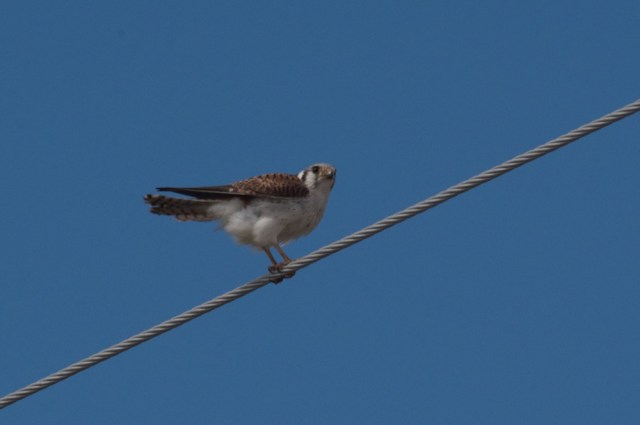
This island has a significantly smaller population of small lizards compared to other nearby islands, probably because of the large population of kestrels.

About the size of a large pigeon, the Kestrel is a serious hunter of anything small enough for it to pin down.

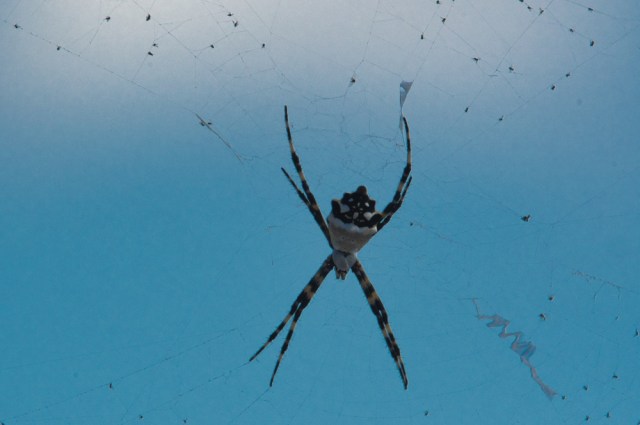
After our travels across the island, we were back the the settlement of Abraham’s Bay and we set out across the mangrove flats to get closer to the flock of large pink birds. There were obstacles, like the 10 foot wide web built across the trail by this large–and strange looking–spider.

I learned a couple of things about flamingos. First, is that they are very skittish birds. A human within 100 yards of so sets them off to nervous “chattering” among themselves and they start to move away.

The other thing I learned, is that there is a very wide color variation within a single flock of birds. Yes, there are certainly many that are the garish salmon-pink of a tacky plastic lawn ornament, but many others are gray, or white, or the barest hint of pale pink.

The variation of color within one flock is quite large.
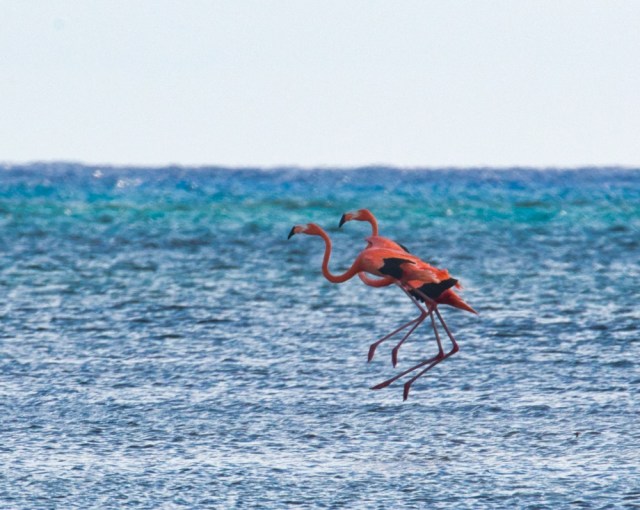
Two birds in full color coming in for a landing.
I am not sure how many places in the world you could get this picture. An adult osprey wading in front of a flock of Caribbean Flamingos.
Posted in Critters, Places | Tagged | 2 Comments

Mayaguana and Pictures

If you are reading this on email or Facebook you might want to click through to FetchinKetch.net to see all the photos.

We left the uninhabited island of West Plana Cay yesterday morning and arrived at the barely inhabited (pop: 277) island of Mayaguana in the early evening. We stopped here two years ago and enjoyed it, but moved on before we had a chance to explore much. Mayaguana is blessed with a very well protected harbor, and It looks like we’ll be here for several days as a weather front passes.

As promised, here are some pictures that we have accumulated since our last internet connection..

Sailing out of Georgetown, we landed a blackfin tuna, one of the smaller and less common members of the tuna family, but locally abundant , and very tasty.

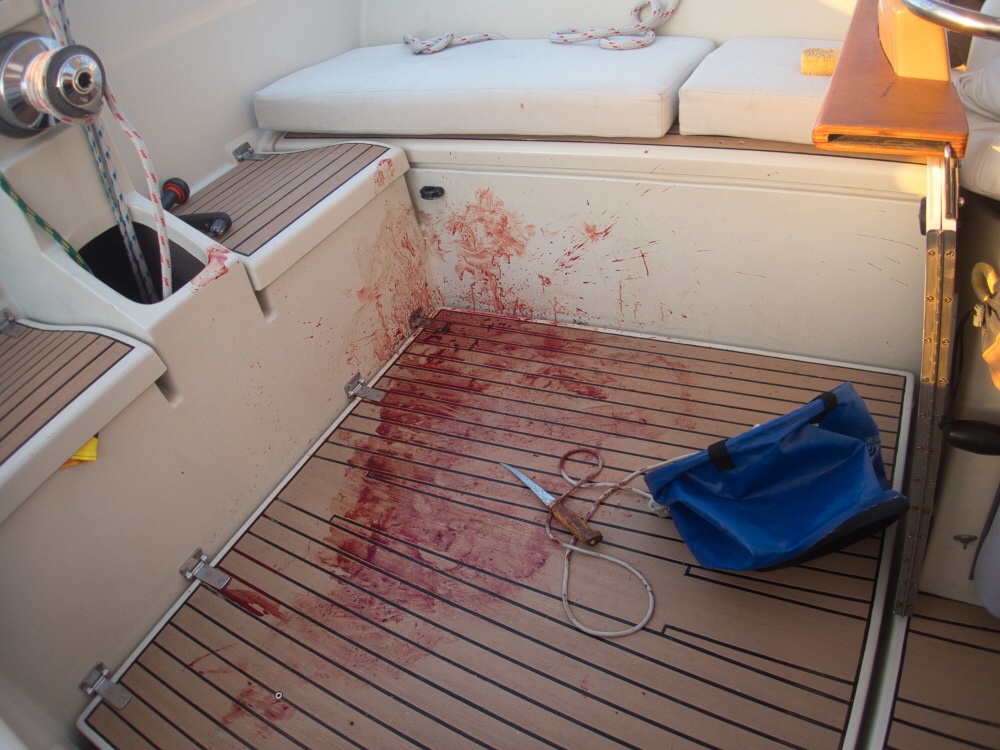
While we always enjoy the contribution to the freezer such a catch makes, the cleanup can be a bit daunting!

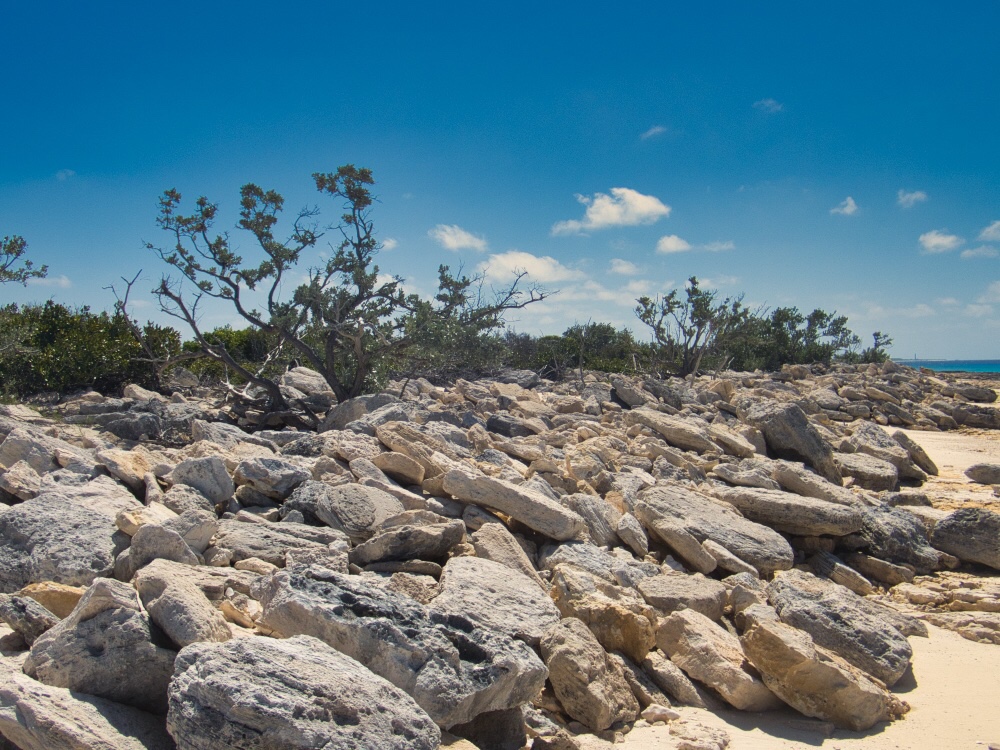
The beach at Acklins Island was pretty, but narrow and rocky. The large coral rock boulders covered the land as far as we could see, making inland exploration too rough for our tastes.

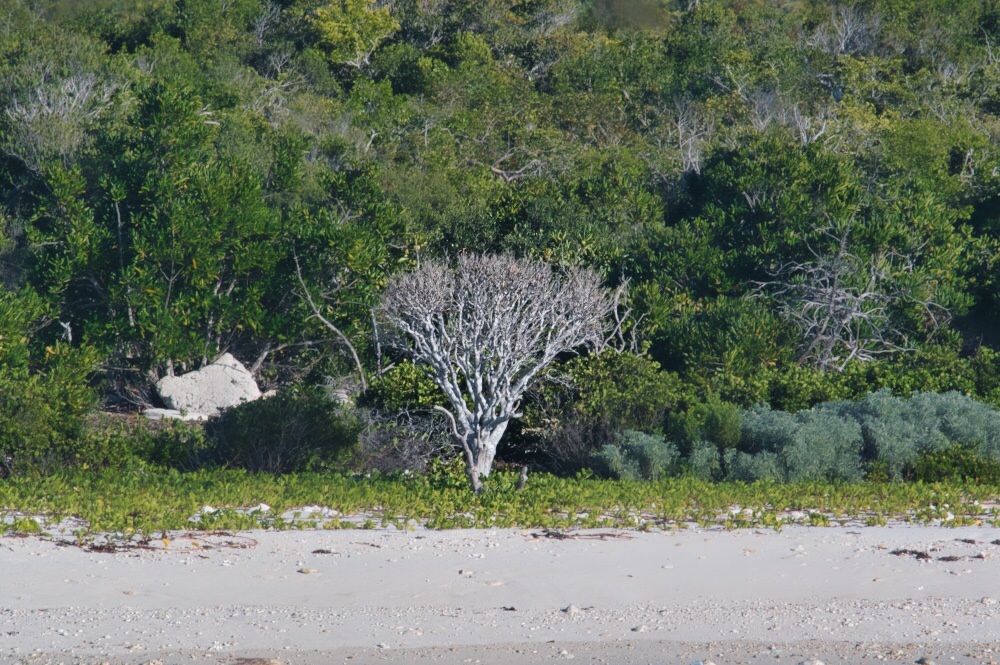
The land was relatively lush with varied small trees.

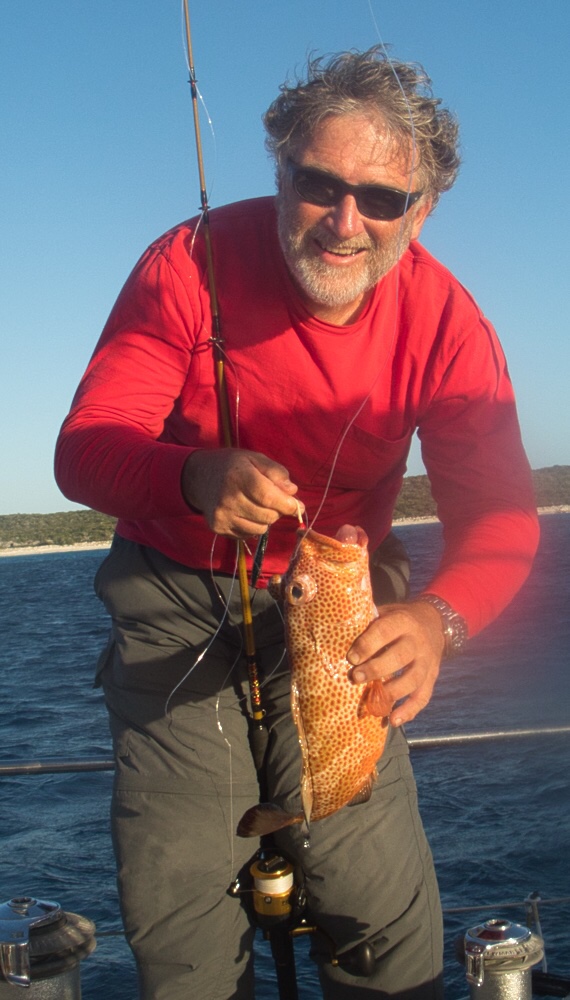
And the deeper side of the reef yielded up some tasty grouper.

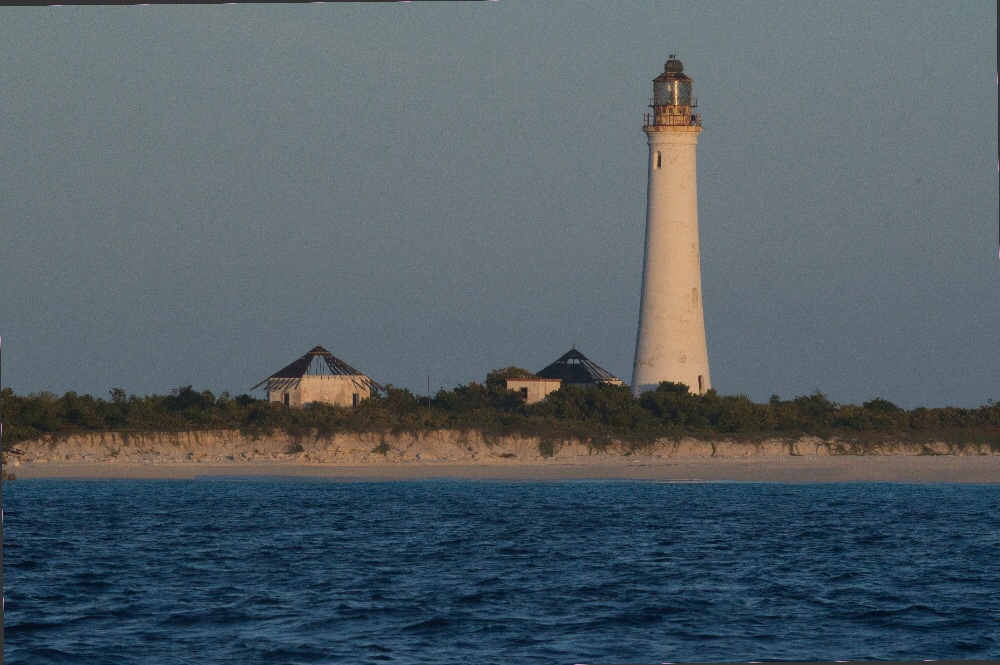
Our route around the southern end of Acklins Is. took us past the small Castle Island featuring a defunct lighthouse. One general rule about how navigation lights work in the Bahamas, they don’t.

Off the east side of Castle Island there is a deep reef that donated a Silk snapper to our freezer from 400 feet under the surface.

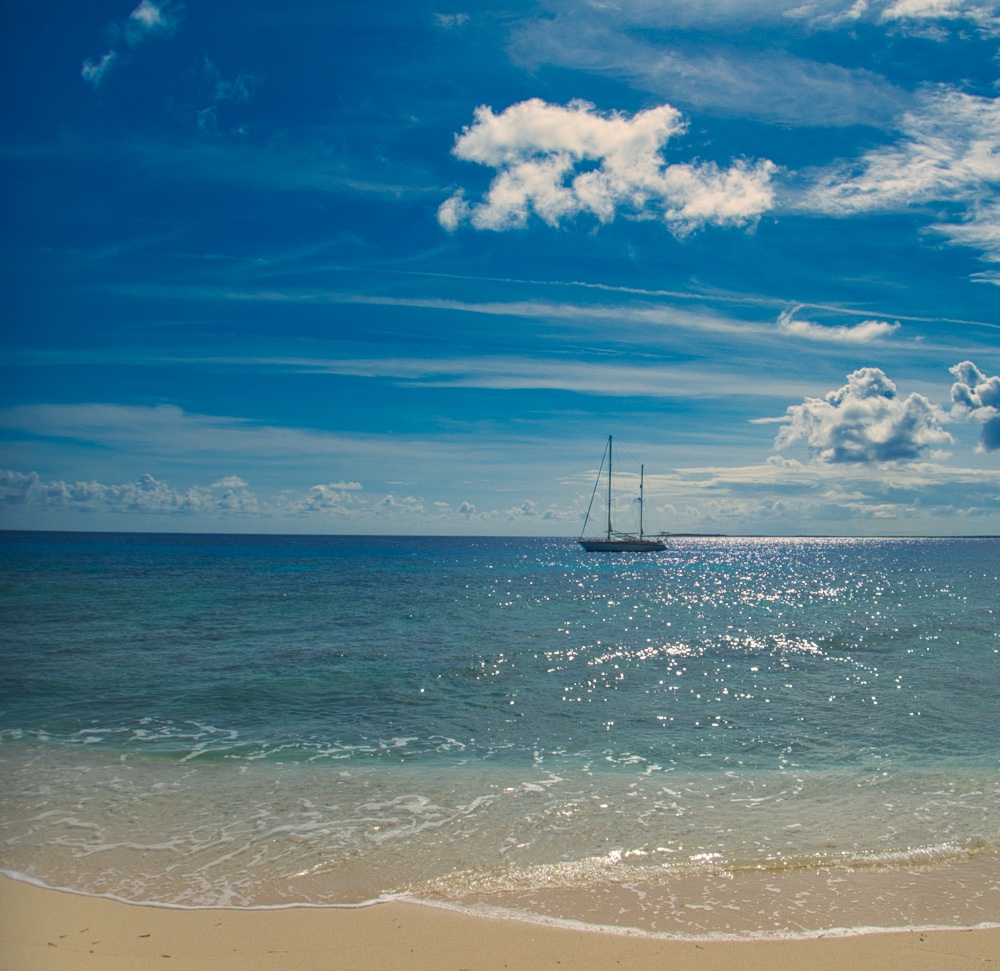
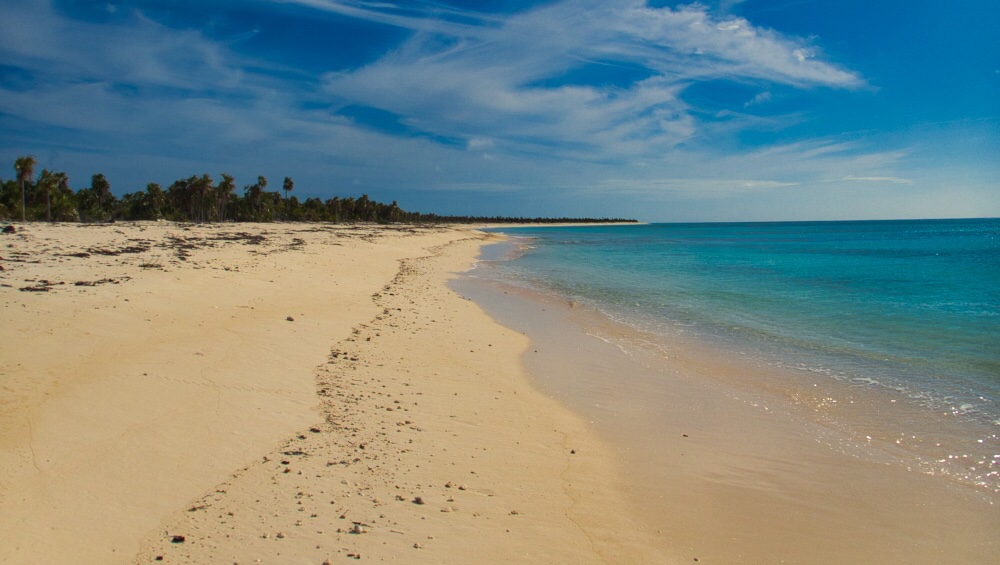
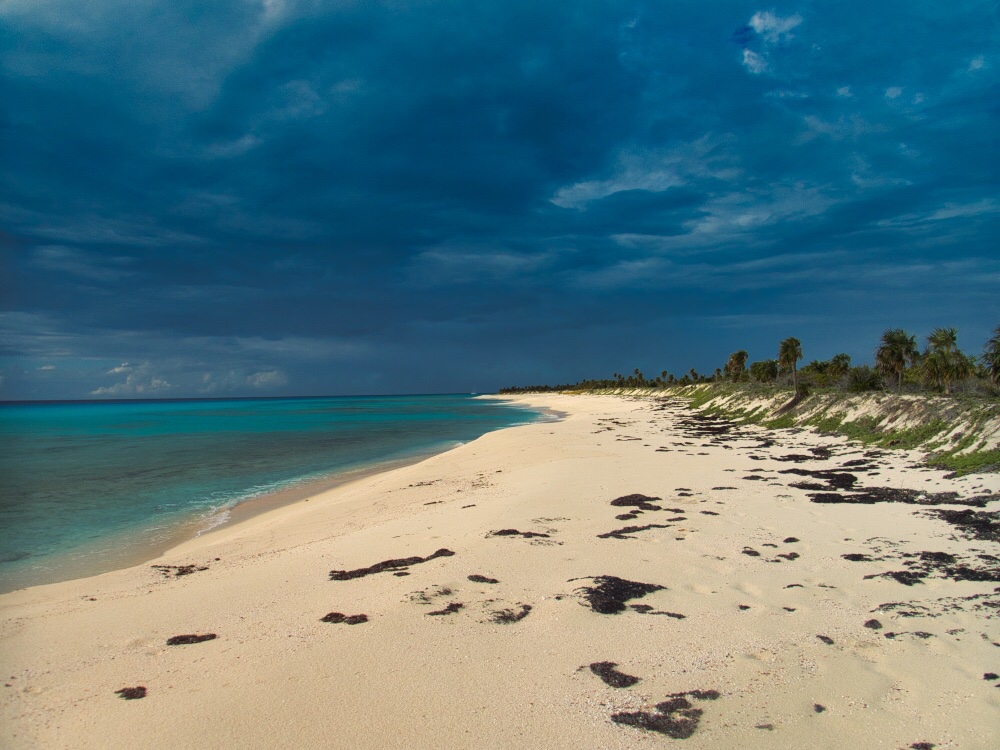
The island of West Plana Cay had the kind of beach Karen dreams about, where the only visible footprints are her own, and there are lots of shells.

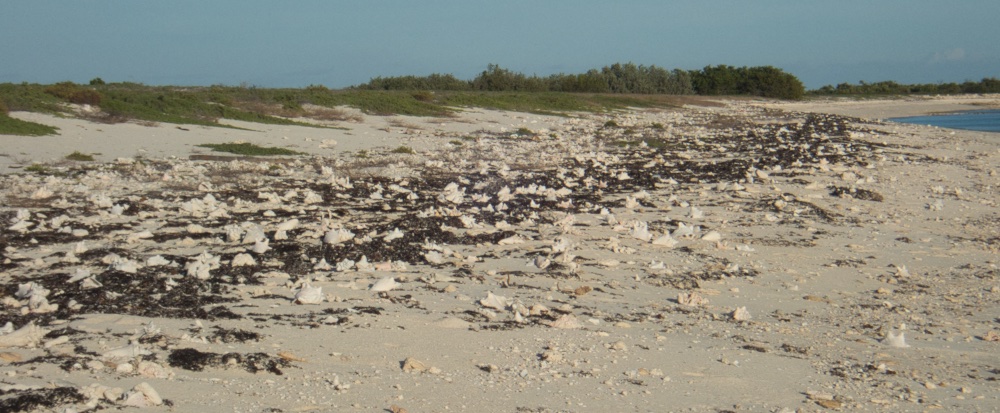
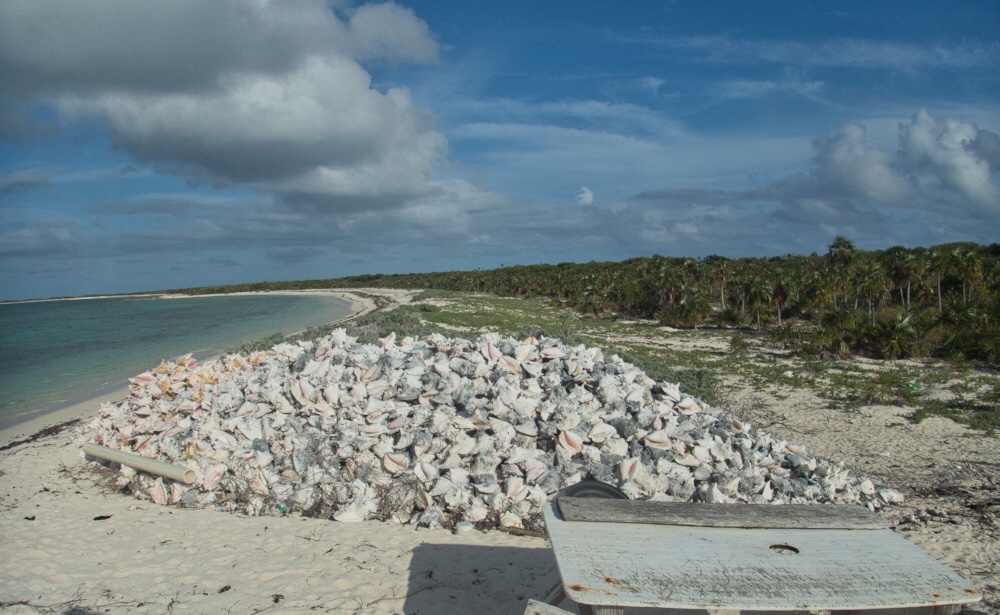
Although no one lives on the Plana Cays, the conch fisherman visit regularly, and have for years judging by the variety of ages of the shells on their discard pile.

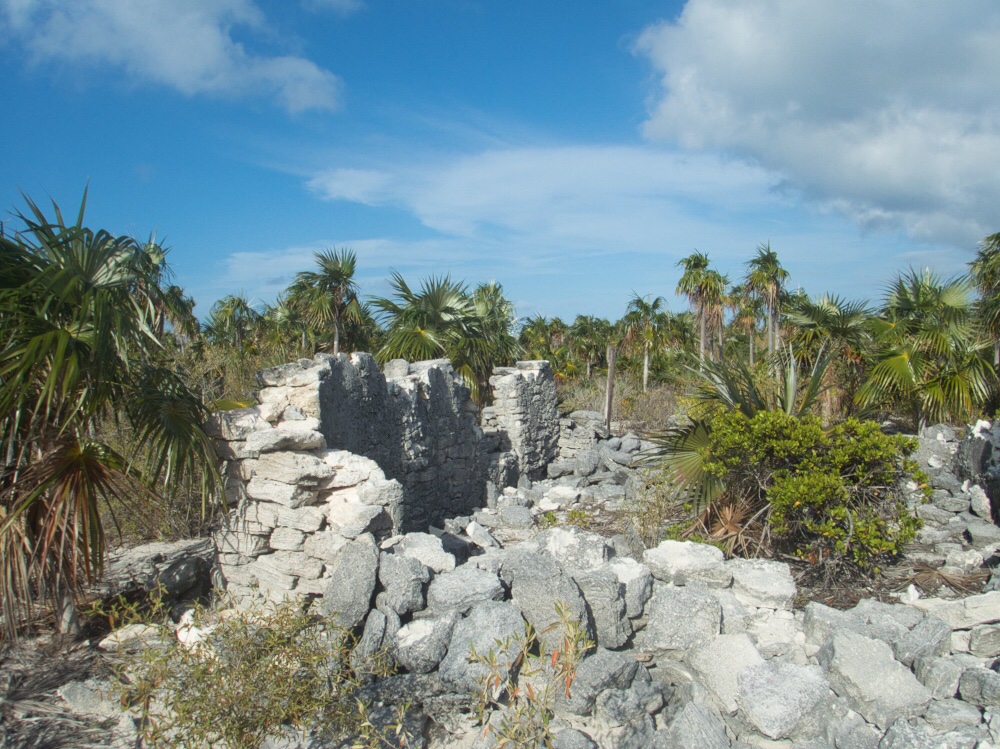
There are ruins from an earlier time. I haven’t seen anything on the history of these islands, so I don’t know how old they might be or what kind of living they might have been trying to make.

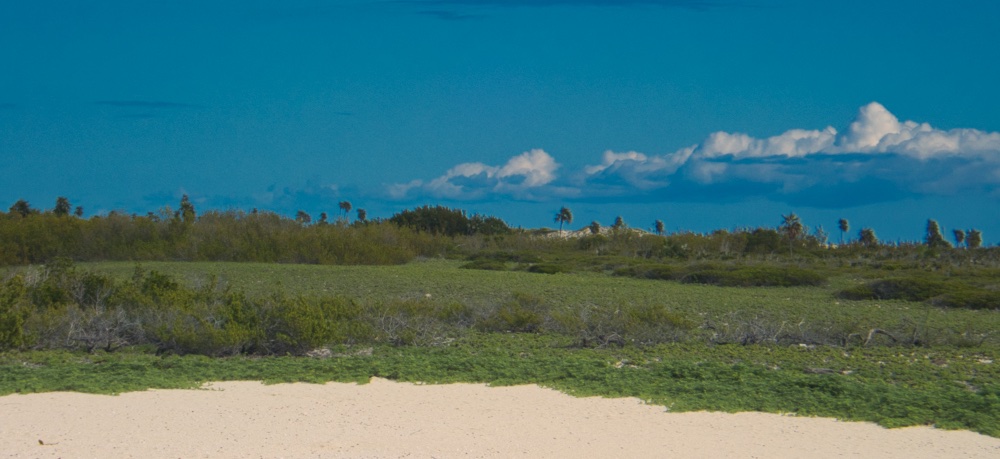
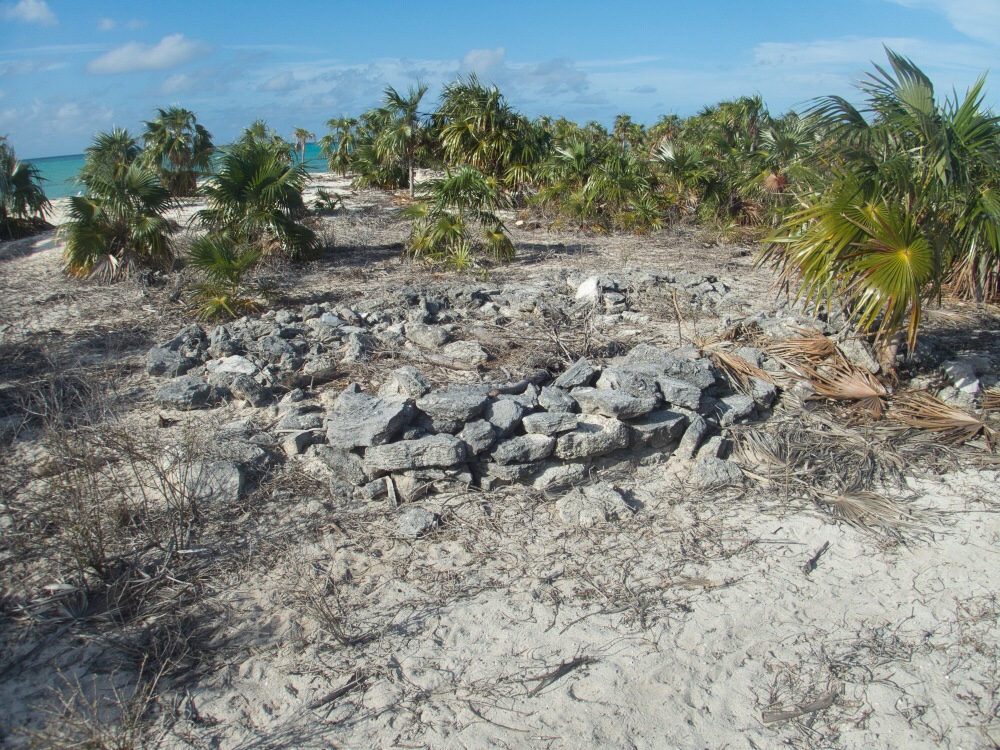
Ruins of smaller scale. Note the very sparse vegetation of very limited variety. Especially compared to Acklins Island just a few dozen miles to the west. We suspect there are two reasons for that.

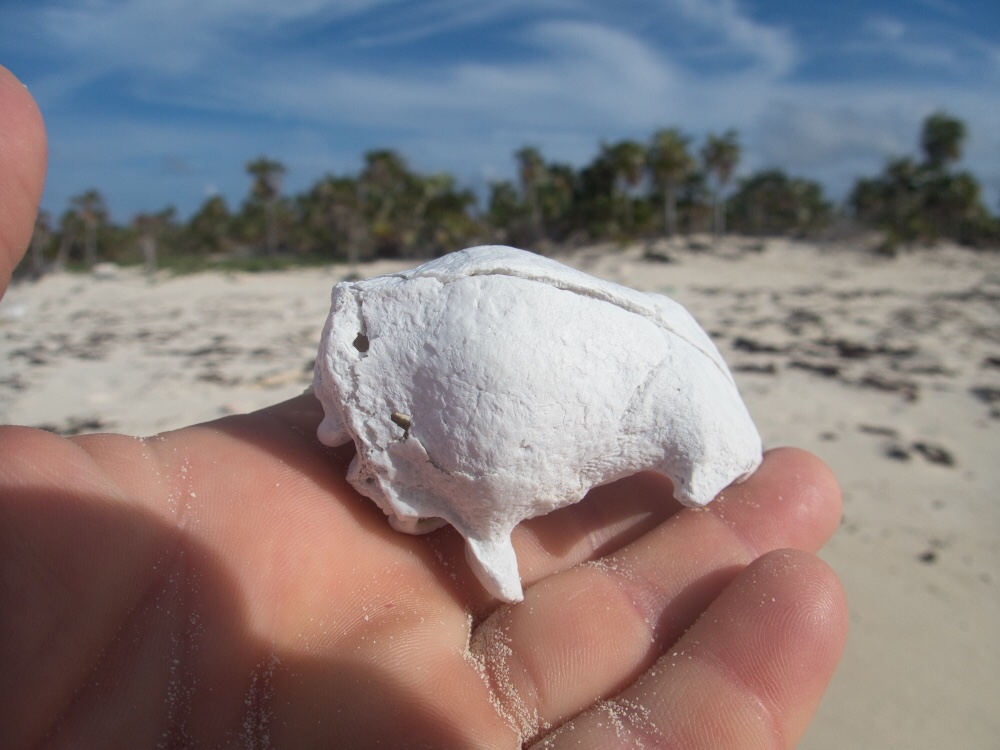
This is as close as we have come to seeing a live Bahamian hutia, a strictly nocturnal rodent that is the only native mammal in the Bahamas. With limited predators, they come to dominate the ecosystem on any islands where they exist.

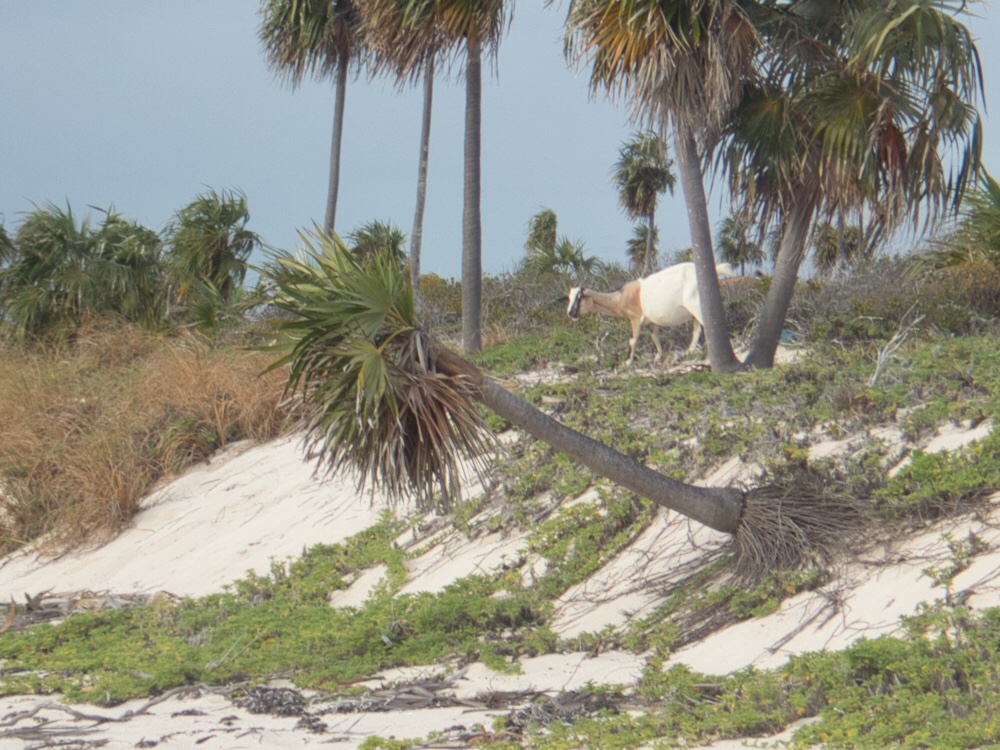
Non-native mammals are also doing their part to keep the vegetation in check. This is the first Bahamian Island we have seen with feral goats.

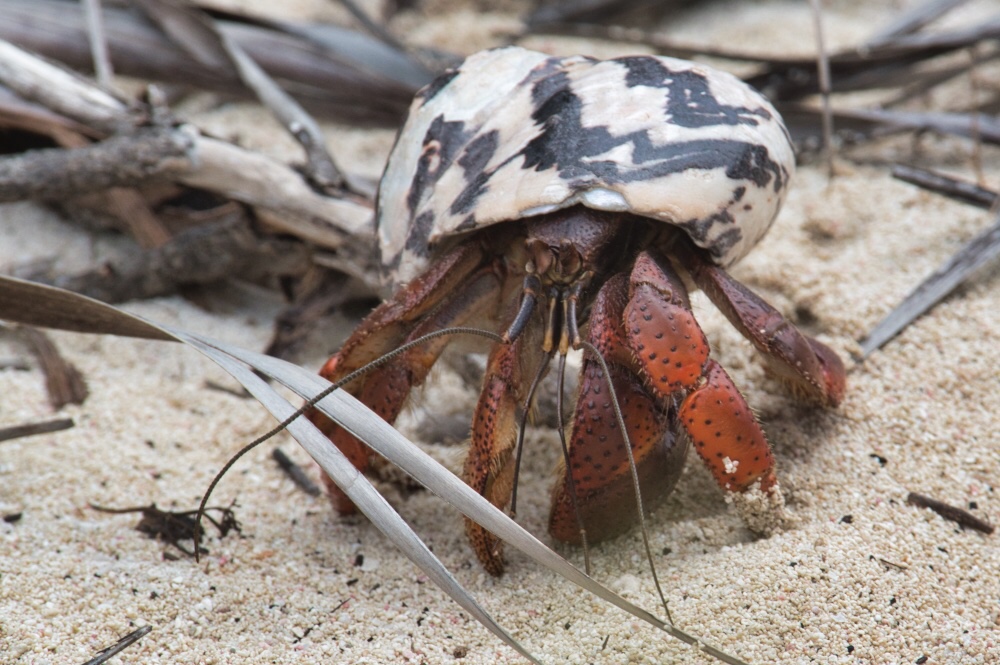
In some places on the island large terrestrial hermit crabs are very common.

Like many of the islands here, the land crab burrows are everywhere the soil is damp.

If you should sail by, West Plana Cay should be more than just an overnight anchorage to break up a passage, it’s worth exploring at some length.

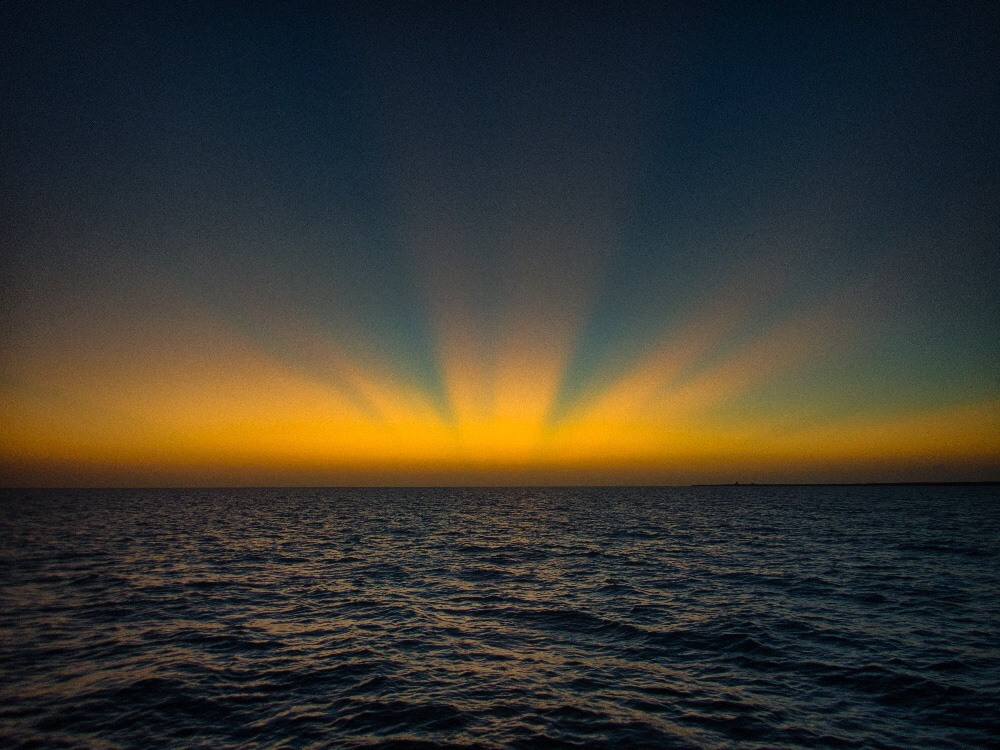
Our arrival in Abraham’s Bay, Mayaguana was heralded with one of the more spectacular sunsets we have seen, and we see a lot of awesome sunsets!

Posted in Underway | 1 Comment