Rhythm to the Rescue!

This afternoon had a strong onshore breeze from the east, and scattered thunderstorms. During a break in the weather, I decided to head off and see if I could catch some fish for dinner. Very shortly after I pulled away from Harmonie I came across a pair of rented sea kayaks who were struggling to return to the beach they had launched from, about 2 miles straight up into the strengthening breeze. Dad had worn himself out trying to tow the two kids, and there was no way one paddle was going to move two kayaks that far into a 15 knot breeze!

Before they accepted a tow, they asked me to go check on Mom and her friend. I buzzed over to them, and the ladies insisted they were OK (Yeah, right!) so I went back to Dad and the kids, and told them I’d tow them into the beach, and then come back to check again on Mom.
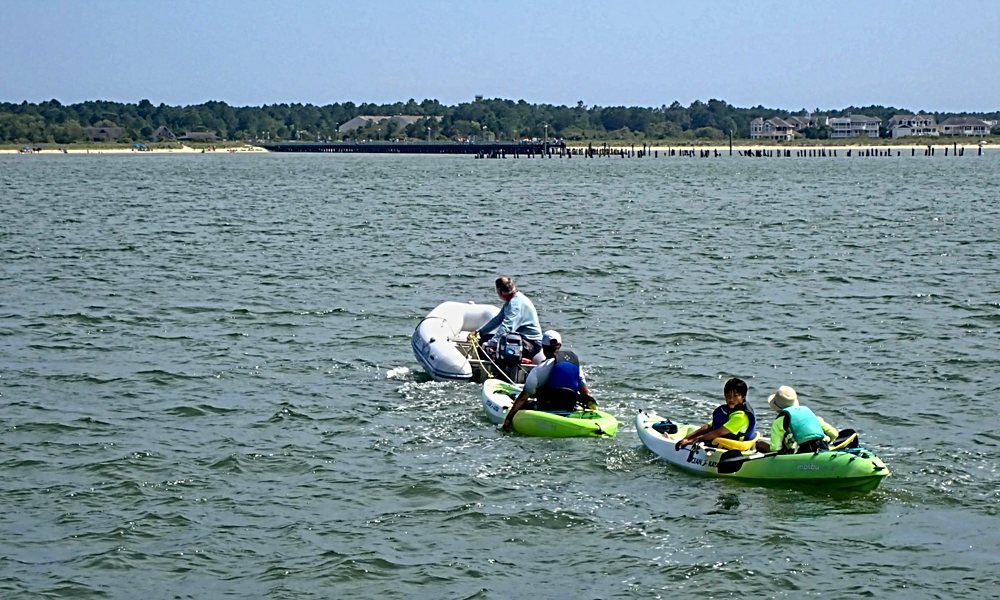
Taking Dad and the kids in tow. That’s a LONG paddle back to the beach!

When we safety got back to the beach, the kids thanked me for going back out to rescue their Mom.

It took me a few minutes to find the other kayak, but there they were, essentially in the same spot I last talked to them. After half an hour of paddling–and making no progress–toward the beach, with dark clouds looming, and lightning flashing in the western sky, they were now much more agreeable to a rescue tow. I told them they really didn’t have a choice since I had already been thanked for rescuing them.

I don’t think much of the livery operation that rented inexperienced people kayaks with a strong offshore breeze. I didn’t see that they had any kind of chase boat of their own. Certainly I saw no evidence that the rental staff even knew there was a problem. They gave no indication that they were aware that three of their boats had been towed back. Sloppy… and dangerous.

On another note, we really like the town of Lewes. Pretty, clean, like a summer resort town should be, but without any of the “Disney-Fake” vibe a lot of them have. There is a town dock right in the middle of downtown, but we weren’t sure Harmonie would have fit, so we just took the dinghy in. Wonderful restaurants, and provisioning at Lloyd’s Market, a great small independent grocer. Beautiful gardens all over. It is a town worth a stop even if you don’t have to.

We got a recommendation for here as a stop from an Ocean Cruising Club member. A great organization for finding information and the inside scoop about lots of things.

Posted in Underway | Tagged , , , , , , , , , , , , , , , , , , , , , , , , | 2 Comments

Out to the ocean again..

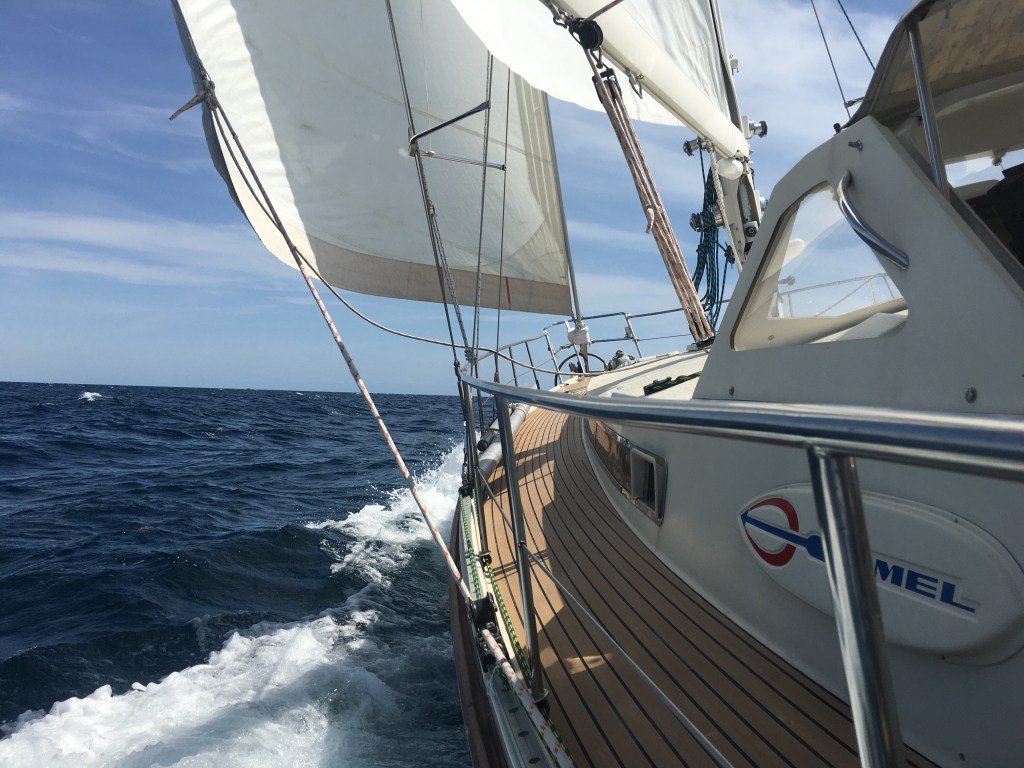
Without a highly specific destination in mind, we head out into the ocean not so much to get somewhere, but just to go sailing while generally meandering north.

Our track wandered basically from one fishing spot to another, in a few cases we stopped to search out a poorly charted wreck, and found one, and missed two. A sea bass was issued an invitation he couldn’t refuse to join us for dinner. 🙂

We got out as far as the “canyons” at the edge of the continental shelf, very popular fishing spots, and this was a Sunday afternoon with absolutely spectacularly beautiful weather, so the big sportfish boats were out in numbers trolling for tuna, and marlin. Many of them show up on our plotter display if they have their AIS transmitter turned on:

At the “magic hour” the dinner bell rings, and everybody heads home toward Ocean City, Maryland at once…

This was so sudden, and so closely timed, I suspect that the boats might have been involved in a tournament and all needed to be back at the dock at a specific time.

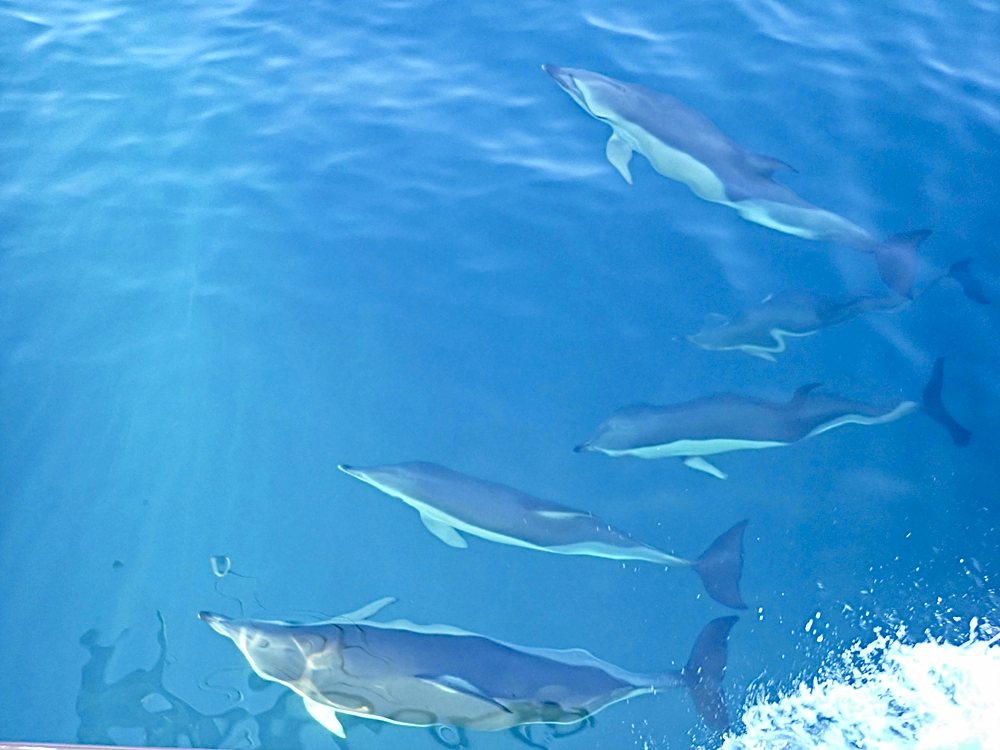
Anytime you are out in the ocean, you have the locals come pay a visit…

Yes, the water is that clear, and that blue, and the dolphins come that close to play.

We stayed out, and trolled up along the continental shelf until we reached Baltimore Canyon, and then as the sun set a light southerly breeze picked up. We set sail, and headed in toward shore. Over night we saw winds of 5 to 10 knots, and moved along at a comfortable speed on a flat sea.

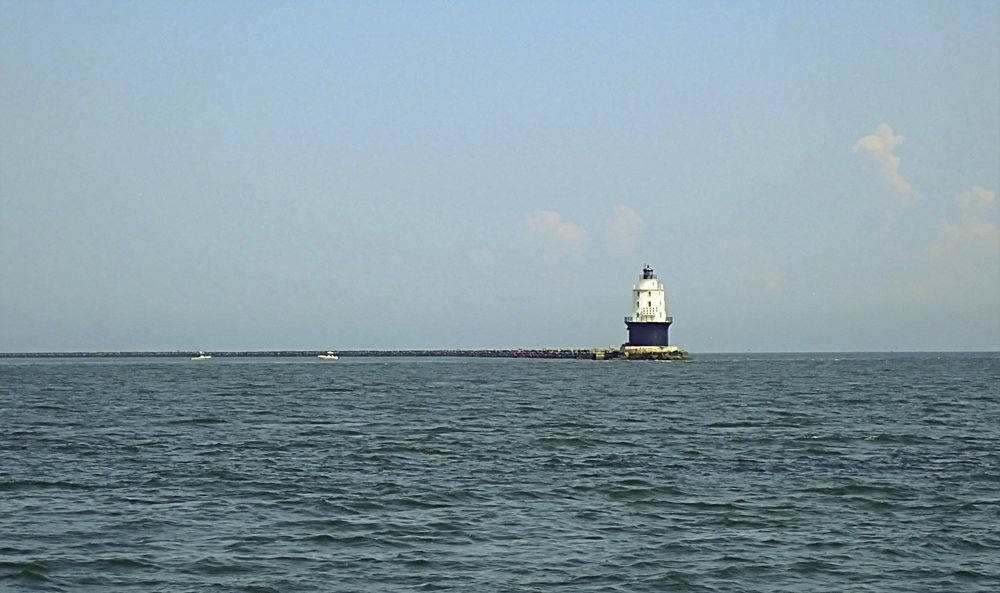
Early in the morning, we come into the port of Lewes, Delaware. Famous(?) as the southern terminus of the ferry that runs from Cape May, NJ to Delaware. Delaware is one state that doesn’t currently have significant travel restrictions or quarantine requirements, so we’ll take the opportunity to head into town here.

Cape Henlopen Light makes the southern side of the entrance to Delaware Bay right off the town of Lewes.

Posted in Underway | Tagged , , , , , , , , , , , , , , , , , , , , , , , , , , | Leave a comment

Now that that’s over…

The weather event that was tropical strom Isaias has blown on through, with the center of the storm just a few miles to the west of Harmonie’s location. Damage here in Hampton, VA was minor. In our marina one or two boats broke loose, but didn’t get into TOO much trouble, a few rubbed up on the dock to the detriment of both, but that was about it. Peak winds were between 60 and 70 knots, without much water level change.

We are getting good at this hurricane prep. It is something we’d just assume NOT have to do, but in this part of the world, it is just a fact of life. The more we see, the more clear it becomes that the real danger to your boat in a serious storm is the OTHER boats!

Here in this marina, I have to say nobody prepped a boat better than we did. About 10% of the other boats did almost as well. Another 60% did something. But, about 30% of the boats did absolutely nothing to prepare for the storm. I don’t know if it’s ignorance, sloth, or just a lack of care, but there are an awful lot of people who own boats who just should just stick to golf as a hobby.

We have a few business things to take care of in the next day or two, and then we’ll be out in the ocean, where we belong!

Posted in Underway | 2 Comments

And This Too Shall Pass…

Isaias, that is.

We are in a marina in Hampton, VA hunkered down for the arrival late tomorrow of the latest tropical storm of the season. Right now Isaias is forecast to run right over the top of us on Tuesday afternoon. The boat is tied up in a cat’s cradle of lines, and we have removed anything loose or vulnerable from the deck. Once we finish our last minute preparations tomorrow morning we have a local hotel room to check into.

The good news is the storm has never really developed into a large and extra powerful storm. No local evacuations or other serious precautions have been called for. Despite all this, a storm like this is still worthy of respect. Right now, we are probably the best tied up boat in the marina!

When in a marina, the most dangerous thing that boats experience in a serious tropical storm is the rise in water level. In the most severe case, this can actually lift the docks up off the pilings that hold them in place. The forecast storm surge for our location is minimal, only a foot or two, so we’re pretty comfortable that we are safe and secure.

Posted in Underway | 1 Comment

Going South to Go North.

Geography requires us to head 150 miles south down the Chesapeake Bay before we head north. We are currently anchored in Fishing Bay in Deltaville, VA. This is a very convenient anchorage for any boat transiting either north or south in the Chesapeake. It is also pretty, and well protected. We arrived about 48 hours ago, shortly after dark. We found “our spot” in the dark with our radar, and settled in uneventfully.

Yesterday was a success story on with an ongoing problem we have had with a coolant leak from the generator’s engine. The leak only happened when the engine was running, and was on the back side of the engine, which is hard to visually inspect when the engine is running. I set up our GoPro camera there with a light, and once I had a chance to review the footage, the answer was obvious, and easily remedied. So that’s all good!

As the day ended yesterday the cicadas were singing in the trees, clouds were rolling in and the sun was setting with a blaze of bright colors.

The dark clouds off to the Southeast were nasty looking, and rolling quickly toward us. It wasn’t long before bolts of lightening were lighting up the sky.

The storm arrived with buckets of rain and a blast of wind. Nothing TOO bad, maximum of 35 knots or so for no more than five or ten minutes, but that was enough to cause a bit of drama in the little bay. There were three other boats anchored here. One had a sail unroll and shred in the initial gusts. We couldn’t see how them got that under control, but it was an expensive lesson. The other two boats dragged their anchors. Not too far, but any is enough to be scary. We didn’t even think this was all that much of a wind event!

There might not have been all THAT much wind… but there was a pretty spectacular lightening show. The image to the right is a frame grab of real time lightening strikes over 10 minutes within five miles of us! Who needs fireworks?

It was all over in 30 minutes, and calm returned.

Tomorrow we will head further south toward Norfolk. The plan is to pull in there, and spend the night, then head out to the ocean on Friday.

Posted in Underway | 2 Comments

And… GO!!

We cast off our lines from Herrington Harbor North yesterday at 10AM and, on a mostly calm and windless bay, motored south, ending up at Solomon’s Island, a major boating center on the western shore of the central Chesapeake.

It is still hot and humid, and should continue to be until we reach the ocean in two days or so.

One thing that never ceases to amaze us is the frequency with which we run into other Amels. We left Harrington Harbor where there were three other Amel boats, and get here where there are three more! One (Loco Lola) that we know from the Bahamas, one new to us anchored right next door (Jackster) and one that lives here as its home port.

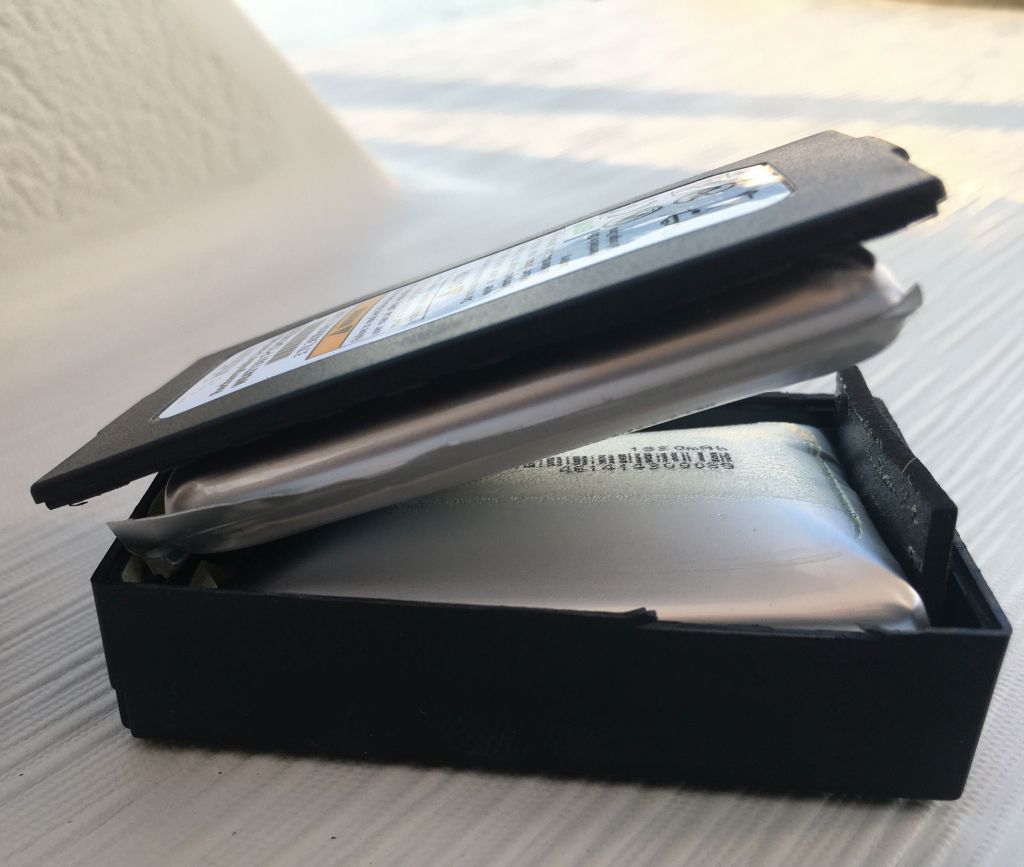
We did discover yesterday that out satellite phone battery had failed. It wasn’t immediately obvious, since we keep it plugged into power all the time. Turns out the battery is needed for it to get a connection to the satellites. Until we can get a replacement shipped in, our constant position update will be down.

What is supposed to be a sealed plastic case broke apart as the internals of the battery inflated, generating a lot of pressure! Luckily, the internal seals held and no leakage or other disaster resulted.

The unit is about 6 years old, so the operative lesson is: Chnage your Iridium Go battery when it is no older than 5 years!

Today’s assignment is to fill the diesel tank, and head further down the bay!

Posted in Underway | 2 Comments

And We’re Off!

Well… almost!

We have been here at Herrington Harbor North Marina in Tracys Landing, Maryland for a few months. It’s a beautiful and well run marina, but it is time to move on. The weather here on shore in July is pretty oppressive, and we need cooler climes to be comfortable! By way of example, we just finished three days in a row with a “Heat Index” of greater than 105ºF!

Our intent is to meander north toward Maine. Some places are more “open” than others, so we’ll stop at places where we are welcome, and pass by those where we are not. We will stop and fish where we want, and stop and explore where we can.

In a day or two we’ll be underway. Not in any rush, or with a specific destination. Just the way we like it!

Posted in Underway | Tagged , , , , , , , , , , , , , , , , , , , , , , , , | 1 Comment

Seriously????

My last post here was about the dangers of a full time connection to dockside water, and the measures we take to mitigate those risks. I have always taken those risks seriously, but never actually had a plumbing failure that could have put the boat at risk.

The Three Fates weave human destiny.

Until—today. I mean really? Was my last post offensive to the Fates or what?

We finished dinner, and Karen was just finishing the cleanup when the piercing alarm that indicates a high level in the bilge sump went off. We can see that the pump is running. How can there be water there? What’s going on?

Once up in the cockpit, I can hear a noise… something is running but it is not a sound that I recognize. When I open the engine room to access the bilge, I see water spraying everywhere. AH-HA! The sound I hear is water rushing through the hose connection. Turn off the water, and everything settles back down. It only takes a few seconds to find where the hose has pulled apart from its fitting.

A couple new hose clamps, and we are back in business. Although the engine room received a good soaking, is all fresh water and in the summer heat it will all be gone quickly.

On the bright side, we were home and able to immediately respond to the situation. The bilge alarm was very important in alerting us to the issue quickly before the issues grew.

If we had been away, the water would have shut itself off after 200 gallons, and the bilge pump would have cleared that out in about 10 or 15 minutes. Nothing highly water sensitive is on the floor of the engine room so no serious damage would have been done.

If we had been away, and did NOT have a water timer on the inlet, we could have been looking at a serious, and expensive issue…

A tentative inspection shows that the hose clamp had corroded and broken. Of course they always seem to rust on the bottom where you can’t see. I have been replacing hose clamps around the boat as I see a problem, but it seems it might be time to be more systematic about that and just change all the old ones.

Posted in Underway | 4 Comments

Keeping the Water Out

When tied to a dock for an extended period it is really handy to connect the local city water supply to directly to your boat, and bypass the tanks. It is convenient, no running out of water in the middle of a shower, and in our case it also is advantageous that we can keep chlorine out of our main water tank. This is important because we use that water to flush our watermaker’s reverse osmosis membranes which can be destroyed by the chlorine added to most municipal water systems.

Do NOT be this guy!

There is a potentially serious downside to this plan. Connecting to the dock water like this means we have an essentially infinite high-pressure supply of water coming into your boat. If any hose or fitting was to fail while we were away from the boat, water would keep flowing, possibly overwhelming the bilge pump, and sinking the boat. In my years around boats I personally know of two boats that have sunk at the dock because of a city water connection. Even though this risk might be small, it is not worth taking without figuring out some way to mitigate it.

One solution is to have a convenient valve in the water line that you shut off every time you leave the boat. This is a perfect solution, except for the one fallible part: ME! I forget.

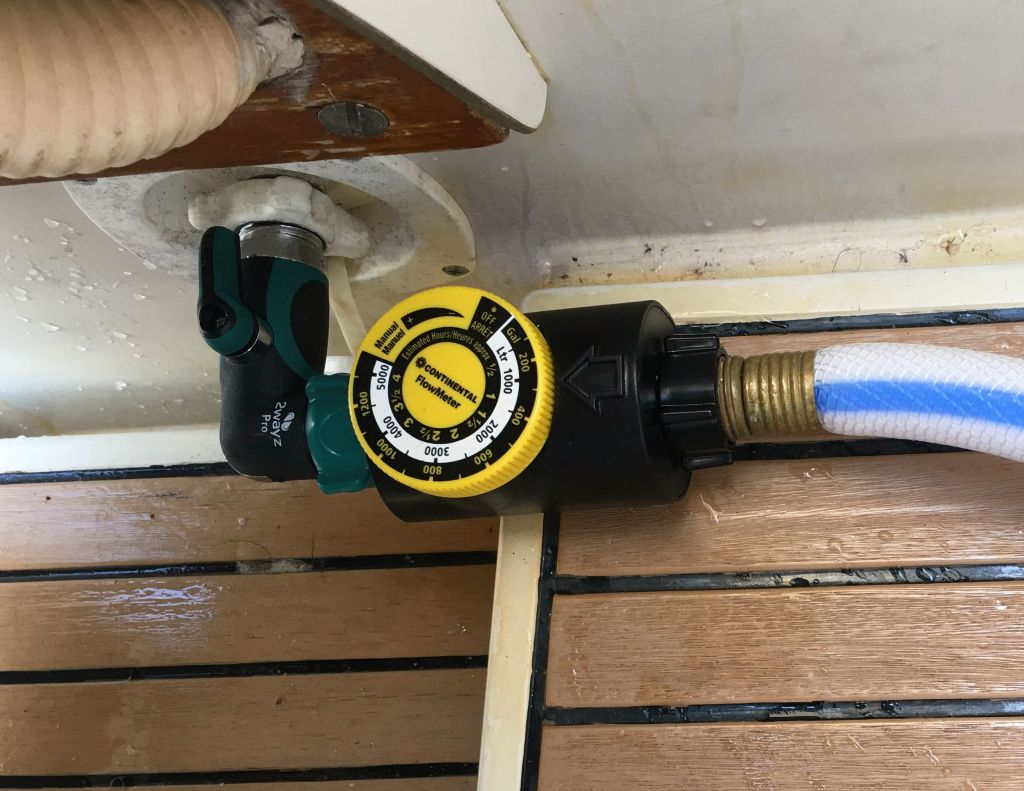
Fortunately, there there is a simple, and unusually affordable, solution: a sprinkler timer. A small device gardeners use to automatically turn off water after a suitable amount has been delivered to their plants. Most of the mechanical ones are not “timers,” they do not count elapsed time, but rather they actually count the volume of water delivered. When the amount of water selected on the dial has been delivered, a valve closes, and the water is shut off.

We set ours for about 200 gallons. If we were away from the boat, and a plumbing failure occurred, that is the maximum amount of water that would be dumped into the hull. Certainly more than we would like, but not enough to create a disaster. With this addition, we feel safe enough to leave dock water connected when we leave the boat for short periods.

The fitting on the hull the hose attaches to incorporates a pressure control valve that reduces city water pressure to 50 PSI, something more typical for boat water systems. The inlet fitting is mounted under our helm seat where it is out of the way, and yet has easy plumbing access to the engine room.

Posted in Boat projects, Products We Like, Underway | Tagged , , , , , , , , , , , , , , , , , , , , , , | 1 Comment

How Fast Am I Going?

For most landlubbers, most of the time, this is a question that is quite simple, and a variety methods will all give you essentially the same answer. When you are standing on, or rolling over, the ground, the ground is always your reference point, so measuring Speed Over Ground (SOG) is pretty much the only thing that makes sense. It is unusual that you would even think of something else.

Sailors have a much more complex relationship with the word “speed.” They certainly understand the concept of a “Speed Over Ground” (SOG), but until the widespread use of satellite navigation systems, SOG was only available intermittently, and rarely accurately. The information that was available was “Speed Through the Water” (STW). Sometimes, these numbers are the same, if there are no currents in the water, other times they can be different. Sometimes very different, if the current speed is more than a small fraction of the boat’s STW.

The modern sailor has both SOG and STW easily available. SOG from the GPS satellites, and STW from a number of mechanical or ultrasonic methods.

Sailing along the east coast of the USA we have to contend with one of the largest flows of water in the world. Parts of the Gulf Stream move over 2 cubic miles of ocean water every minute to the north and east. Surface speeds of three, four, even four and a half knots are common.

As the Gulf Stream moves along the East Coast of the USA it twists, turns and wiggles. The fastest water is not in the same place from week to week, or even day to day.

Four knots is a significant fraction of most sailboat’s speed, so no matter if you are headed north and looking for an extra boost, or headed south and trying to avoid bucking the strongest part of the current, knowing what the current flow is can be a really important navigation tool.

Given a Course Over Ground, a Speed Over Ground, a Heading, and a Speed Through the Water it has always been possible to calculate the speed and direction of the local current–if you were handy with vector arithmetic and trigonometry. Modern sailing instruments can, of course, do this in real time and present the data to the navigator as it happens both graphically and numerically.

To me, this data is worth a LOT while making a long distance ocean trip. If I only know the Speed Over Ground, or only the Speed Thru the Water, I feel very under informed about my situation. Not knowing how the water I am sailing in is moving is missing a key piece of the puzzle.

Playing the currents can make a big difference in how long a passage takes. As an example, last year while we were migrating north, we had stopped off the coast of South Carolina to fish. While we were there, a much larger, and theoretically much faster, sailboat passed us heading north. That was the last we expected to see of them…

We used what we knew about the expected behavior of the Gulf Stream, and what our instruments were telling us about the current speed and direction, to stay in the fastest currents we could find. Three days later, as we approached Cape Henry at the entrance to Chesapeake Bay, who comes up on us from behind, but our bigger, faster friend. They actually called us on the radio, “How do you get here so fast?” Karen was impolite enough to laugh…

Posted in Underway | Tagged , , , , , , , , , , , , , , , , , , , , , , , , , , | 3 Comments