Baddeck

As the “Big City” (Pop. 793) on Bras d’Or Lake, Baddeck is where it all happens.  Just to put things in perspective, we are about 4 hours by car from Halifax.  Baddeck had been on our list of places to see up here because it came strongly recommended by everybody we know who has been here.  

Baddeck is a delightful little town on the “Cabot Trail” the popular driving tour of the area. Even more than the other parts of Nova Scotia (Latin for New Scotland) Cape Breton Island is connected with the “old country.”  Coming in to the harbor, you are likely to hear the sounds of a bagpipe drifting over town.  Many signs around town have Gaelic names on them. (With the possible exception of Welsh, I think Gaelic uses more letters to make fewer sounds than any other language!)

When we arrived up here we were ahead of the remnants of tropical storm Erin. The local forecast was for heavy rains and winds of 35 knots.  Nothing terribly serious but not something to be ignored either.  So we found a snug little harbor, and for the first time in a long time set a second anchor.  Not because we wanted more holding power, but because swing room was restricted.  Fortunately for us, and the locals, the forecast turned out to be a bust.  I doubt we ever saw more than 15 knots.  
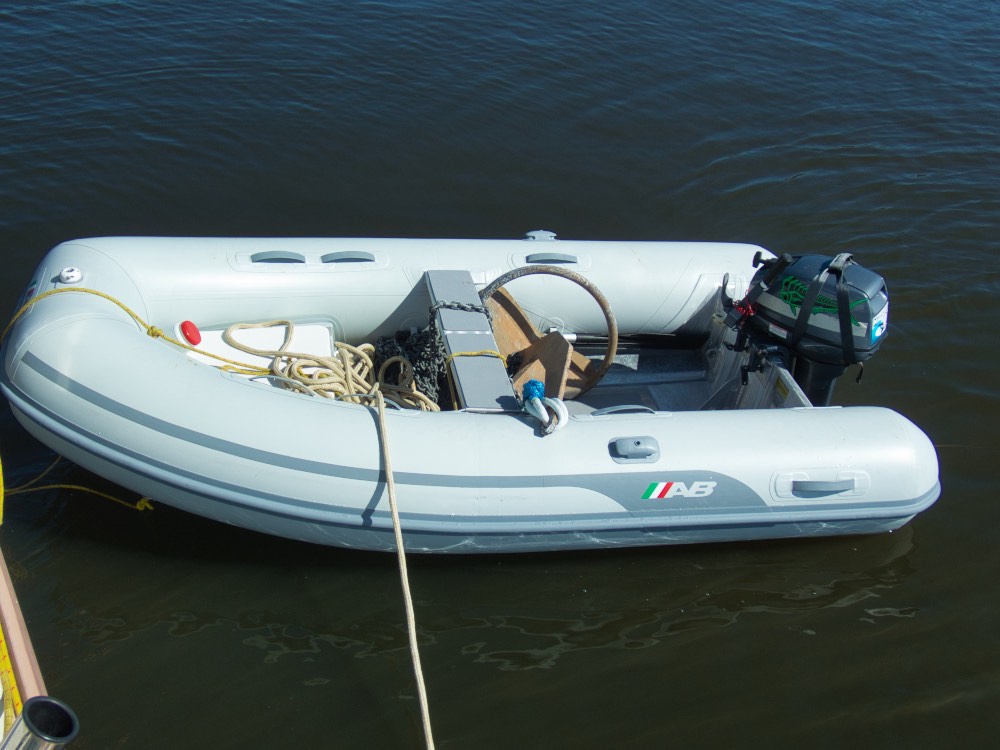
The tender loaded with the spare anchor.

Recovering the second anchor, turned out to be a bit of a challenge. We ended up drifting up against the mud bank and needed the dinghy (again) to push us off. No harm, no foul! We had quite the muddy mess on deck when we finished.

Braddeck has one big claim to fame, its most famous resident was Alexander Graham Bell.  After making his fortune in the telephone business, he settled here and lived as a renaissance inventor dabbling in the new field of powered flight, and high speed boats. He even speculated on the use of hydrofoils for sailboats, a development that took 100 years to come to production.
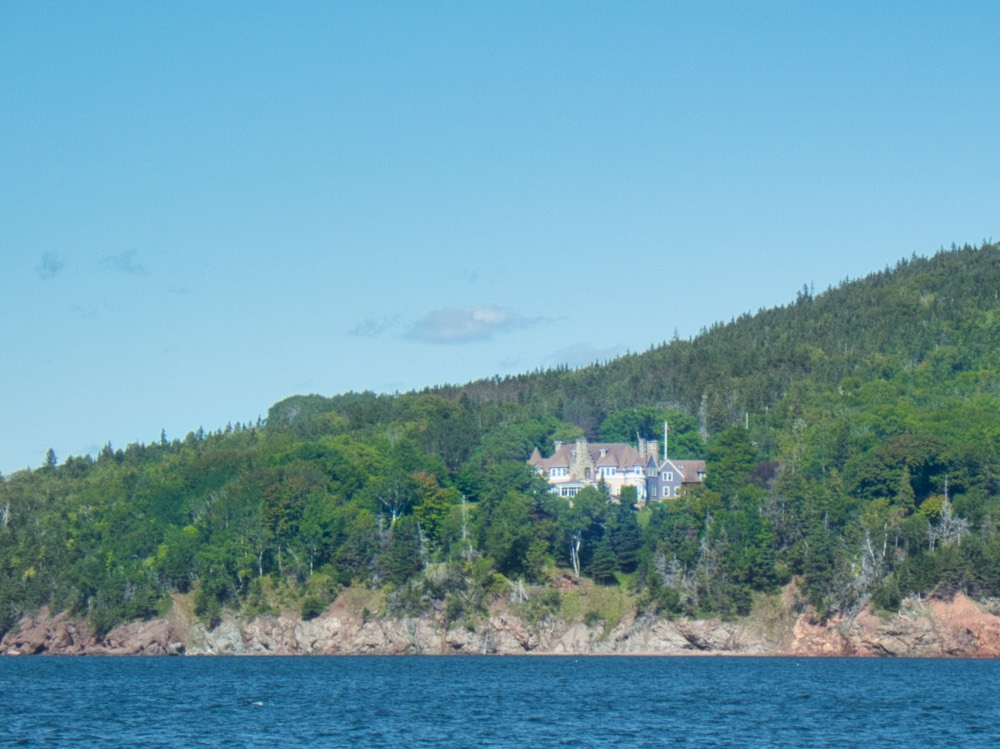
The Bell estate at the enterence to Baddeck Bay. Still owned by the Bell Family.

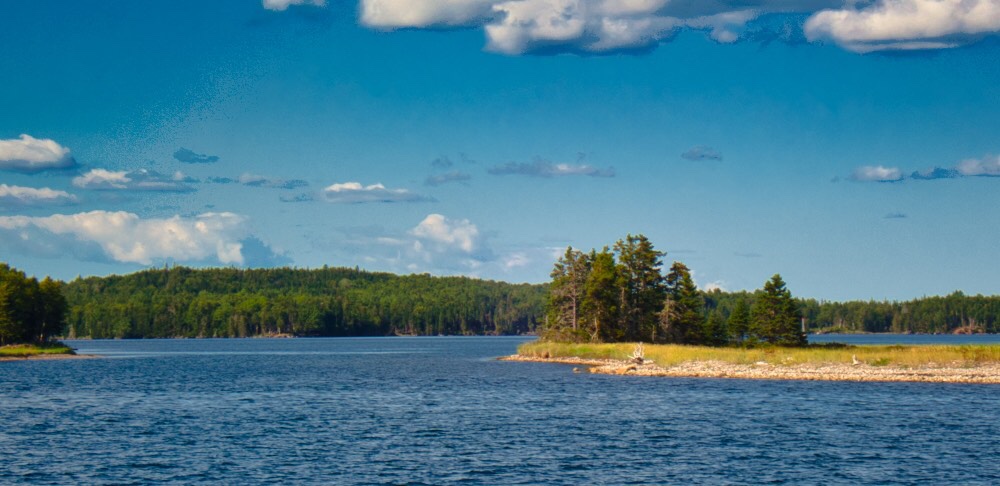
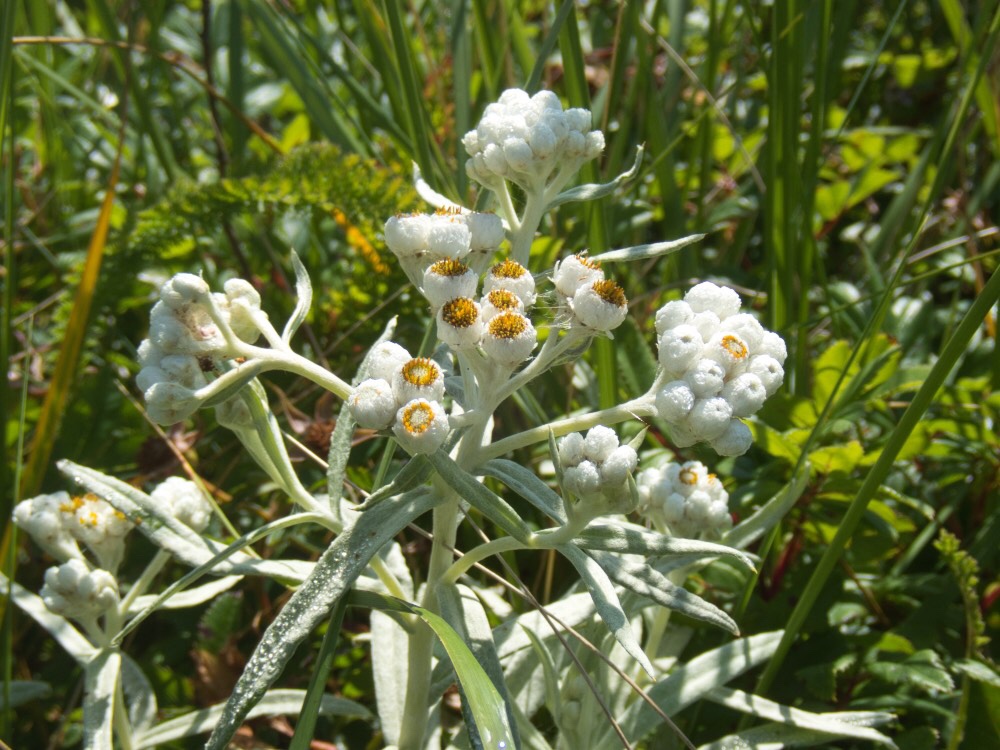
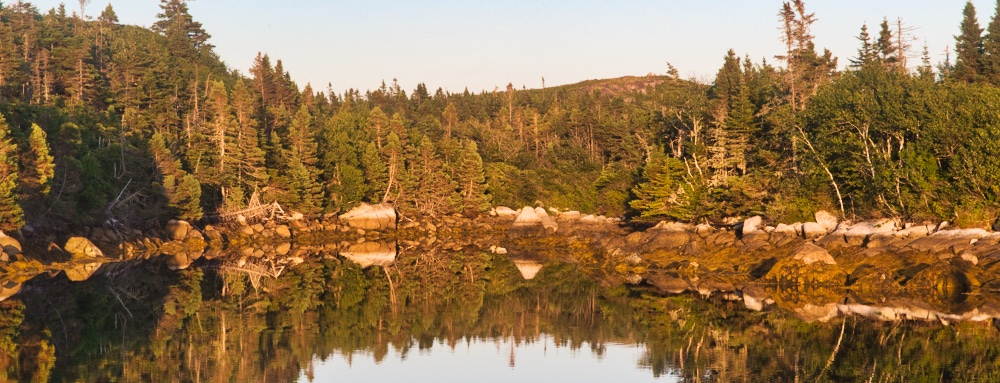
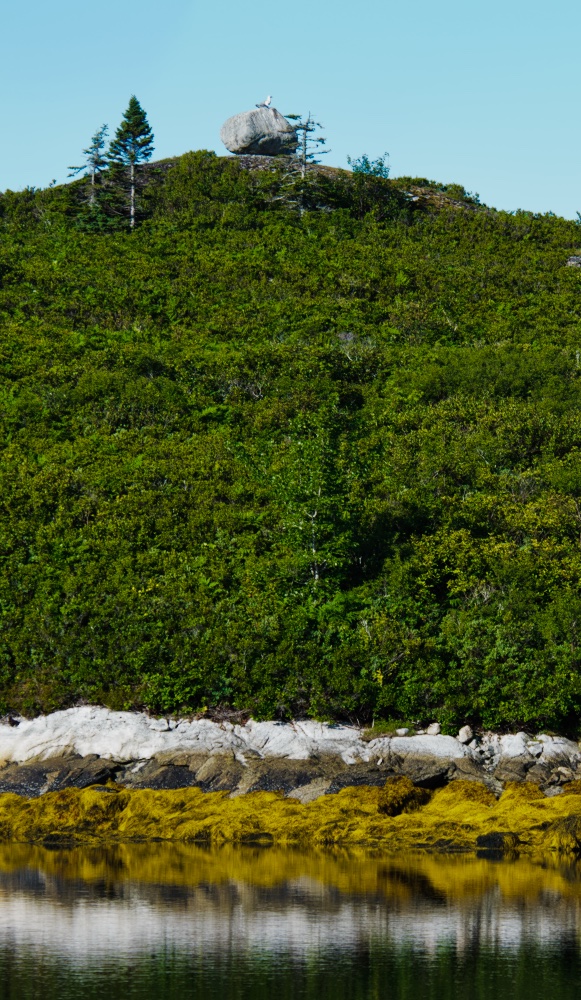
Like everywhere around Bras d’Or Lakes natural beauty is everywhere.  The landscape is different than southern Nova Scotia.  Instead of exposed rock, and rugged cliffs, this is rolling hills of bright red soil.  A much wider variety of trees grow in the forest.  
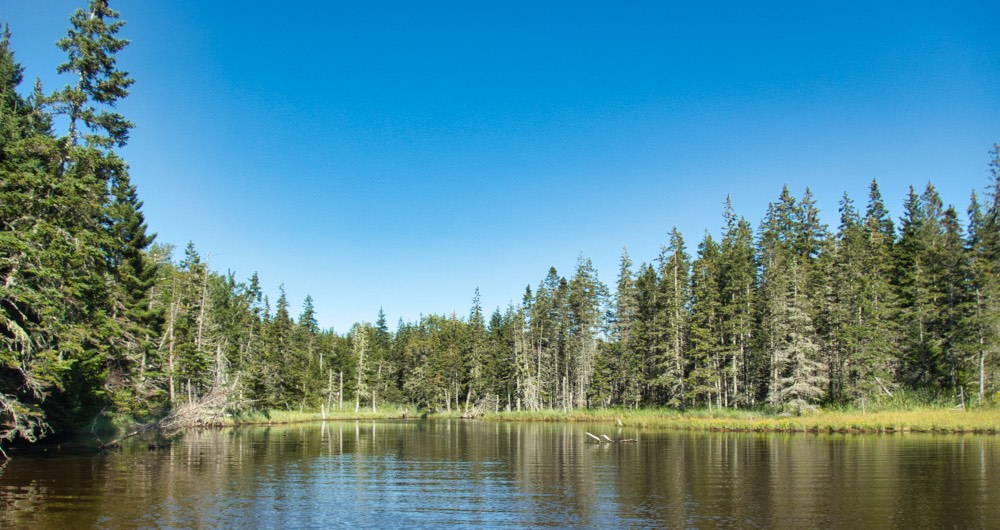
A scene typical of the shoreline of the Bras d’Or Lake
How dark is it here at night? Dark enough to see about a bizzilion stars…

In addition to the beauty of nature, they also have some very pretty boats up here.
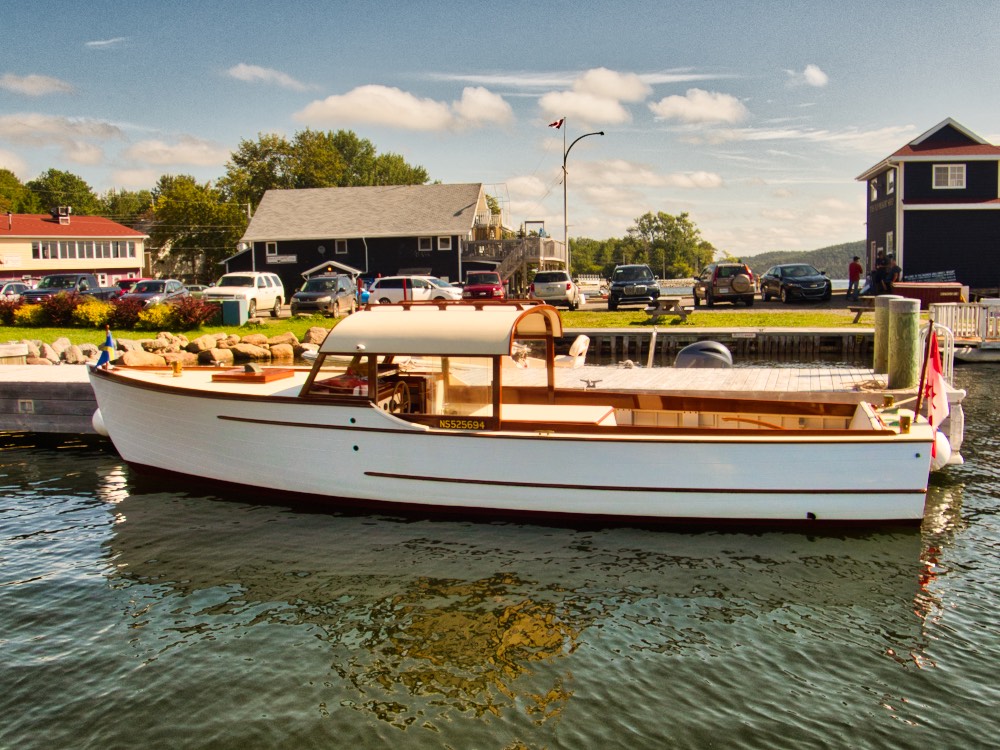
Built in 1935, and rescued after 50 years in a garage by the original owner’s grandson, Rosie is a work of love and art.
Harmonie gets photobombed by the local tourist schooer, the Amoeba

We’ll be in this area for a few more days, and then maybe move back out into the ocean and stop at Sydney.  From there if the weather allows we’ll head to Sable Island again, or if not, begin our passage south.  Right now we are watching the long range forecasts for Dorian’s track. Out seven days or so (about two forevers in weather forecasting) he is destined to be in our neighborhood.
Posted in Underway | Tagged , , , , , , , , , , , , , , , , , , , , , , , , , , , , , , , , | Leave a comment

Bras d’Or Lake

Our sail from Sable Island back to the mainland was a delight. Overnight we saw water with as bright a phosphorescent glow as we have ever seen. Doubly fun when dolphin swim by looking like glowing green comets in the water.

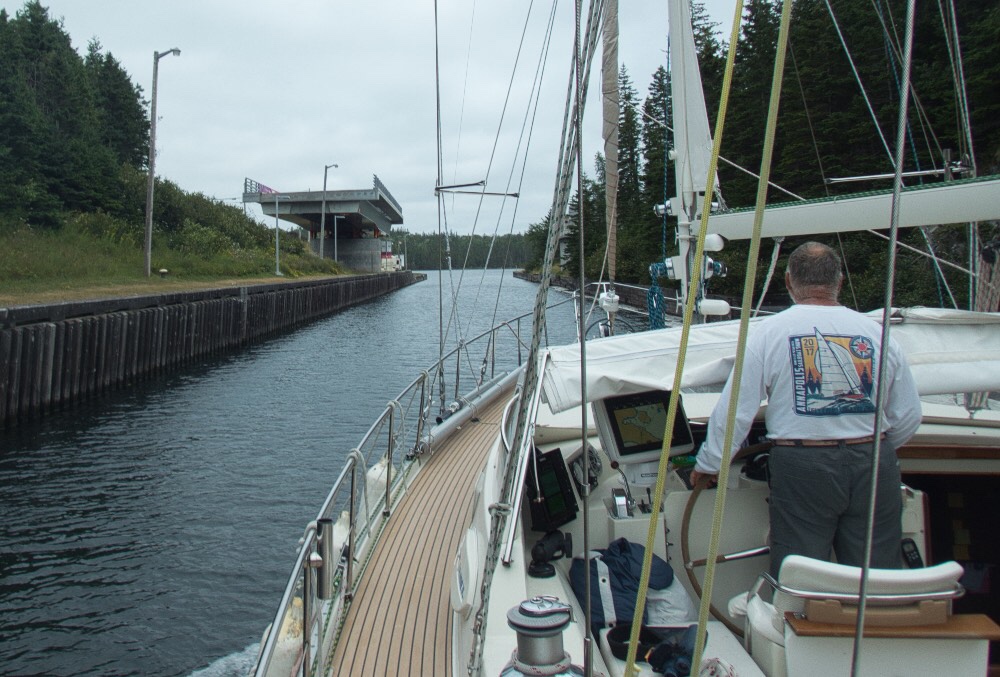
We arrived at the south east corner of Cape Breton Island, at the village of St Peters where we entered Bras d’Or Lake (pronoiunced “ba-door”) with an experience new to us: Taking Harmonie through a canal lock.

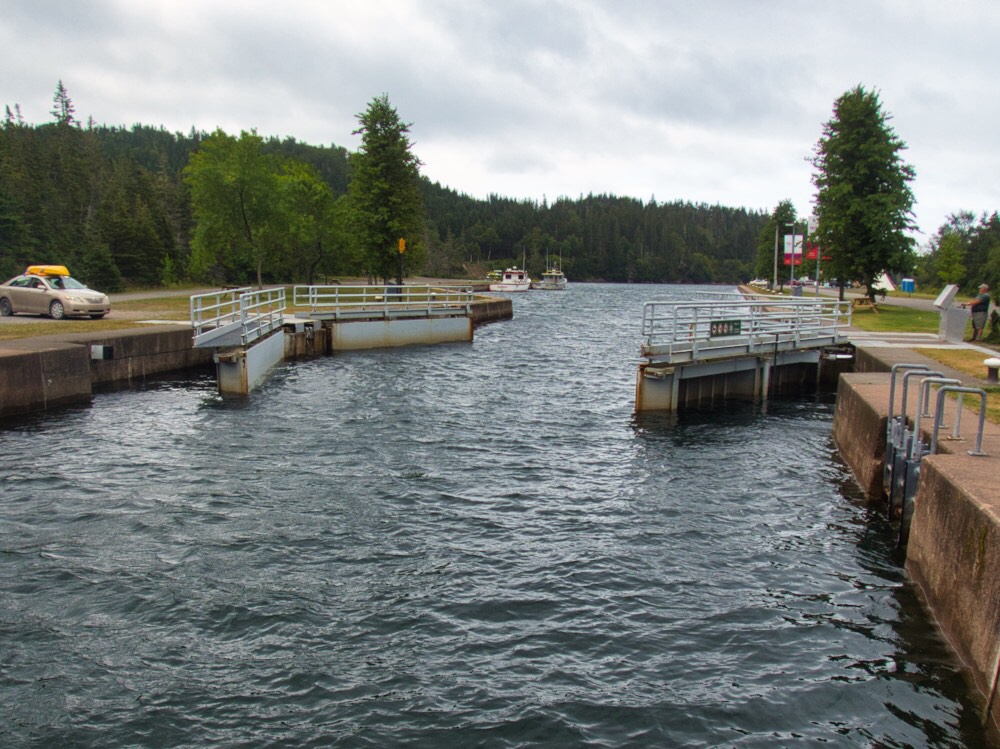
The lock gates in the St Peters Canal.

The swing bridge at the lake end of the canal.

The canal was built 150 years ago, and connected the lake with the ocean. Since the tides in the lake and ocean here are out of sequence by up to 4 feet, the lock was needed.

Once in the lake, we put in at the St Peters Marina for easy access to the grocery store and to top off the fuel tanks. A very low key and quiet place.

Bras d’Or Lake is huge estuary that drains most of Cape Breton Island. It has a small natural opening to ocean at the north end, and the St Peter’s Canal to the south. It is about a 50/50 mix of salt and fresh water and hosts a unique eco system. Where else do flounder, cod, and trout live together?

Sailing on a lake is different than in the ocean. The wind is more fickle, as it twists and turns around the hills and valleys, and the water is very calm, lacking any of the ocean swell we are used to.

We have found a small harbour fittingly named “Little Harbour” where we anchored to wait out an approaching nor’easter that is threatening tomorrow. Once the weather calms again, we’ll be making our way further up the lake to the town of Baddeck, the cultural capital of Gaelic speaking Cape Briton.

As our email inboxes fill with the manic notices of end-of-summer sales from numerous sellers of VIS (Very Important Stuff) we realize that our time this far north is getting short. Our plan is to head out in to the ocean at the north end of Bras d’Or Lake and begin our southern migration. If the stars align perfectly we might get another stop out at Sable Island. From there we expect a stop at Newport, RI, and then on down to Annapolis by early October.

Posted in Underway | Tagged , , , , , , , , , , , , , , , , , , , , , , , , , , , , , , , , | Comments Off on Bras d’Or Lake

Island of Sand, Fog, and Bones

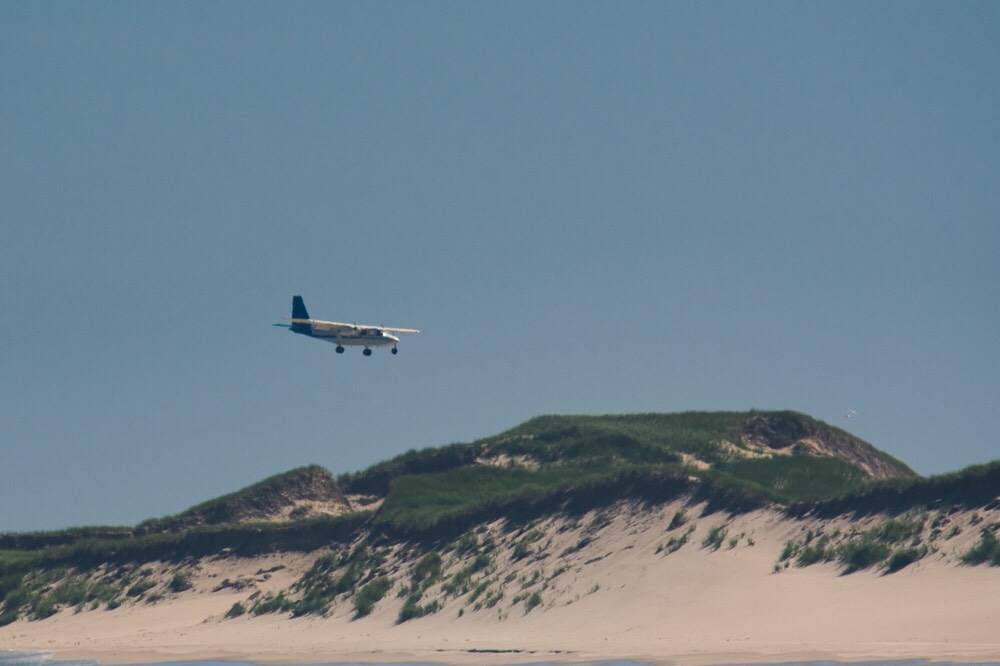
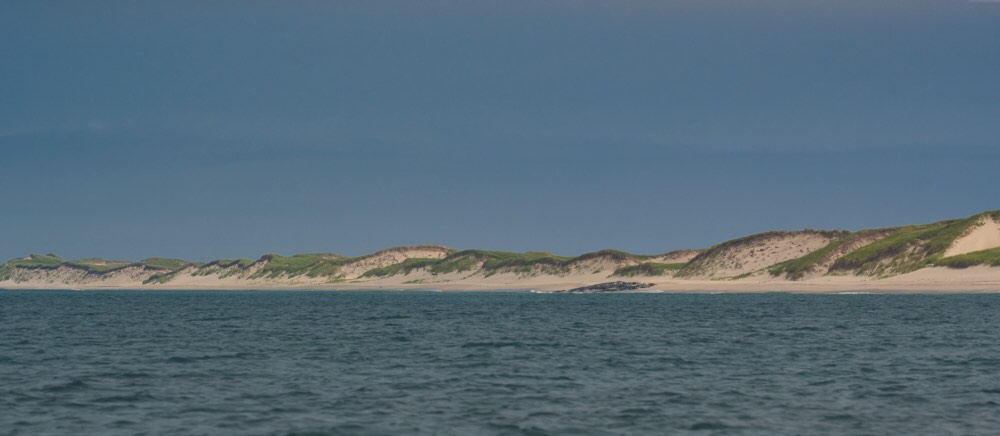
Sable Island is a 26 mile long, crescent shaped, sand pile over 100 miles from the coast of Nova Scotia. It is so remote that it is visited by only 6 to 8 private boats a year. Most people who do visit come by chartered airplane, or “eco-tour” boats and spend no more than a few hours on the island.

How most people get to Sable Island

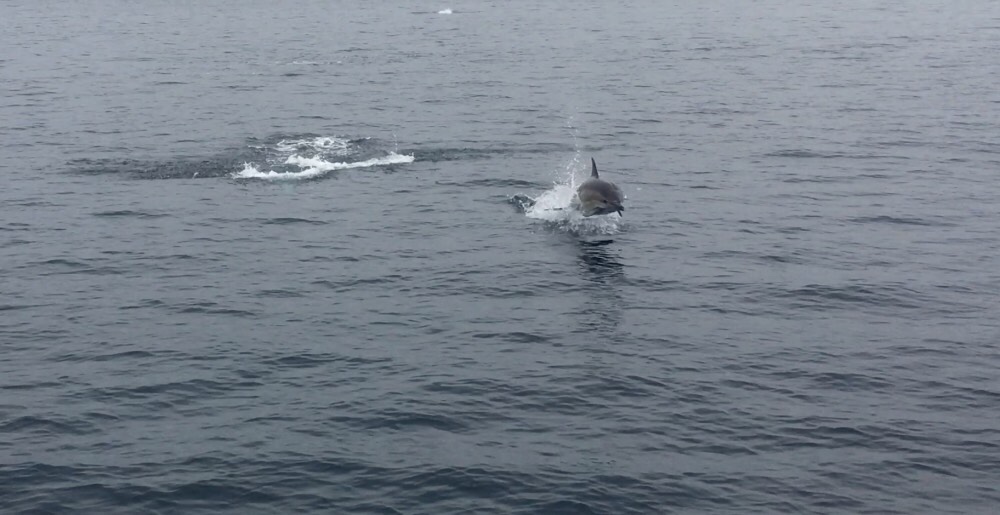
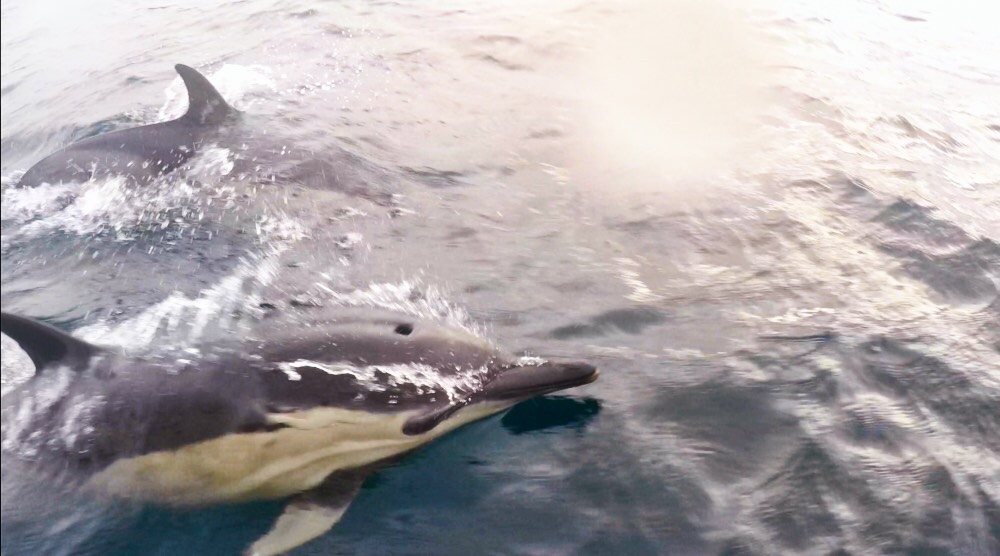
As we approached the island, we were escorted by a pod of common dolphin. We could see them in the distance, but as soon as they see the boat, what ever business they are up to is discarded for play time! They made a beeline to the boat, and spent 15 minutes riding the bow wave.

“Look guys! A boat! Hurry up!”

In the days before electronic navigation tools, the island and the surrounding fog-shrouded, shallow banks were a deadly hazard to the fishing fleet, and for ships headed between northern Europe and any American port from New York north. Well over 300 ship wrecks are recorded on the shores and shallow banks around the island. Almost all of the physical evidence of these shipwrecks have been dispersed by the movements of sand and time, although the boiler of the steamer Skidby, wrecked in 1905, is still a promenent landmark on the north shore of the island.

Skidby’s boiler.

It’s a mystery to me why the island is there, and why it stays there, but it has been there since the last ice age, and although the dunes themselves move constantly, the island as a whole is a a rather stable geographical entity.

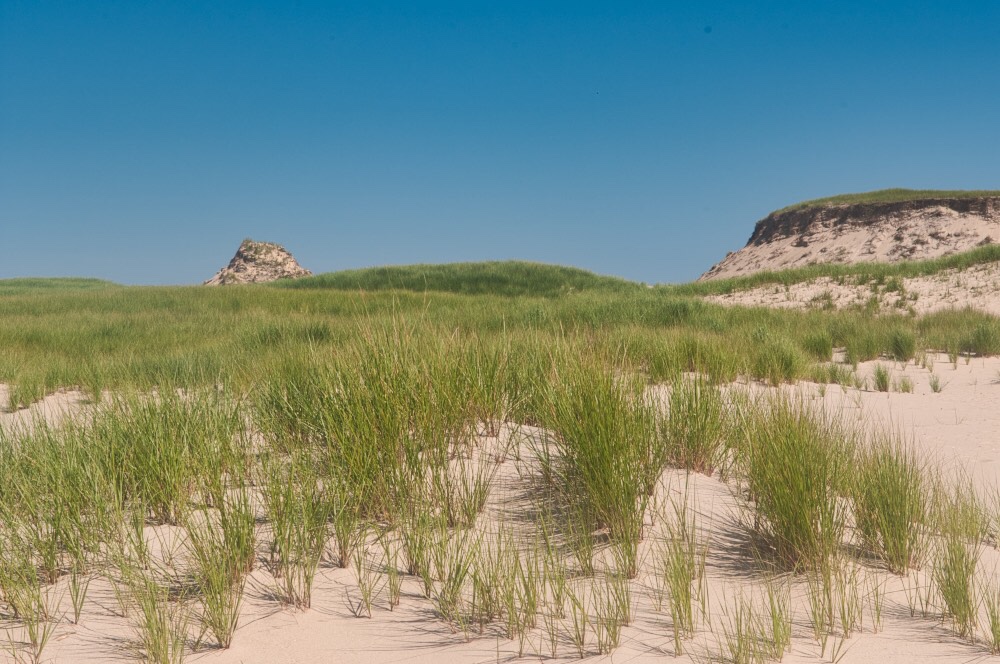
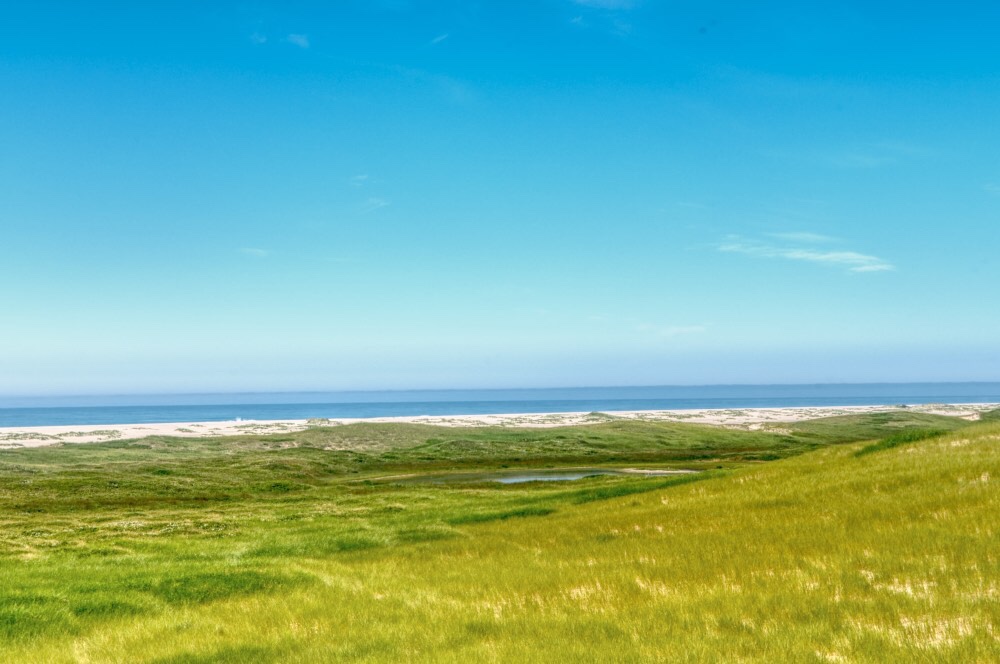
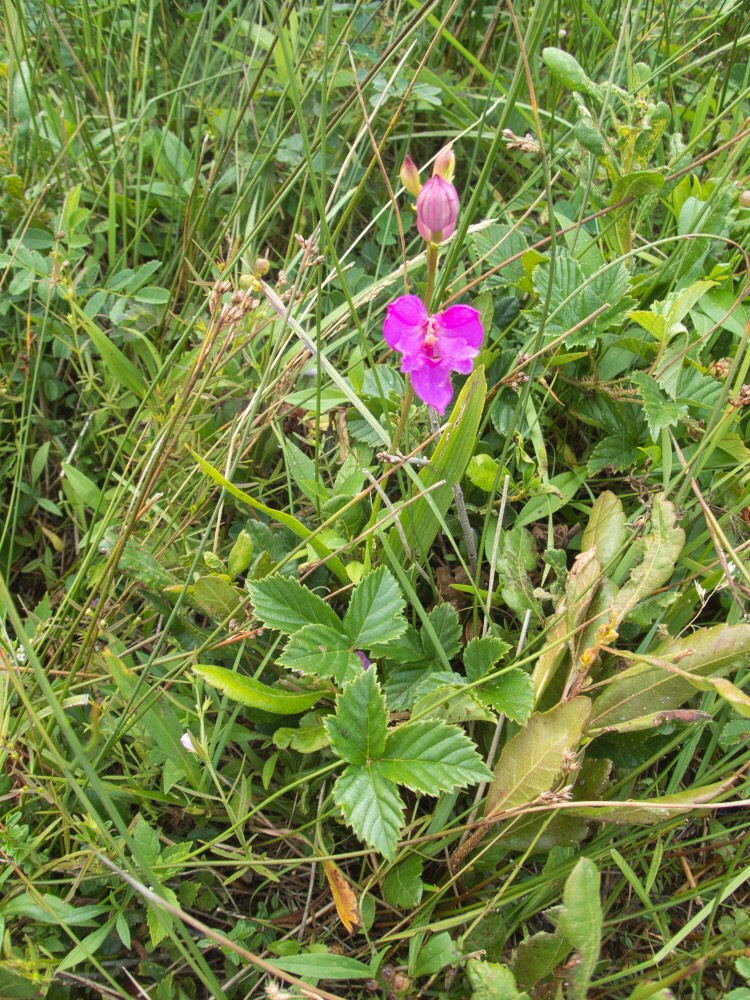
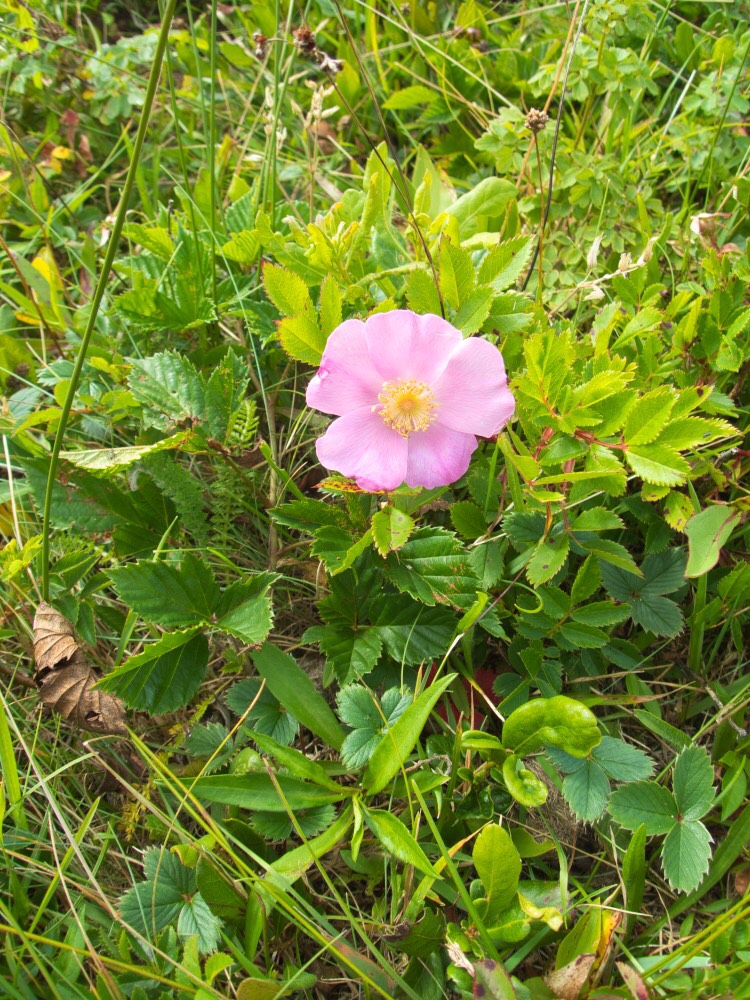
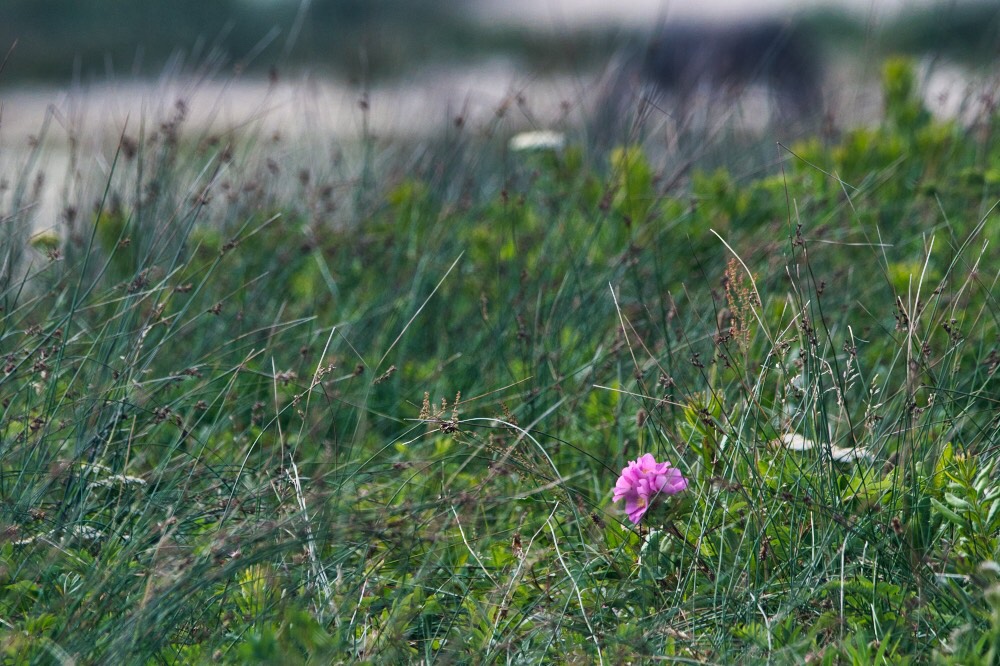
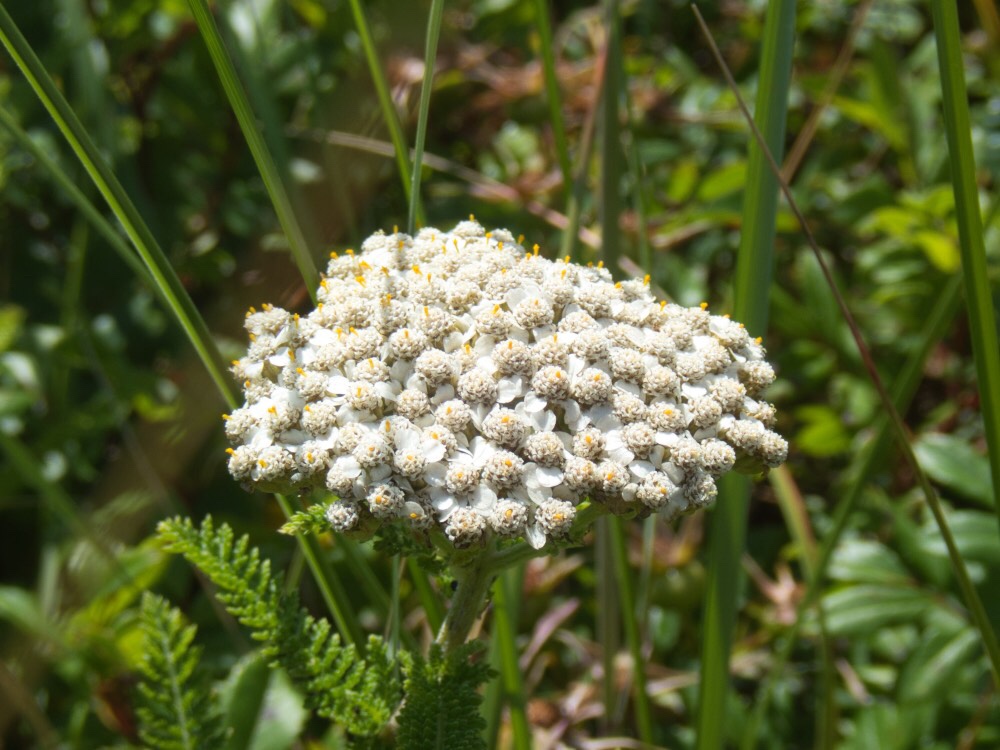
The biology of the island is fascinating. Although dominated by dune grass, the hollows between the dunes have a highly diverse selection of plant life. There are a number of fresh water ponds on the island.

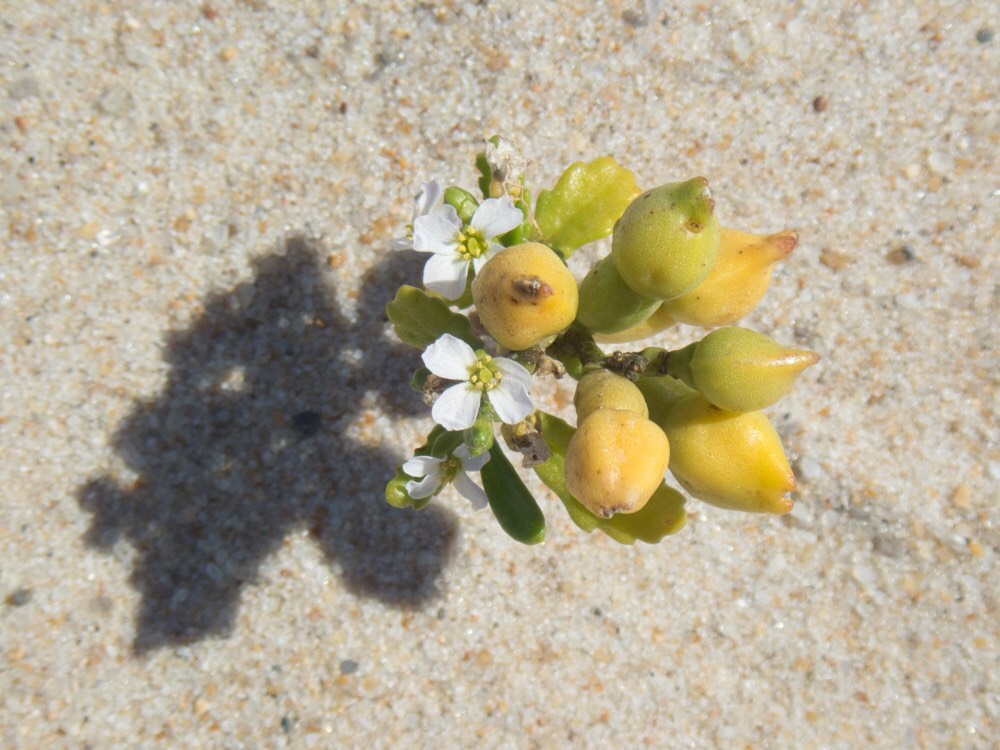
Karen of course found the one native orchid that was still in bloom.

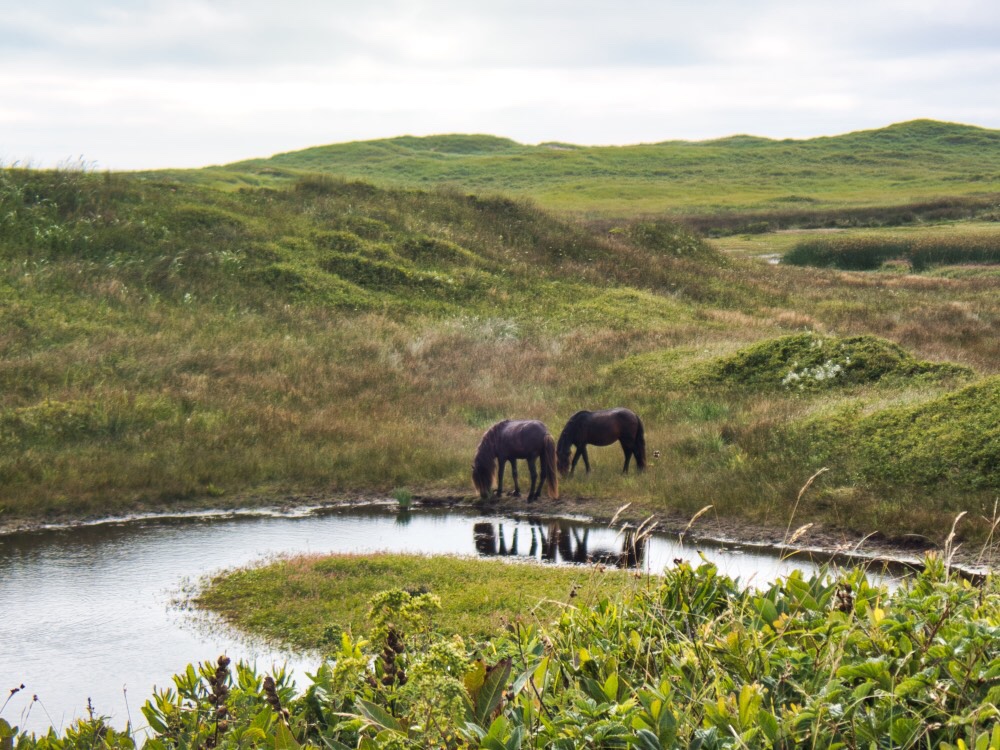
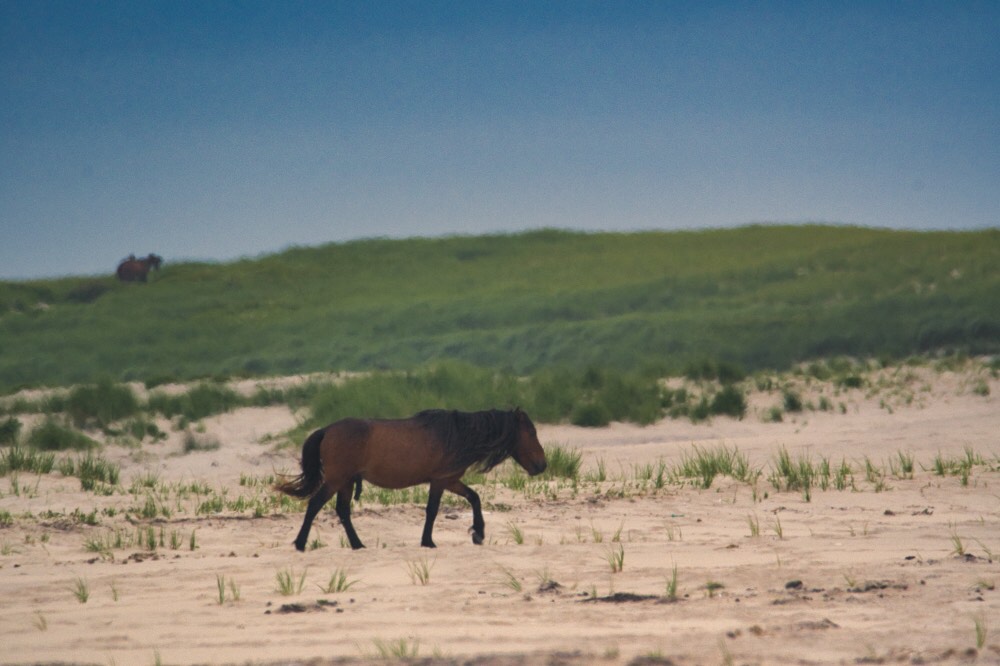
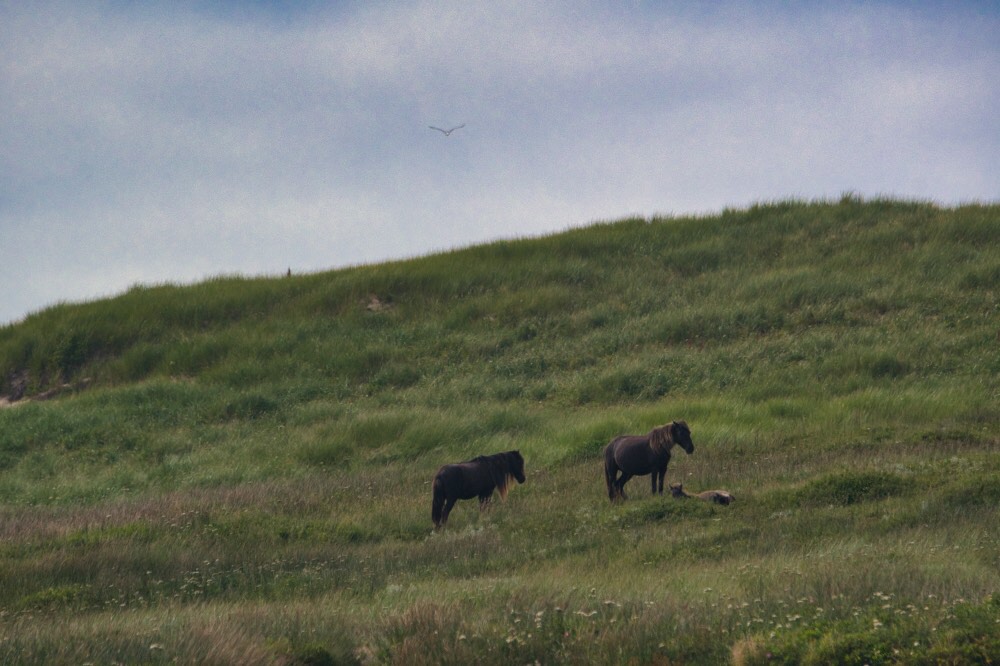
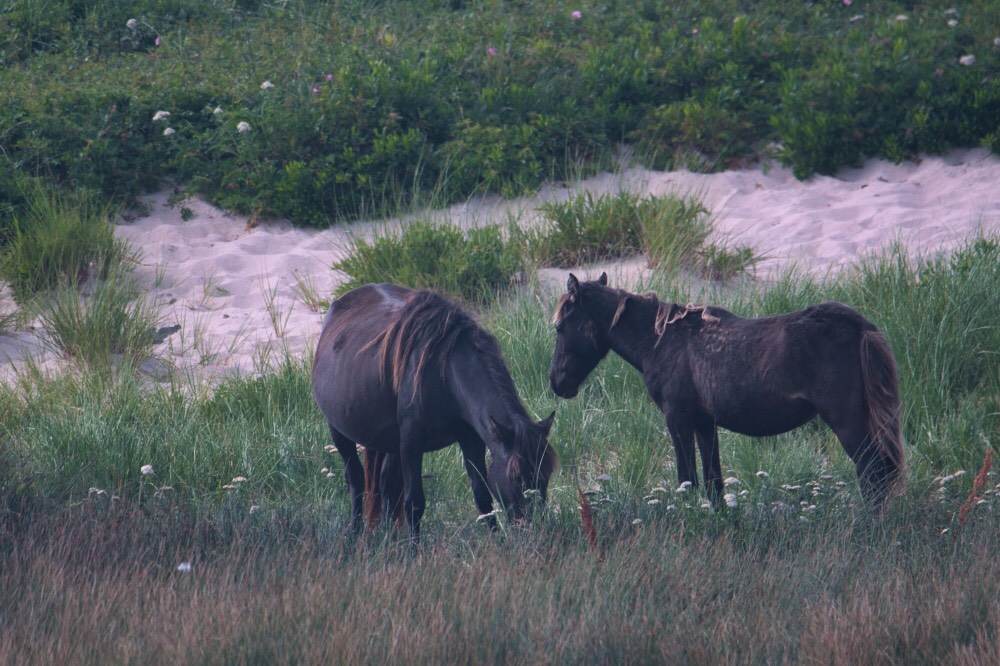
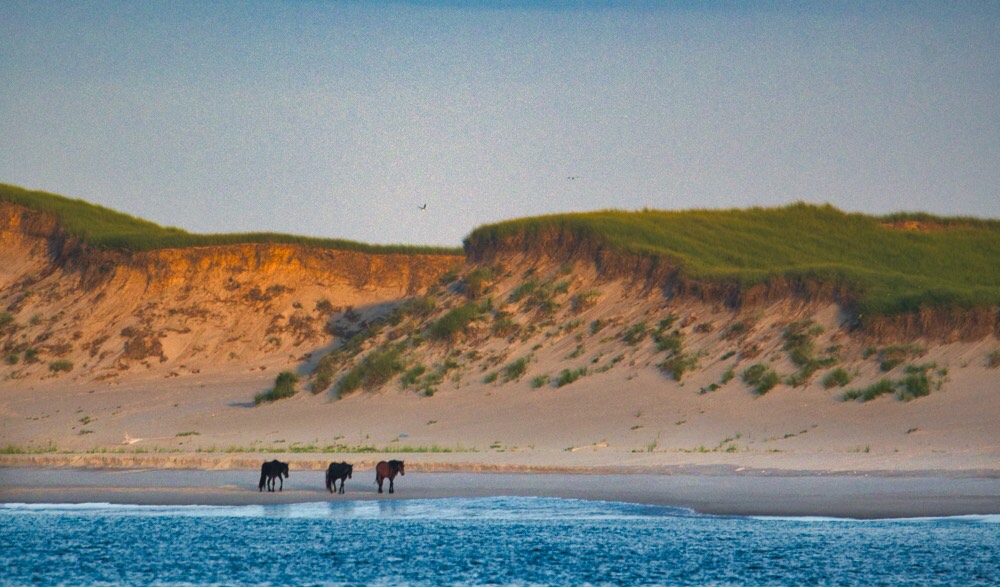
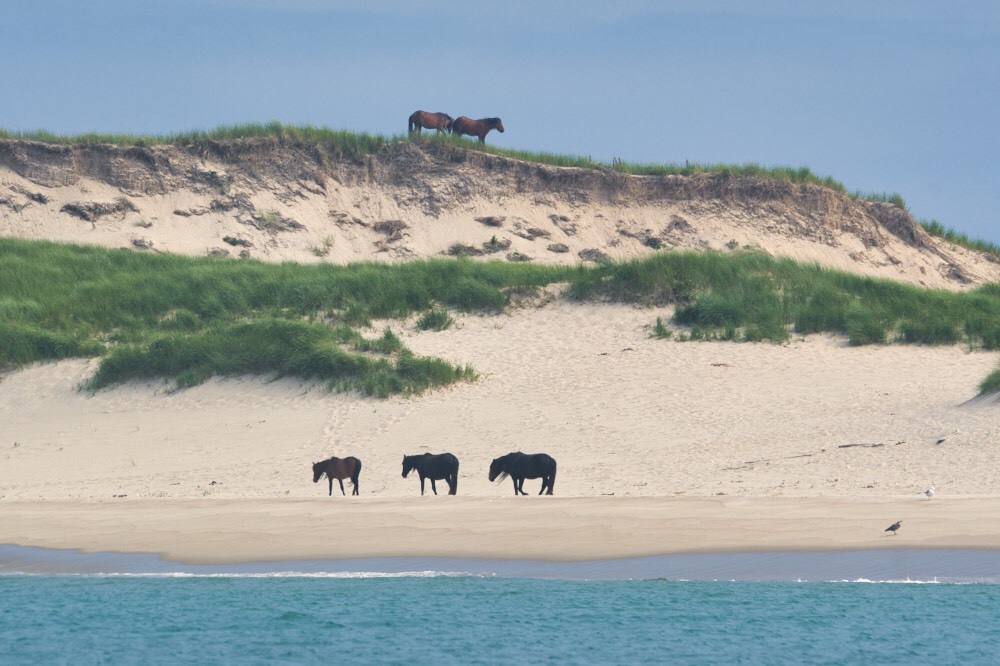
There are only three kinds of mammals currently living in the island. A small group of humans, several species of seal, and horses. The horses are not native, of course, but seem to do quite well in a difficult environment.

The horses are the “star” attraction of the island, as wild horses are pretty much everywhere.

Interestingly, even though freshwater is plentiful, there are no mosquitoes!

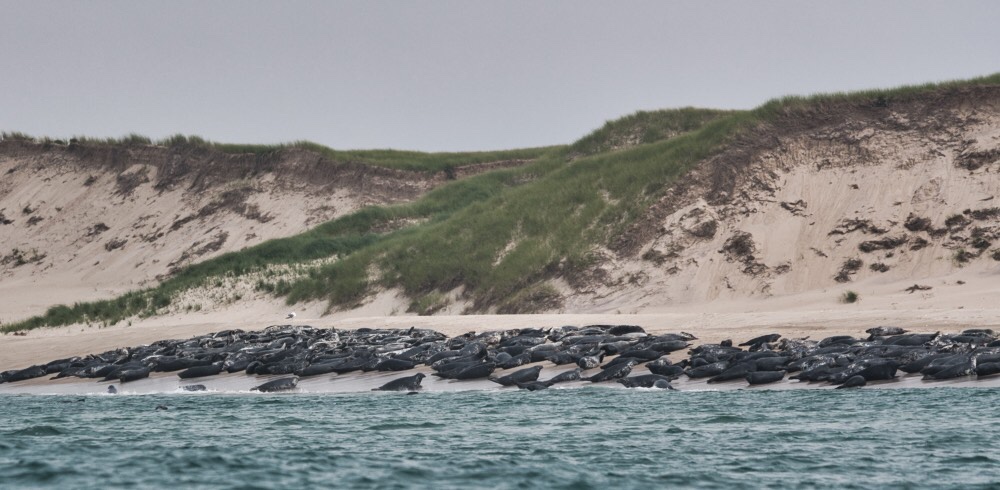
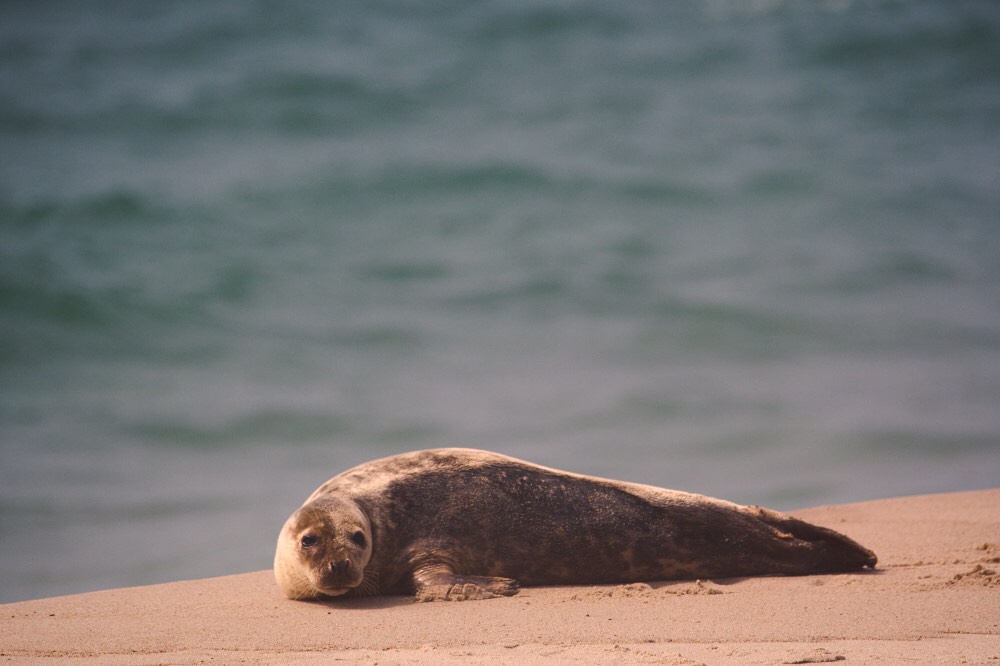
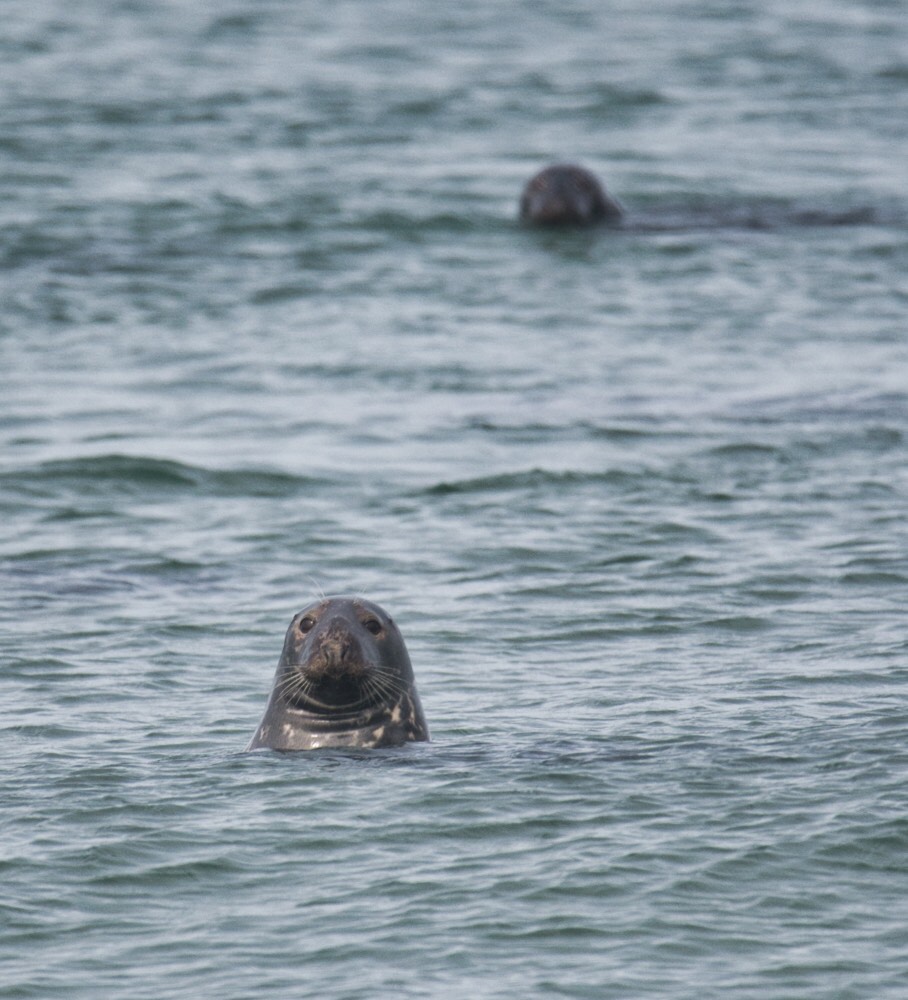
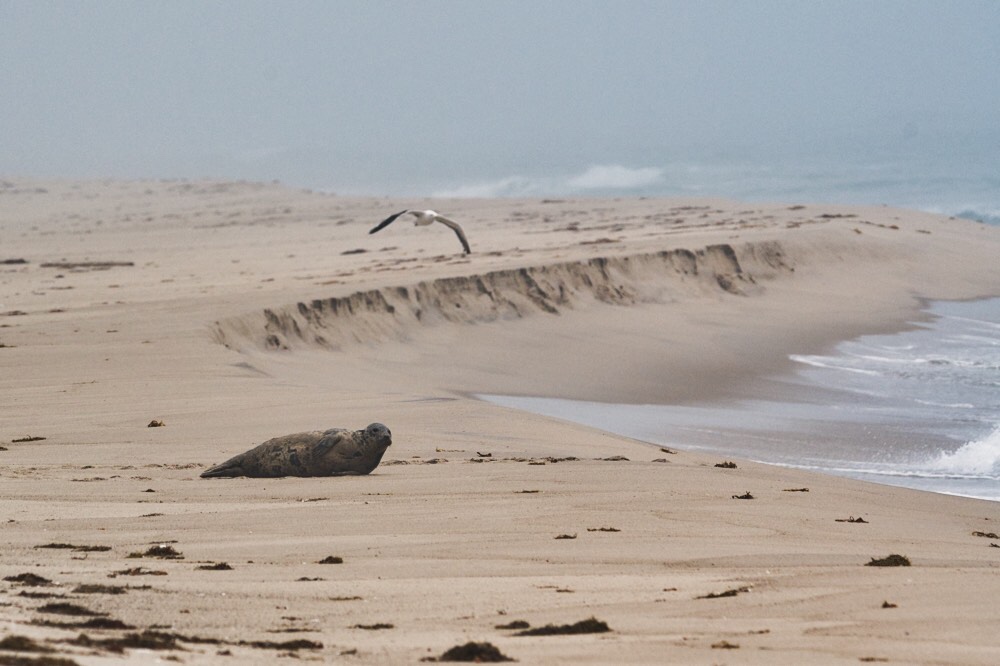
There are several kinds of seal that use the island at various times of the year, but the most numerous year-round residents are the gray seals. Hundreds of thousands are on the island during the spring breeding season. Fewer during the summer.

In large groups the vocalizations of the seals are bizarre. Imagine the best haunted-house moan you ever heard. Now imagine a hundred seals making that noise in a dark and foggy night.

As evening approaches the seals haul out on the beach by the hundreds.

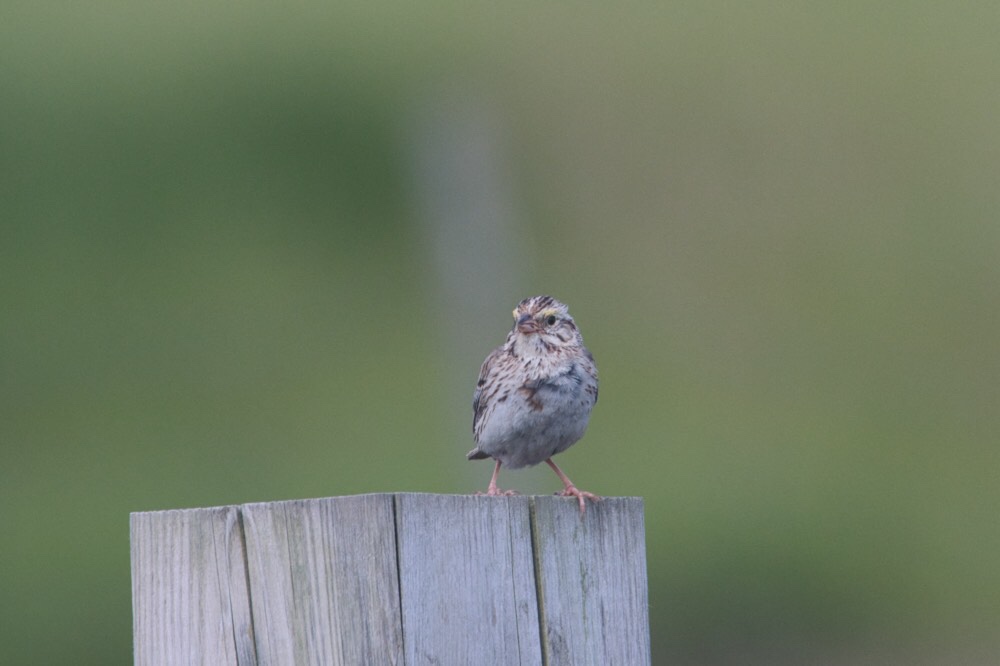
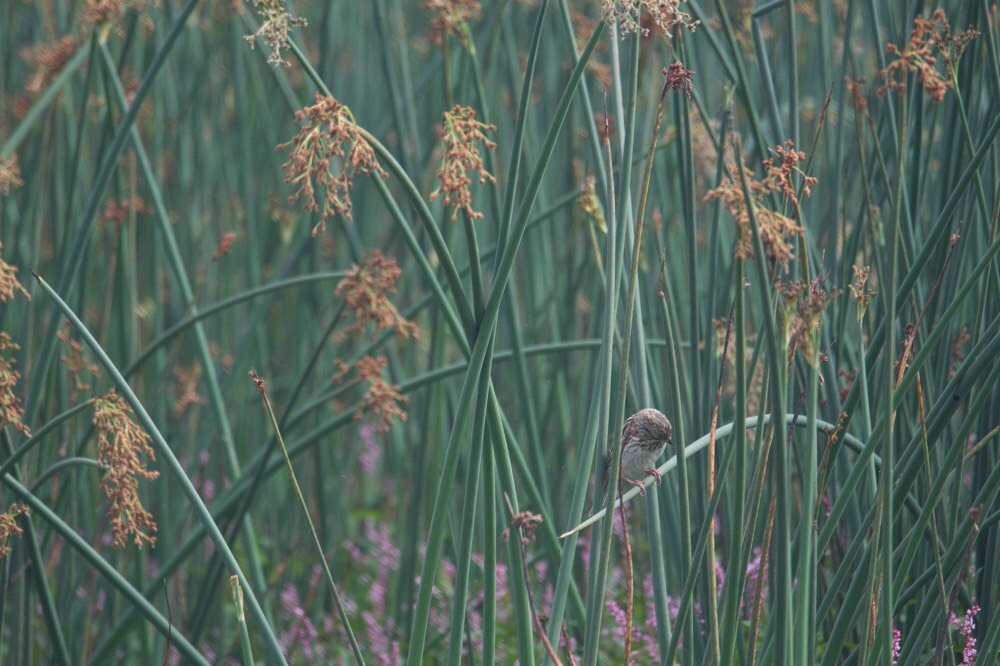
Of course a wide variety of shore and sea birds use the island for breeding and feeding. One subspecies of the savannah sparrow, the Ipswich sparrow, nest only on Sable Island.

An Ipswitch sparrow.

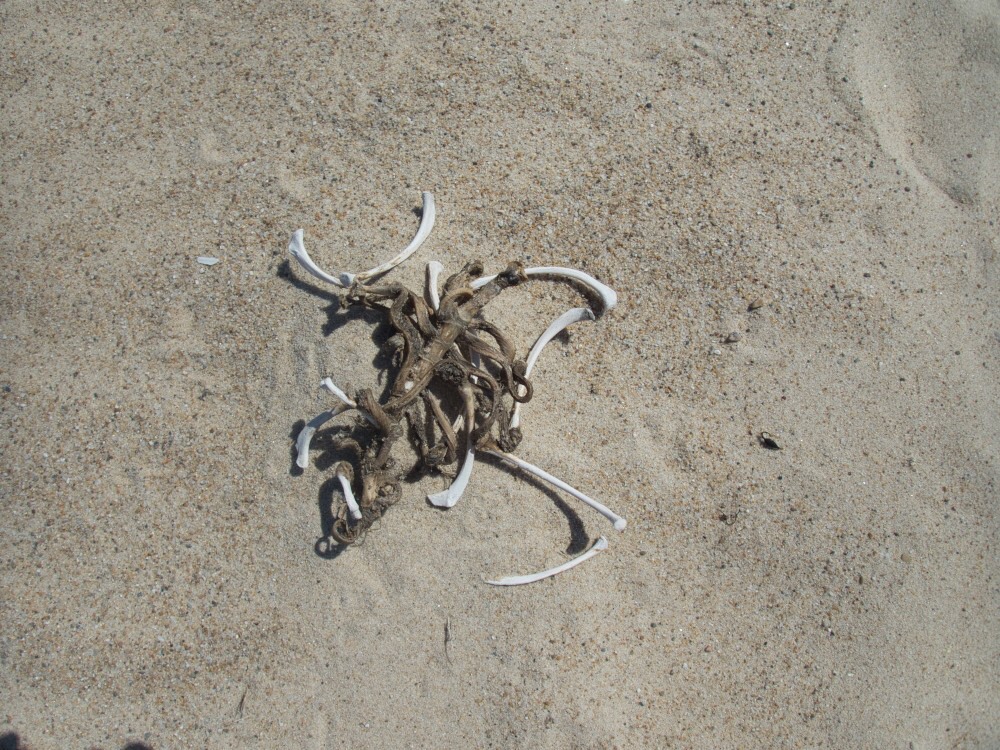
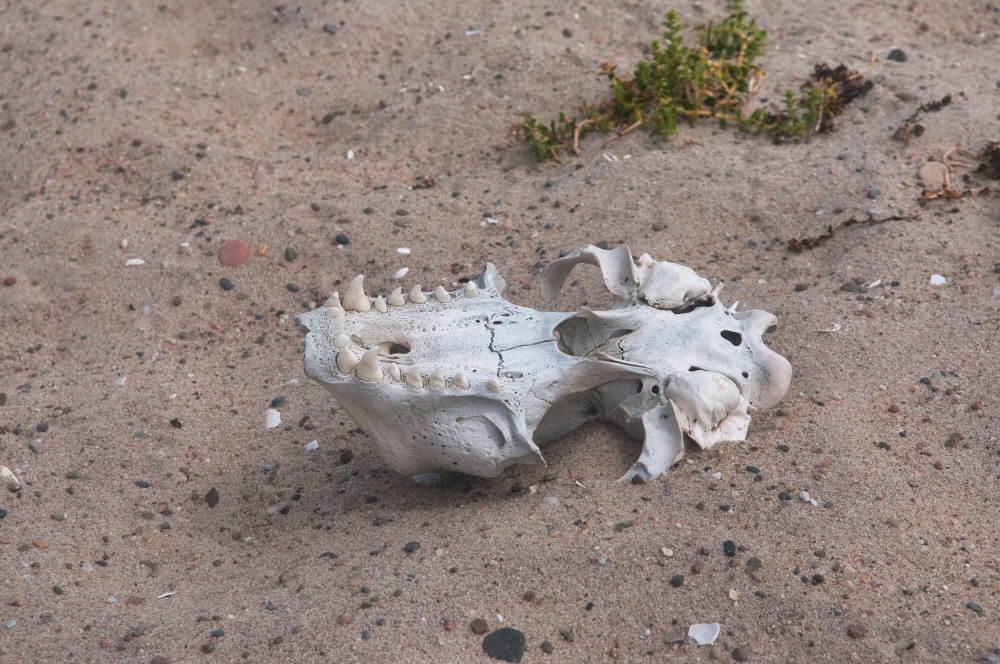
One of the striking things about an island with no large scavengers, and thousands of large animals, is that death is on display everywhere. The carcass of a horse or seal that dies is not pulled apart and scattered but persists in a recognizable form of hide and bone for years. Bones are everywhere.

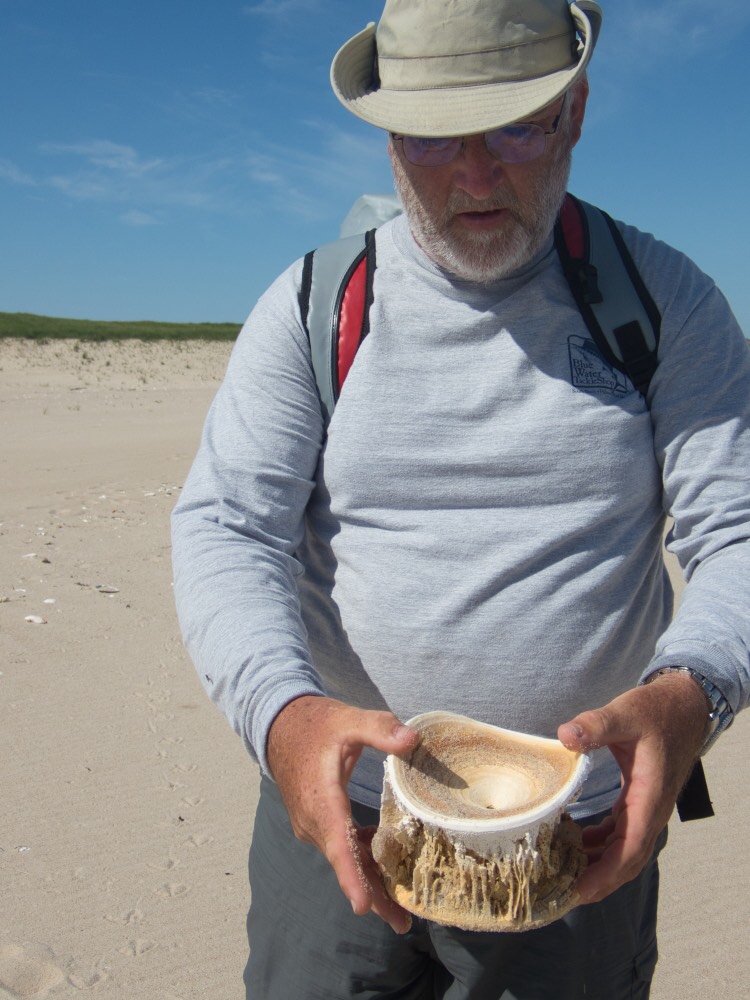
A different find. A vertebrae from a basking shark, next to a whale shark, the biggest fish in the ocean! Since it’s from a shark, I guess technically it’s not a bone, but close enough!

Seal pup carcasses are especially common. With tens of thousands whelped on the island every year, even a low mortality rate leaves lots behind.

Adult seals die here too.

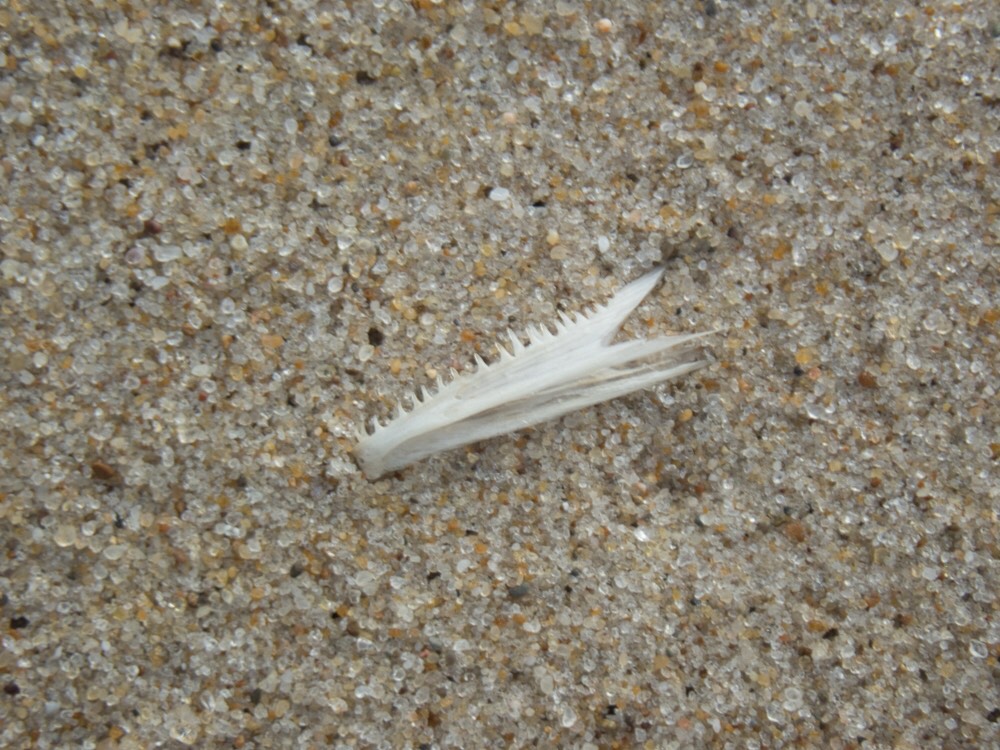
Even the delicate jaw of a fish washes up on the beach.

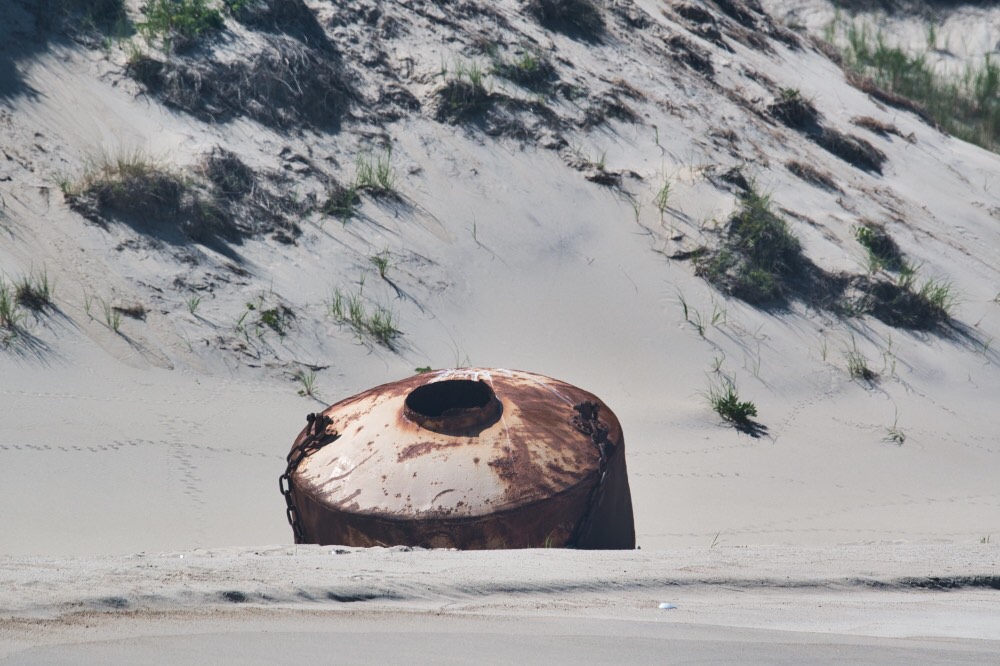
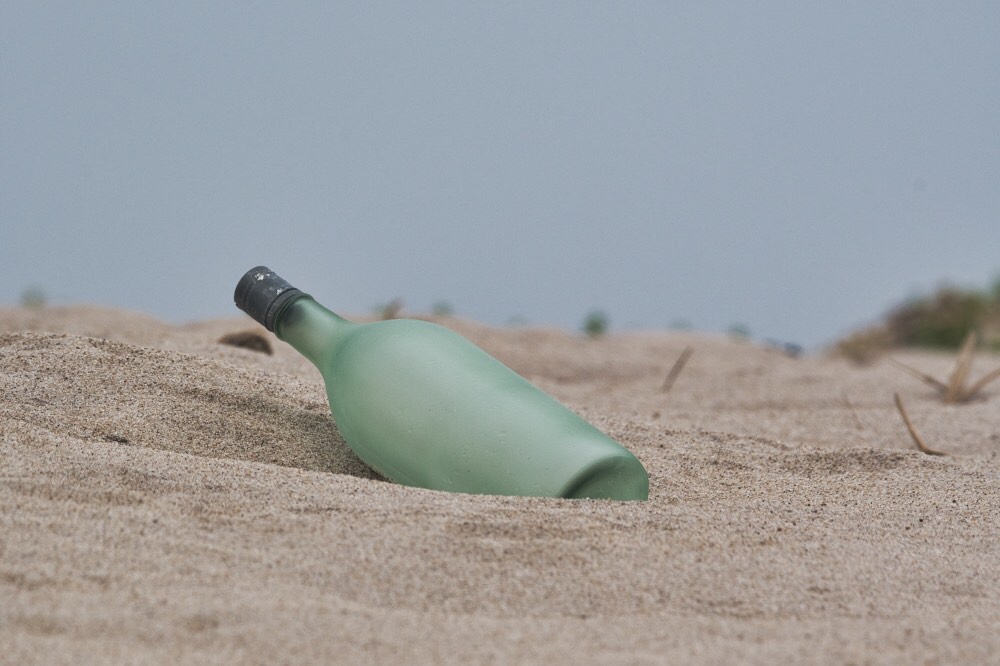
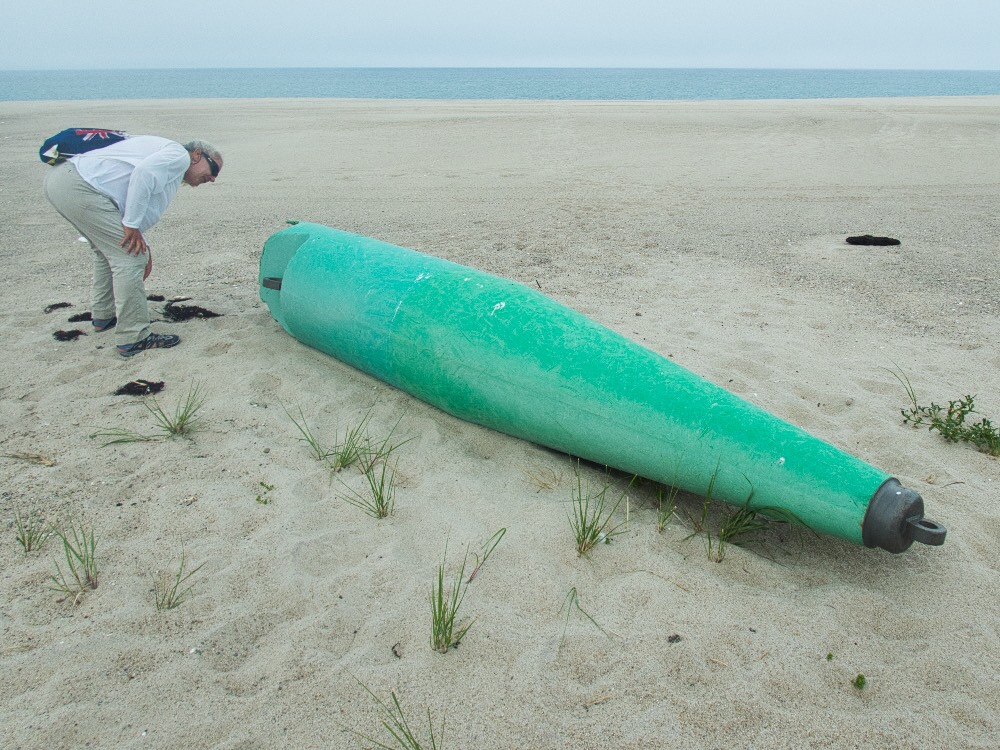
Of course man made objects wash up on these remote beaches too.

Karen inspects a navigation buoy that appears to be off station.

If you get the chance, go to Sable Island. By far the best way to visit is by private boat. In round numbers, about the same number of people go into space in a year as visit Sable Island by boat! Do the adventure! We found the permitting process to be very simple, and the park staff was helpful and welcoming.

Posted in Underway | Tagged , , , , , , , , , , , , , , , , , , , , , , , , , , , , , , , , , , | Comments Off on Island of Sand, Fog, and Bones

Sable Island

What a strange and wonderful place this is. It is remote outpost of the Canadian National Park system located 130 miles off the coast of Nova Scotia. Twenty six miles long, and nowhere over a mile wide, it is an oddity out at the edge of the continental shelf. It is made completely, and only, of sand. I am sure we will say this again, but anyone who has a chance to come here should. It is a truly amazing place, and unlike anything else you will ever see.

It is visited by only 6 to 8 private boats a year, although there are “eco-adventure tours” that arrive by weekly for eight hours by chartered airplane, and a monthly tour boat for two days. The park staff has welcoming and helpful, although it does feel a bit strange to us–used to visiting uninhabited islands–having people worried about where we are and our safety although it is not unwelcome. With that said, we have basically been given the run of the island. With few exceptions and simple rules we basically can go where ever we like.

We’ll have a lot more to say when we get an internet connection where we can post photos, (and we have a LOT of photos!) but the local herd of 400 to 500 wild horses and the many thousands of gray seals are the high profile residents of the island.

We are anchored off the northern side of the island in an open roadstead, so if the wind shifts to anything from north of east or west we have to leave, but we expect to have at least one more day to explore.

From here we’ll be heading a bit further north and west to the Bras D’Or Lake and Cape Bretton Island.

Posted in Underway | Leave a comment

The Bawleen

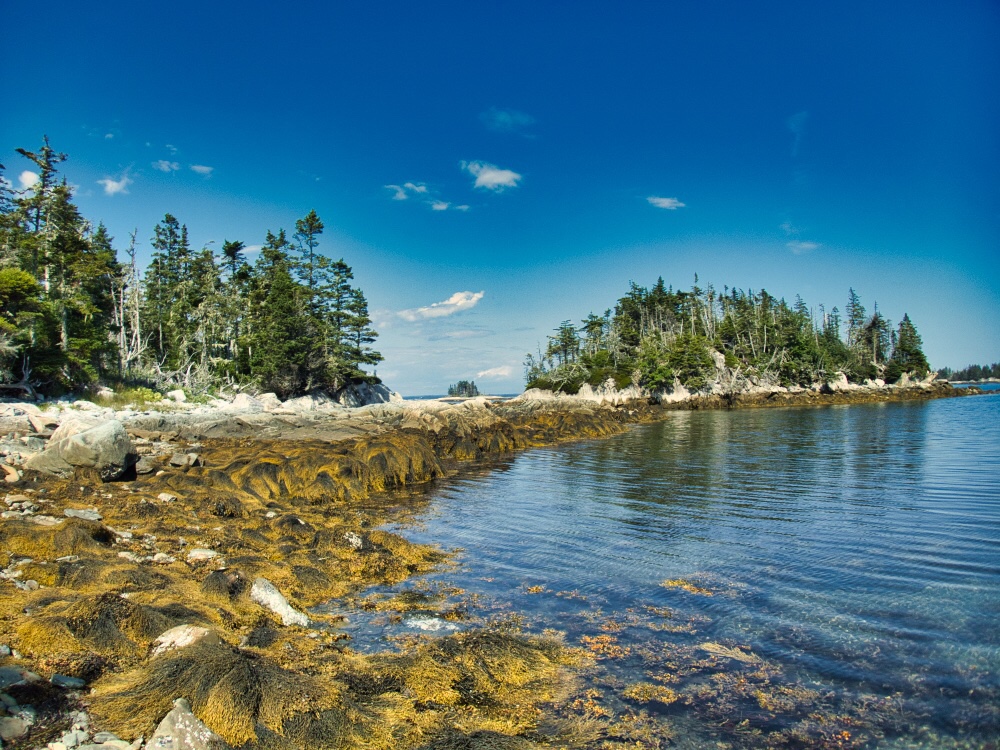
The Bawleen is a beautiful bay enclosed by three islands at the entrance to Spry Habrour about 50 miles east of Halifax. I haven’t found any derivation of the name, but it has the ring of a Scots word, as so many place names here do.

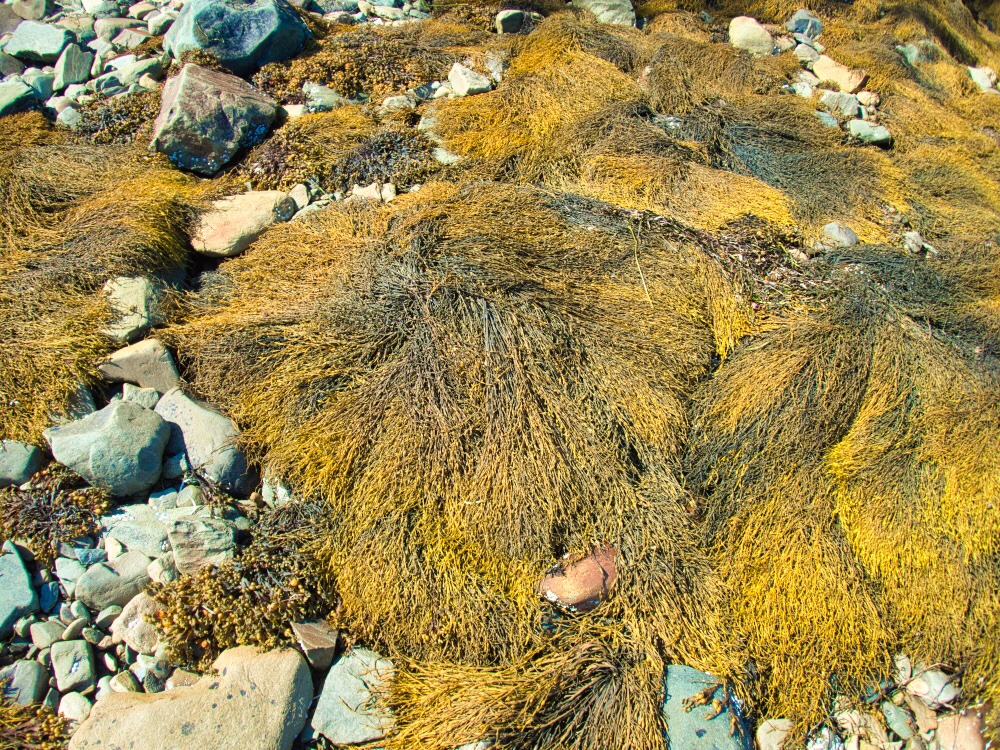
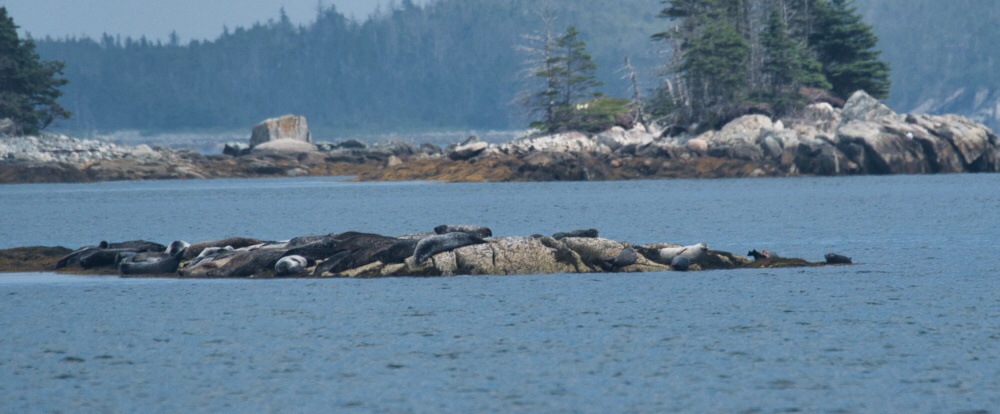
The entrance is difficult, but we carefully surveyed it by dinghy and found our way in without a problem.The bay is probably 20 acres in size with a large population of birds, and about 50 seals. One thing almost totally missing is… fish! The seals eat just about everything that swims in. The pictures below can not begin to do the beauty of this place justice.

Today we moved to the Sheet Harbour on the shores of which is the town of the same name. We are here because it is the closest grocery store for 100 km. We’ll be shopping tomorrow to refill our stocks for our weather-delayed trip to Sable Island. The weather is settled back down again, and looks perfect for leaving to the island on Sunday morning. It will take us about 24 hours to get to the remote island were we will stay for 3 or 4 days, or until the weather chases us away!

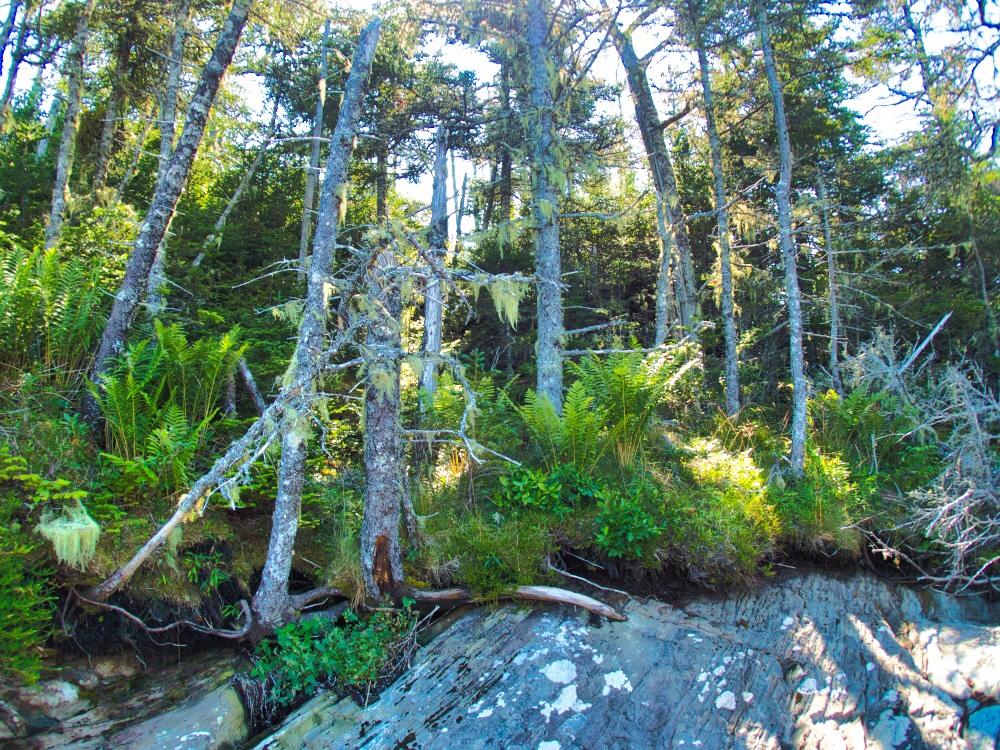
Lush growth of midsummer in the north.

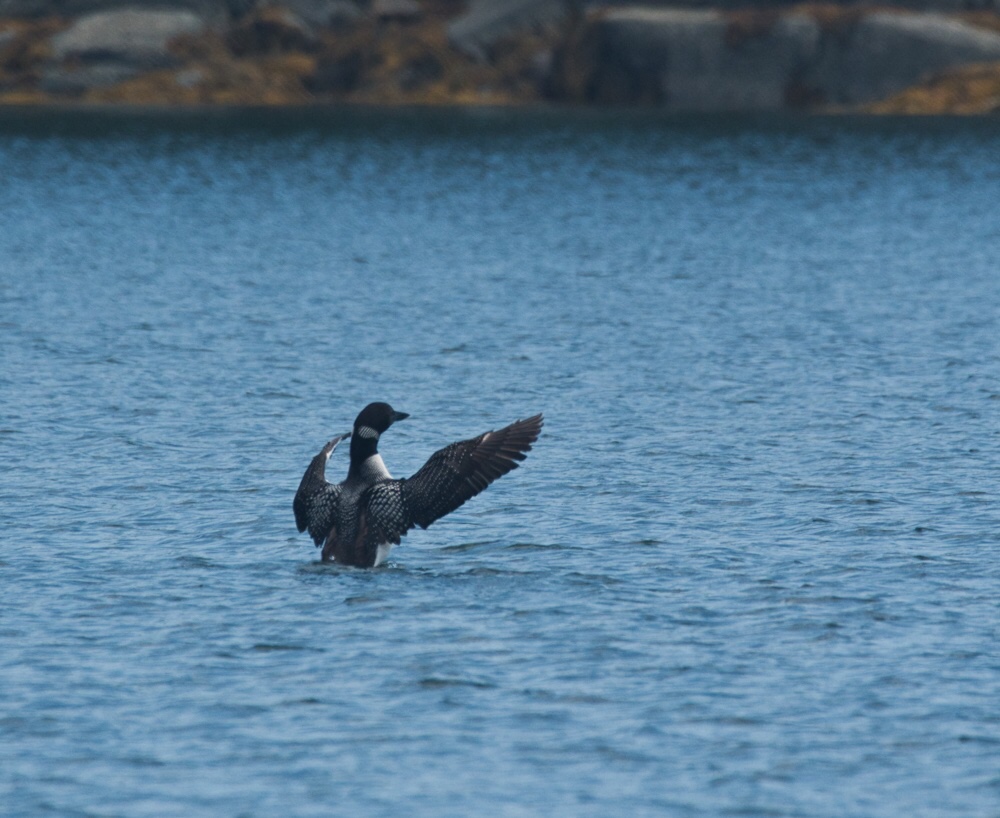
A common loon.

Just a few of the Gray seals that call this bay their home.

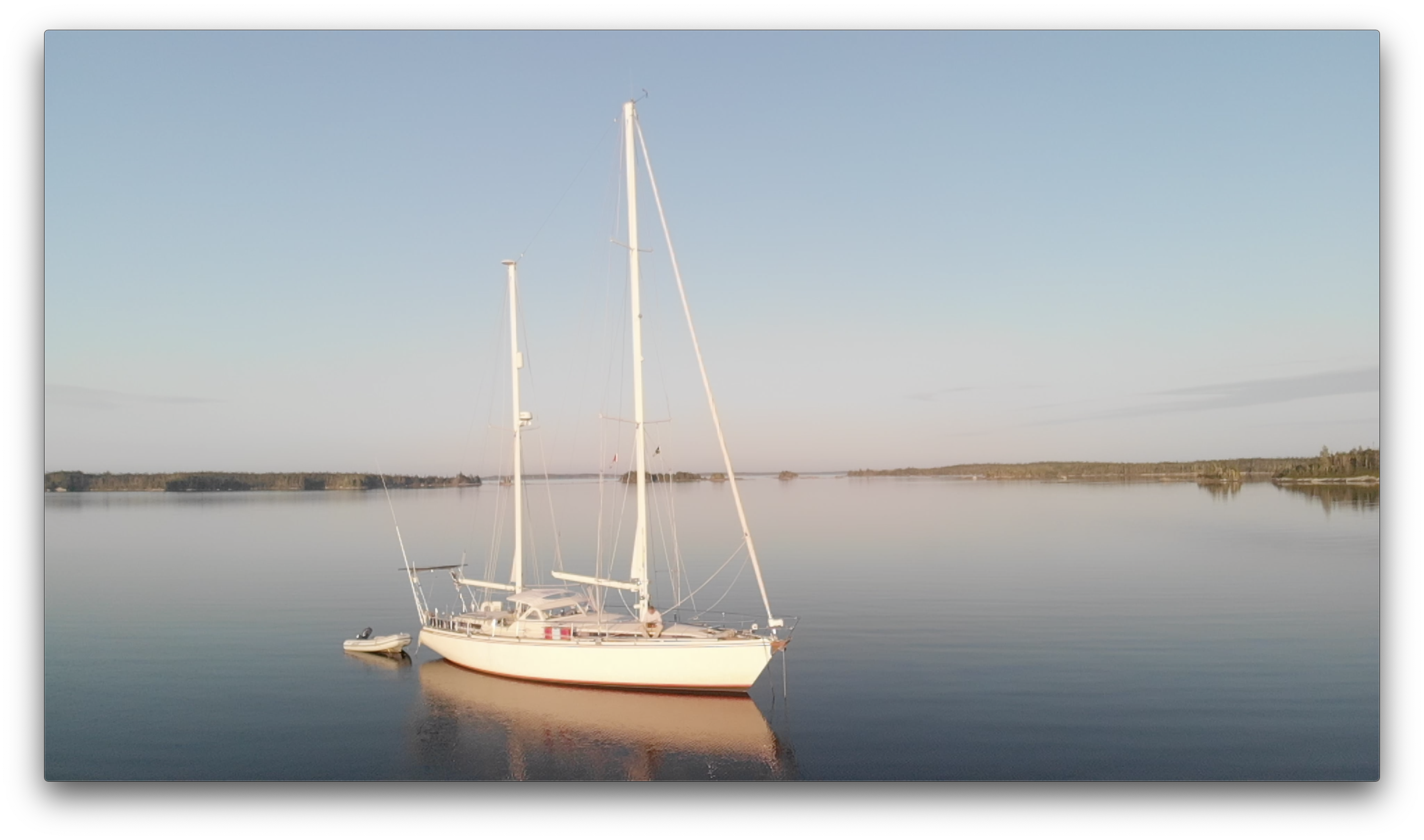
Harmonie in The Bawleen.

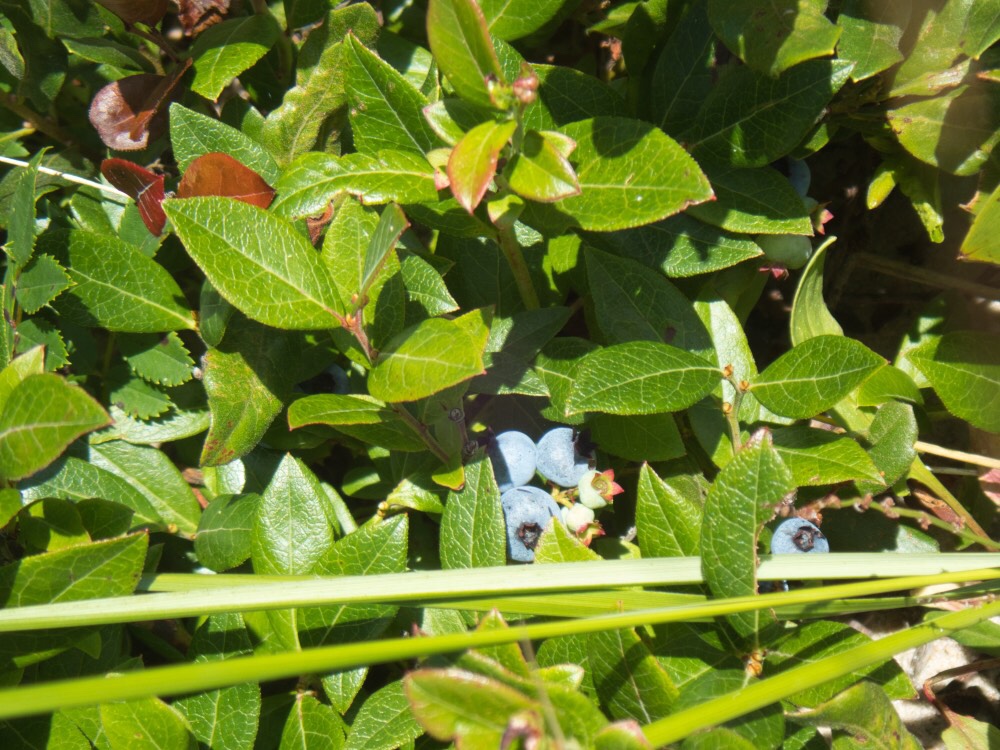
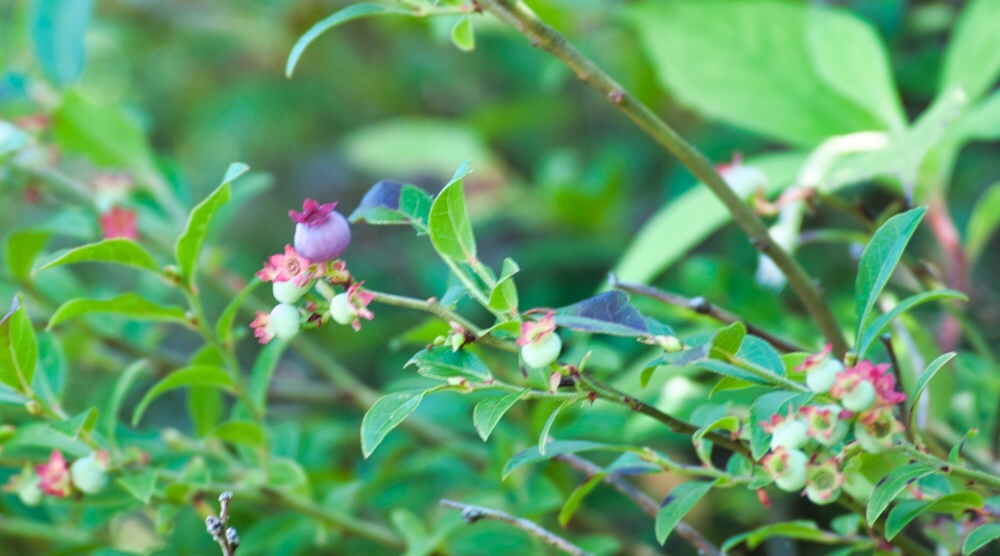
Low bush blueberries are everywhere.
Posted in Places, Underway | Tagged , , , , , , , , , , , , , , , , , , , , , , , , , , , , , , , , | Leave a comment

Seals! and Eagles! and Loons! Oh my!

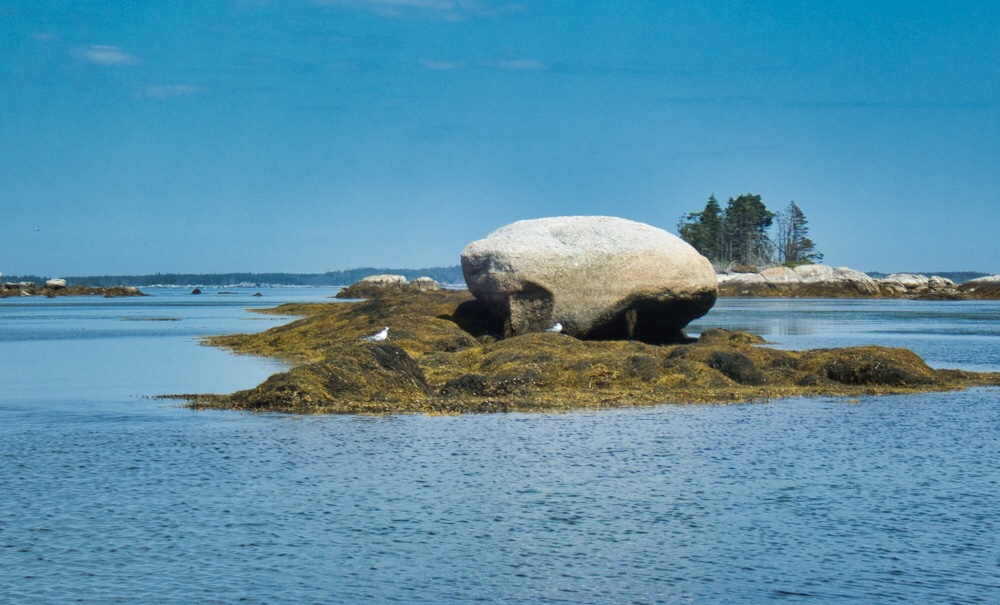
As we have made our way further north and east along the coast of Nova Scotia every place we go is prettier than the last. The geology changes at Halifax. Halifax harbour is actually a fault that separates the solid granite ledges of the south from the shale and red dirt of the north. There is still a lot of granite here, but in the form of isolated boulders carried from some remote locations by the glaciers of the last ice age.

The large Gray Seals are commonly spotted lifting their heads high out of the water to get a good look at us from what they consider to be a respectful distance. A number of Common Loons have moved out to the saltwater bays after finishing their spring breeding season in the fresh water lakes and ponds. At dusk their strange and haunting calls echo across the water. Bald Eagles are a common site roosting in the trees.

Right now we are the only boat anchored within sight in Spry Harbour. We’ll be in this area for another day or two as we watch the weather for our trip out to Sable Island. I explored by dinghy today a nearby cove called “The Bawleen” that is poorly charted. It looks like there is plenty of room to take Harmonie in there which is our plan for tomorrow.

We share the bay with a group of four or five Common Loons.
You haven’t been to Canadian Maritimes until you get a picture of a Bald Eagle.
There is a small village on shore with some very traditional architecture. As I write this on Sunday evening, the church’s bells are ringing.
…and some buildings seem to have been designed by an architect who might have paid a little too much attention in his cubist-modern class.
Posted in Critters, Places | Tagged , , , , , , , , , , , , , , , , , , , , , , , , , , , | Leave a comment

Back in the big city…

We are patiently (not!) waiting for out package of pump parts to clear Canadian Customs. With no way of knowing when the wheels of bureaucracy will finish turning, we have decided that they will get here when they get here, and if we miss them, we’ll pick them up from the marina on our way back south. So we have stopped back in Halifax to fill our boat for a few weeks away from easy supply.

Passing over the shoals at the enterance of Halifax Harbour the sonar was lit up with so many fish that we had to stop and see what we could see. It took no time at all to discover that the fish were dense schools of “harbour pollack,” which is a polite way to say, small pollack. So many fish, they literally fought over who had the priviledge of biting the hook. We did finally land a cod of a size sufficient to grace our chowder pot for dinner.

We spent the last two nights in an anchorage called “Rouge’s Roost” a small, beautiful, quiet, bay with the narrowest opening we have ever piloted Harmonie through. It was on the very fringes of cell coverage, so we had no practical internet connection while there, which was its own kind of delightful. Back at the bustling waterfront of Halifax, the contrast is entertaining!

Photographers do not call it “Golden Hour Light” for nothing!
“Sisyphus was here!”

Next week–weather permitting–we will be visiting Sable Island. An adventure we are very much looking forward to.

Posted in Places, Places, People, Things to do., Underway | Tagged , , , , , , , , , , , , , , , , , , , , , , , , , , , | 1 Comment

And the Natives are Friendly.

Yesterday was one of those perfect days that cruising is just all supposed to be about. The weather was perfect.  Cool morning, sunny warm afternoon without a hint of hot and muggy and, for now, the fog has burned off. The sailing and the fishing are great. The scenery is beautiful, and the natives are friendly.

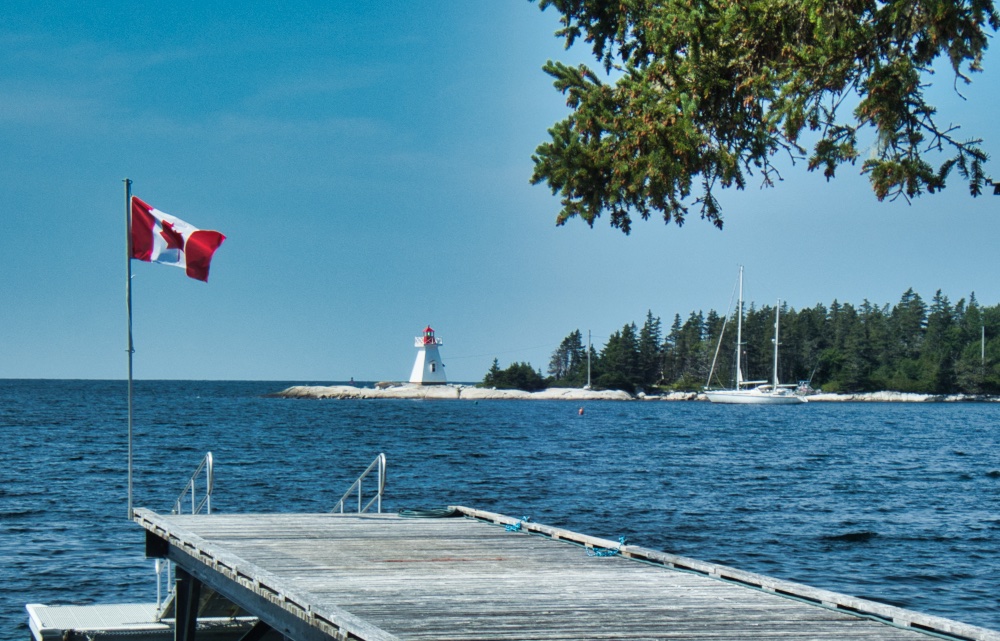
We are now anchored in Indian Harbour, a tiny cove on the eastern shore of St Margaret’s Bay.  With care, one other boat might fit in here, but it would be a tight squeeze. The cove is on the east side of Paddy Head Island, and the entrance marked by Paddy Head Light.

Harmonie in Indian Harbour. Paddy Head Island and Light in the background.

To give you an idea of what it’s like cruising here, this spot was mentioned as a good anchorage in our guide book. Not exactly a featured spot, but certainly nothing bad was mentioned. Locals could list off ALL the boats that had anchored here over the last five years. Pretty quiet.

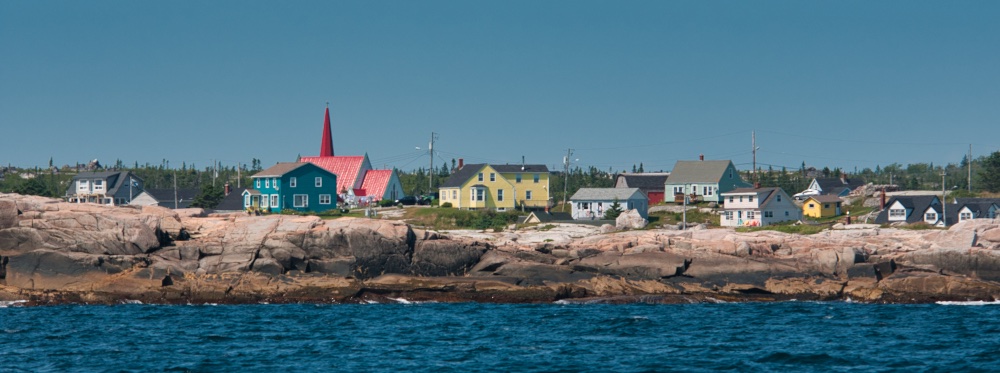
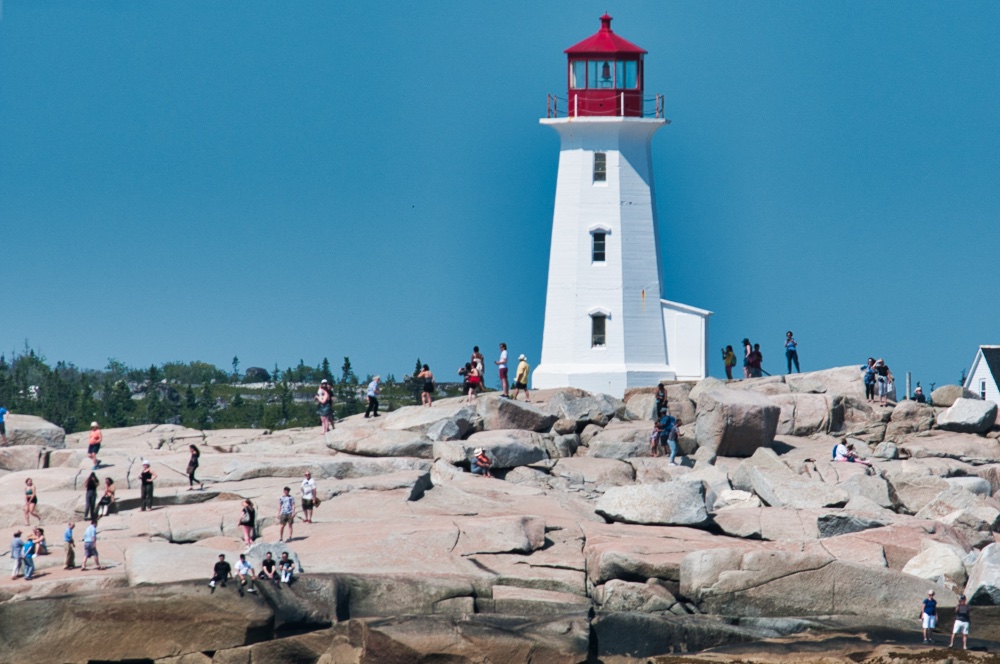
Just a few miles away, at the entrance to St Margaret’s Bay, is what our guide book described as “ground-zero for Nova Scotia tourism.” And as we come around the point, sure enough a pretty, and unusually colorful, village appears, complete with an iconic lighthouse.

Colorful Peggy’s Cove

As we get closer, the one feature that seperates Peggy’s Cove from other small Nova Scotia fishing towns becomes visible: Crowds of tourists.  Hordes even. The place is positively infested with them.  

Our advice to touring Nova Scotia (or pretty much any other place on the planet!):  Avoid places like this.  They are pretty and all, but within just a few miles there are a lot of other REAL fishing villages where you will meet real people, and see real things. In their own real-life way they are just as pretty.

How iconic is the town of Peggy’s Cove? So iconic it has been duplicated as a theme park in Chao Lao Beach, Thailand!  Billed as an “authentic western fishing village.” Seriously. You could google it.

Outside the tourist meccas, the natives are friendlier than anyplace we have ever been.  People come out to your boat and invite you to breakfast, offer a ride to the store, water, whatever they can help you with just because, “you’re a long way from home.”

Fishing in these waters is a bit different. They are rich with life. We look for a place where a pile of rocks rises out of a surrounding soft bottom, and there are the fish.  So far cod and pollack have been the principle catch, with a few oddballs thrown in for good measure. Because we are fishing close to shore in relatively shallow water, we are catching the smaller fish, but a 5 lb cod, while not a trophy, still puts food on the table. If you put 4 of those on deck, you are headed towards filling the freezer!

Cod doesn’t get any fresher than this.
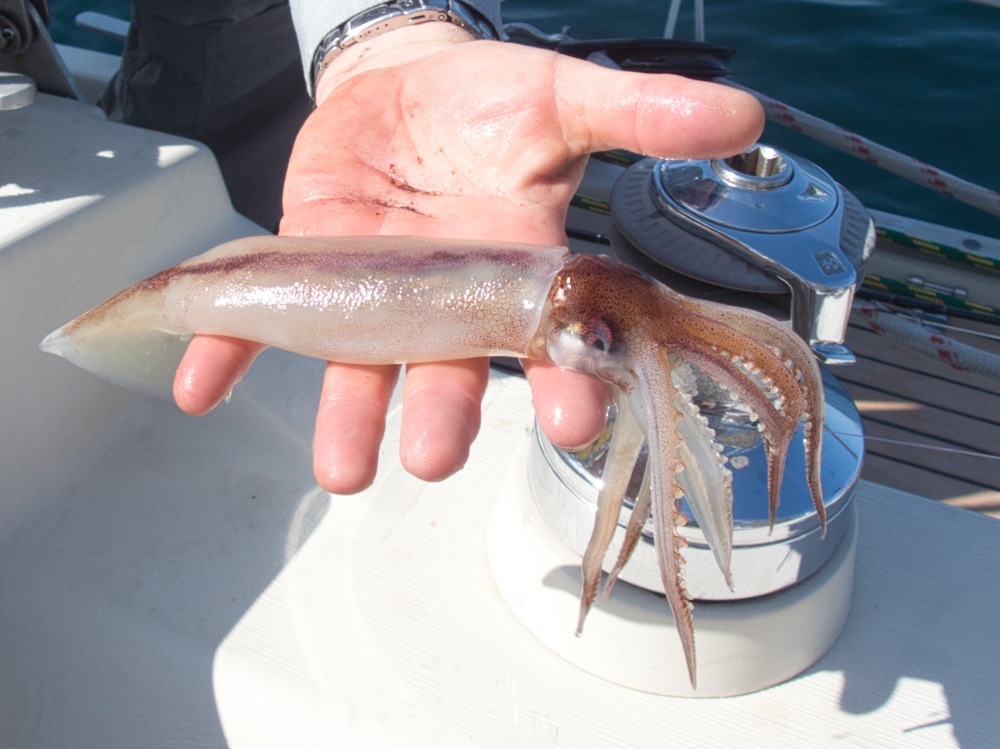
Today’s oddball catch, a squid. Although much more common in the ocean than most people realize, they rarely end up on fisherman’s hooks. Squid like this one probably make up a very large percentage of the diet of cod like those in the previous picture.

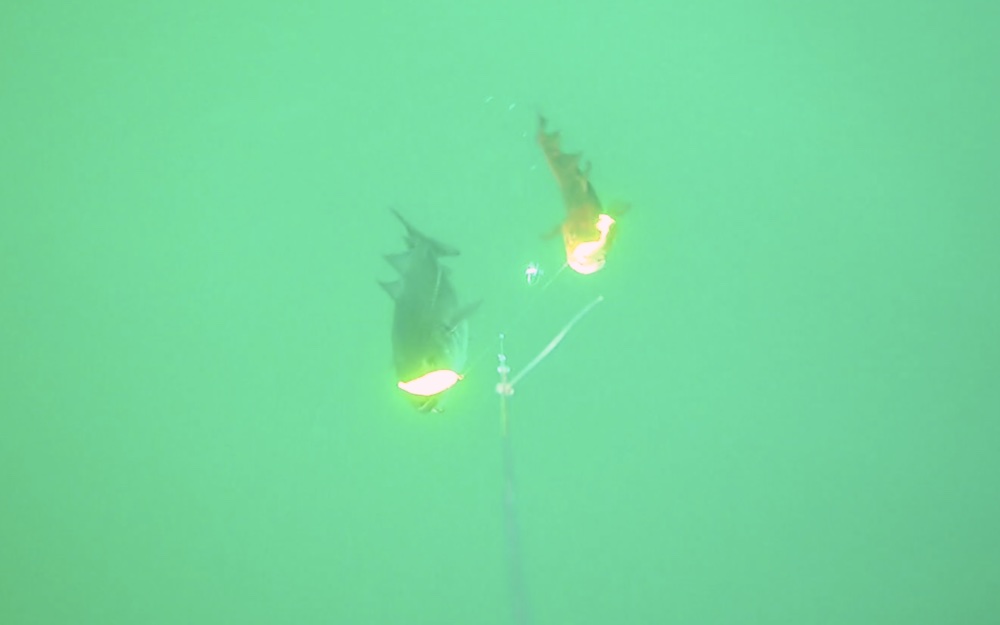
Trying something a bit different, I attached our underwater camera to the line for part of the day. That provided some interesting and educational footage of fish interacting with our lures. I’ll be editing and posting some of that before too long!

A cod and pollack double-header being reeled to the surface, captured by the “Fish Cam.”
Posted in Critters, Places, Places, People, Things to do., Underway | Tagged , , , , , , , , , , , , , , , , , , , , , , , , , , , , , , , , , | 1 Comment

Sambro Bay

We sailed out of Halifax yesterday with good wind, much of the way. Once we reached the mouth of Halifax Harbour, we sailed most of the rest of the way in thick fog. When you are coming into a new-to-you harbour, surrounded by rocks and shoals, and you can not see a boat length in any direction, it certainly increases your appreciation for GPS and RADAR.

We stopped along the way twice to try our luck with fishing, and ended up with a small pollack and a cod. The ocean bottom here is very rough and there is “fishy structure” everywhere. We stop when the sonar shows us dense schools of fish. In many, many places there are huge schools of mackerel and herring. We look for those schools that have bigger fish marks hovering underneath.
Between Halifax and Sambro there are rocky islets and shoals that extend offshore for several miles. Marking these is Sambro Light. With so many picturesque lighthouses around it is hard to pick a top ten, much less a “best” but this one certainly is in the running.

The fog just lowering on top of Sambro Light.

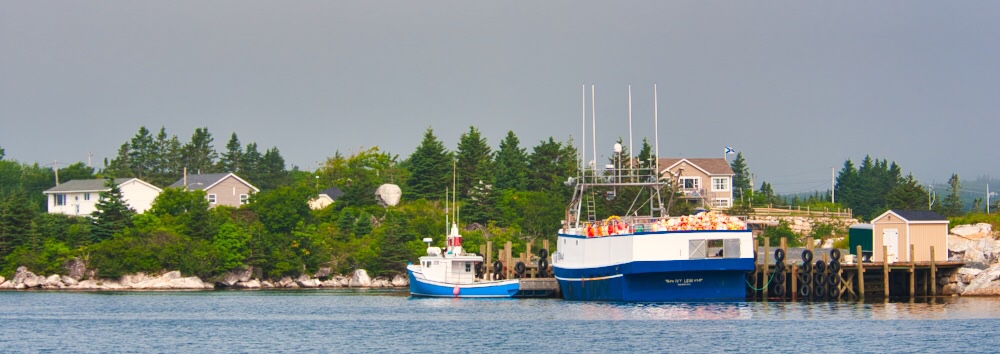
As we sit at anchor here, the surrounding landscape comes, and goes, as small changes in wind and temperature bring the fog in, and then push it back out again. The bay is surrounded by houses and small fish landing operations that seem mostly dedicated to lobster. If you ever meet a Nova Scotia lobster fisherman, be sure to treat him very nicely. No matter if he looks looks it or not, he is one tough hombre. Lobster season here is in the winter. That’s some seriously tough work.

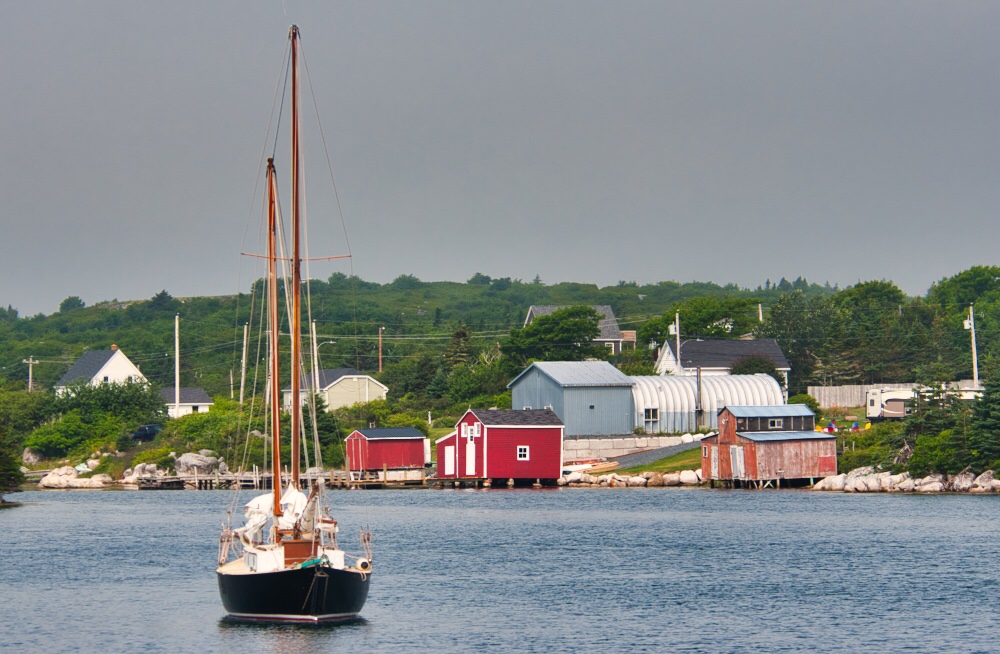
In the cruising guides Sambro Bay does not get high marks for scenic beauty. But it ain’t too shabby looking!

Posted in Places, Underway | Tagged , , , , , , , , , , , , , , , , , , , , , , , , , , , , , , , | 1 Comment

And We are Ready to Go…

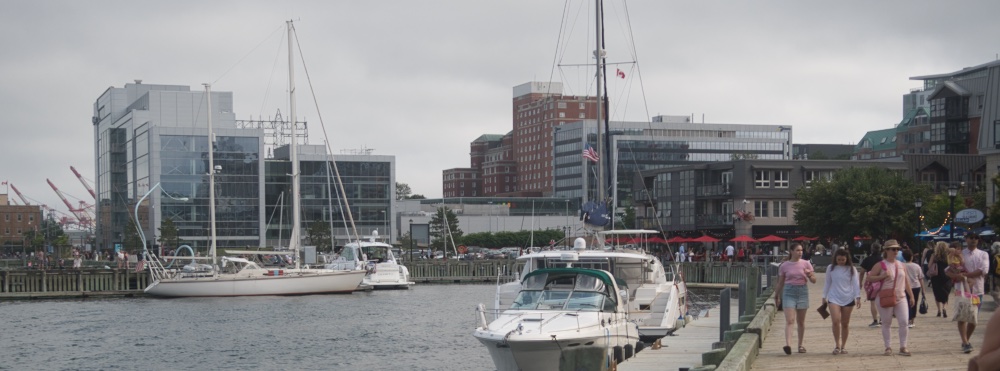
Harmonie docked in downtown Halifax
Georgia is 159 feet of luxury, and is for sale. She can be yours for $13,000,000.

We have been enjoying life on the town for the past couple of days, and were expecting to leave this morning, but we got elbowed out of the line for refueling by a little boat named Georgia. A 159 foot yacht that I imagine is a far more profitable trip for the fuel truck!

We are making our preparations to run around the corner to the “fuel dock” which is basically a spot along the seawall where the truck can pull up and reach with his hose. Once we top off our tanks, we’ll be back here, and then leave first thing in the AM.

Karen was just chatting with one of the local harbour pilots who came by to say hello. It turns out he did a crossing of the Pacific on an Amel, so she got some high quality local info from him. He suggested that if we wanted to catch some fish, we just stop at any of the shoals and start jigging. We’ll certainly be giving that a shot in the next few days.

We had applied with the Park Service for a permit to visit Sable Island, a sandy little speck of land 100 miles east of the coast. Definetly far, far off the beaten track. Uninhabited except for a small park staff and a herd of wild horses. We were excited today to get notice our application was approved! It’s a big deal, for many years the island was completely off limits to all visitors. These days almost all the visits are by small plane. An 8 hour visit on the charted plane costs $2500 and are available only a half dozen days a year. If the weather cooperates, we’ll be out there in about 2 weeks. A few days there will cost us nothing more than the time to get there.

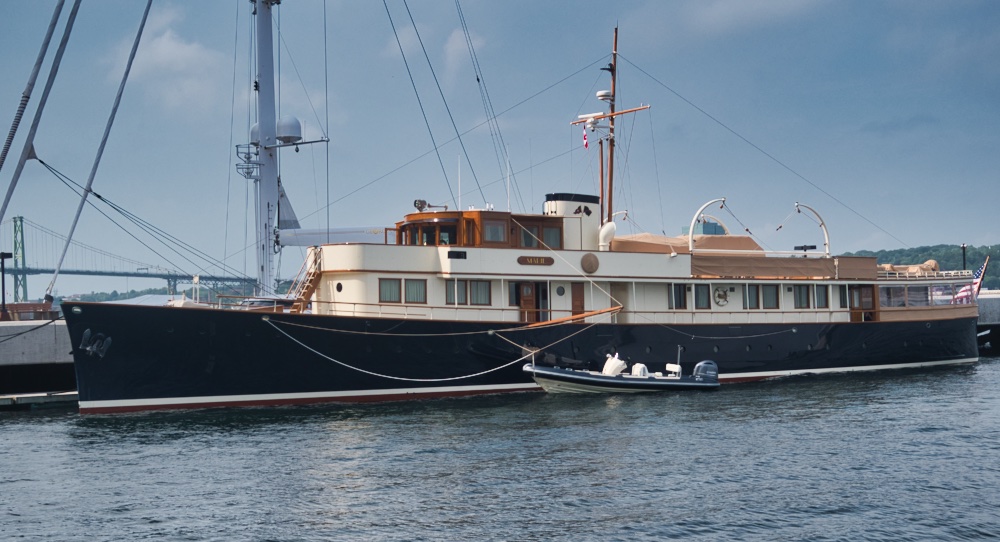
Another, even more beautiful boat. 130 foot long Marie was built in 1930. Twenty years ago she was a derelict and her steel hull was scheduled to be cut up for scrap. She was rescued, and restored to a level that is above and beyond museum showpiece standards.
Posted in Underway | Tagged , , , , , , , , , , , , , , , , , , , , , , , , , , | Leave a comment